You find a puddle on the sill before breakfast. It might be last night’s cooking and cold glass, or yesterday’s storm finding a path through the wall. The price and scope of those fixes are very different.
There is no reliable authoritative national price range for diagnosing or repairing a window leak. Testing time, access, flashing work, and hidden damage change the bill. Before requesting a replacement quote, record where the water starts and what the weather was doing; those clues keep the estimate focused.
Where is the water: glass, track, sill, or wall?
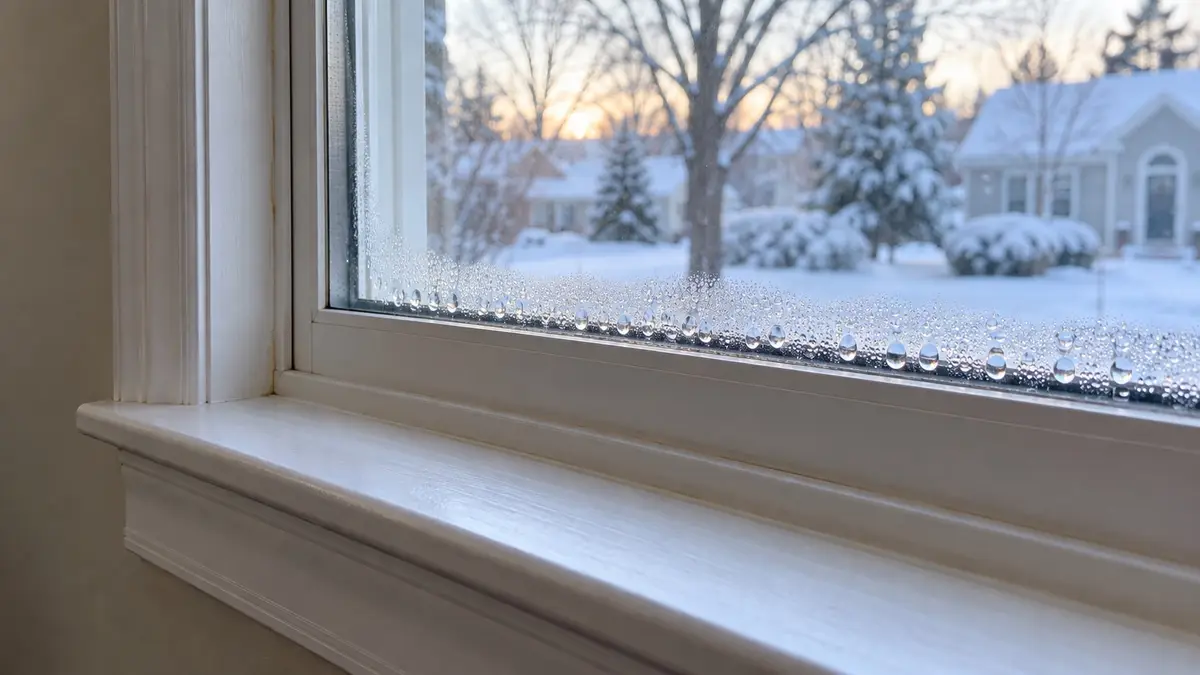
Warm indoor air leaves moisture on cold glass, usually at its lower edge and corners. Andersen’s care guide says room-side condensation reflects moisture in the air and does not by itself indicate failed glass. A ring of droplets on several bedroom windows after a cold night therefore points toward humidity.
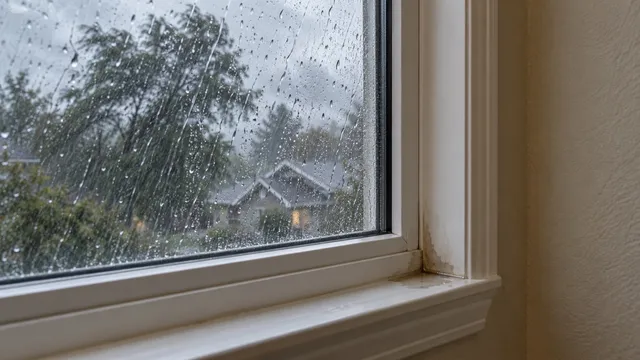
Rainwater can enter at the sash, the frame, or the joint between window and wall. Building Science Corporation describes bubbling drywall at lower window corners as a typical leak sign. Water on the wall beneath the window, damp carpet, or staining after a storm warrants a closer look. One wet window on the windward side of the house is another clue, though years of condensation dripping onto a wood sill can leave similar paint damage.
| What you see | Strongest clue | First move |
|---|---|---|
| Droplets on room-side glass | Cold morning; several windows | Measure humidity |
| Water in track | Heavy rain; exits outside | Check designed drainage |
| Stain at wall corner | After rain; spreading | Document and call window contractor |
| Haze between panes | Cannot wipe either face | Ask glazier about sealed glass |
| Dew on outside face | Cool, humid morning | Wait for it to evaporate |
The table is a first sort, not a diagnosis. A wet sill can hold both condensation and rainwater. Photograph exactly which surface is wet before wiping it.
When does the water show up?
Condensation tends to follow cold nights, showers, cooking, or humidifier use. Frost on room-side glass can melt after sunrise and run onto the sill without any rain. Rain leaks follow rain, often from a particular wind direction. Building Science Corporation’s moisture guide advises tracing rain wetting backward and upward from the visible spot; water may travel sideways inside a wall before surfacing.
Make a one-week log with six columns: date, outdoor temperature, rain and wind, indoor relative humidity, affected windows, and exact wet spot. Take a photo at roughly the same time each day and add notes after storms. If the same glass sweats on dry cold mornings, test humidity first. If only the west wall wets during west-driven rain, tell a window contractor that pattern. Snowmelt or ice above the opening can also send water to the window head, so note thaw days rather than calling every post-storm drip a window-unit failure.
Why does room-side window condensation happen?
When moist room air touches glass cool enough to fall below its dew point, water appears. Cornell Cooperative Extension explains why glass shows it before an insulated wall: it has much lower insulating value. Drapes shut tight against the pane block warm room air, cooling the glass further. Bay and bow windows can run cooler because they project beyond the insulated wall.
Better glazing can keep the inner face warmer, but it does not remove moisture from the house. NDSU Extension’s 2011 guidance gives approximate examples at 40% indoor humidity: condensation on double glazing below 0°F outdoors and on triple glazing nearer −40°F. Those are examples, not guarantees for a particular frame, spacer, or installation. If shopping for windows, the NFRC Condensation Resistance rating is an optional 1-to-100 comparison measure, not a prediction for your room.
Where is the extra indoor moisture coming from?
Start with everyday sources: people breathing, showers, cooking, laundry, houseplants, and firewood stored indoors. NDSU’s 2011 release estimates about three pints of water vapor per person per day from breathing. A portable or whole-house humidifier can keep adding moisture long after a cold spell ends. Check whether bath and kitchen fans actually exhaust outdoors; persistent bathroom steam has its own ventilation checks. Materials in a new house or recent remodel can add temporary moisture; Andersen says it should disappear during the first heating season.
Heavy window sweating alongside an unvented gas or kerosene heater is a stop sign. Such appliances add water vapor and other combustion products. Keep the unit off pending evaluation by a qualified gas-appliance technician; opening a window is no substitute for that assessment.
What indoor humidity should you aim for in winter?
Use a hygrometer and adjust for outdoor temperature. The Minnesota Center for Energy and Environment gives this general winter guide. Even 40% can produce troublesome condensation in extreme cold; the practical target also depends on the window and the house.
| Outdoor temperature | Keep indoor relative humidity below |
|---|---|
| 20 to 40°F | 40% |
| 10 to 20°F | 35% |
| 0 to 10°F | 30% |
| −10 to 0°F | 25% |
| −20 to −10°F | 20% |
| −20°F or colder | 15% |
Andersen suggests 30–35% in winter. NDSU’s 2011 guidance says about 40%. The EPA’s 30–50% ideal range and below-60% ceiling concern general moisture control, not a promise that glass stays dry. The colder the day, the lower humidity often must be.
If moisture consistently builds up on windows or walls, CEE says to turn off the humidifier and lower its RH set point before turning it back on. Cornell’s 1999 fact sheet advises against operating a humidifier in cold weather. Use bath and kitchen exhaust fans that vent outside, open drapes during the day, and allow room air to circulate. For persistent whole-house moisture, ask an HVAC contractor to assess ventilation, including whether an appropriately sized heat- or energy-recovery ventilator fits. NDSU says portable dehumidifiers are generally ineffective when relative humidity is already below 50%. The Cornell fact sheet says dehumidifiers in electrically heated homes have proven more energy-efficient for moisture removal than indiscriminate exhaust-fan operation. Measure before buying one; that comparison does not replace local exhaust at the source.
Which signs point to rain entering from outside?
Rain-linked wetting at trim or drywall deserves attention even when the pane looks dry. Check from inside that the sash is fully closed and locked; Andersen’s care guidance says windows are designed and tested in that position. Joined, or mulled, windows are another possible entry point. A visible drip at the head may have entered above the window through siding, roof, or flashing around the opening.
From the ground, look for loose trim, failed exterior joints, or water running from above. Leave upper-story inspection to a window or siding contractor. DOE’s Building America guide lists soft trim, peeling finishes, stains, and bubbling paint among flashing-related clues. Its guidance says proper flashing is often required by code; requirements and permits vary locally. A stain below the window does not prove the opening itself is where rain entered.
For a closer comparison of sash, flashing, and wall paths, see why windows leak during wind-driven rain. A drafty sash that needs weatherstripping can also carry moist indoor air toward a cold storm pane.
Is water in a sliding-window track normal?
Yes, briefly, in some drainage designs. Andersen says water can pool on the sill during heavy rain and may take time to drain through exterior weep holes. The result should be water leaving the frame outdoors, not spilling across the interior stool or wetting the wall.
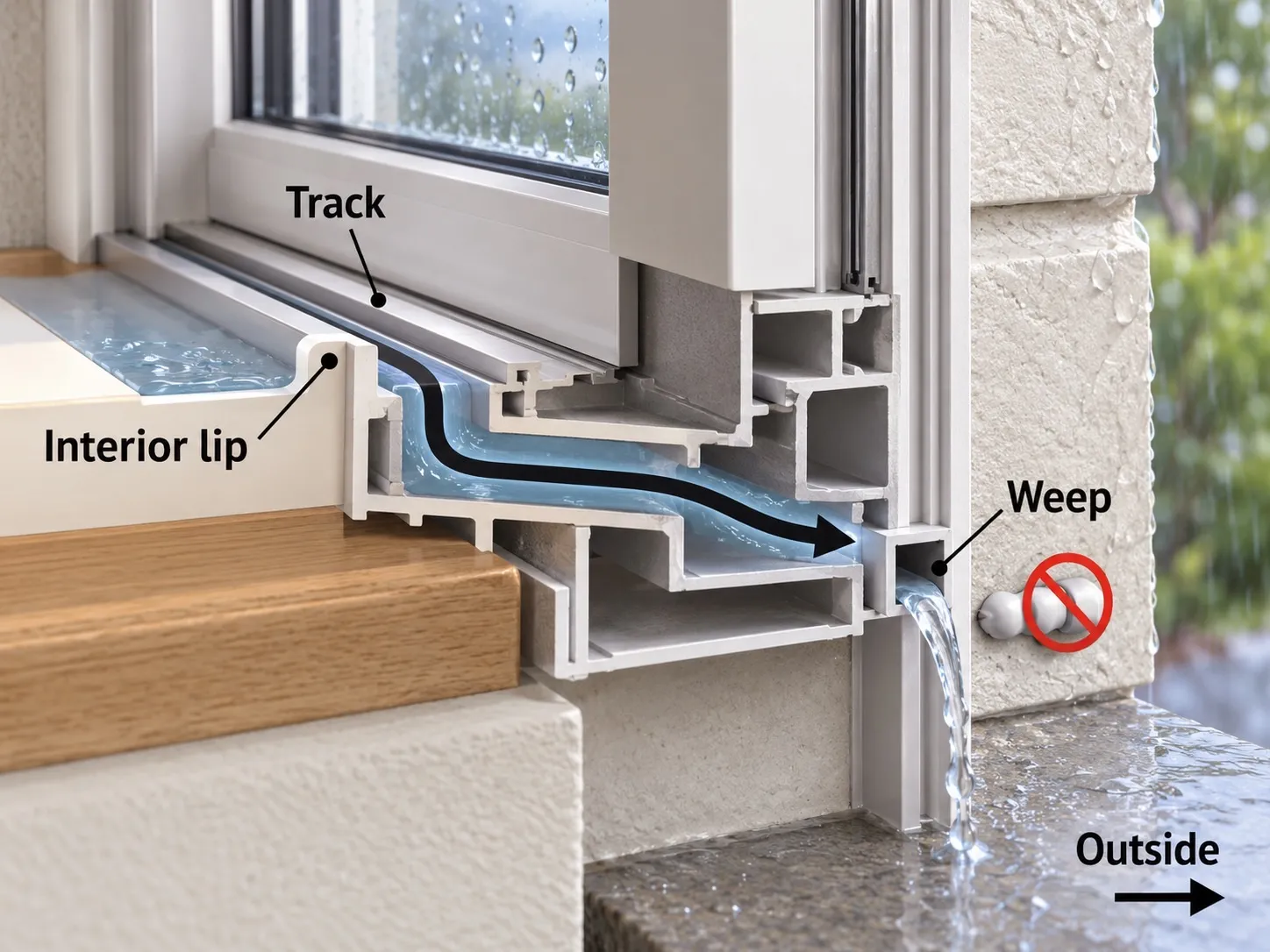
Illustrated drainage path; frame designs vary. Keep the exterior weep open rather than sealing it with caulk.
On a reachable ground-level unit, look for debris at the small drain openings and clear it gently. DOE’s weep-hole guide describes a small-pour check of the track. Do that only on an intact unit with no existing overflow or nearby damage: water should exit outside; if it pools or comes inward, stop pouring and call a window repair contractor. Never caulk the weep holes shut. That blocks the designed exit and can worsen the leak.
What if the clues point to both causes, or neither?
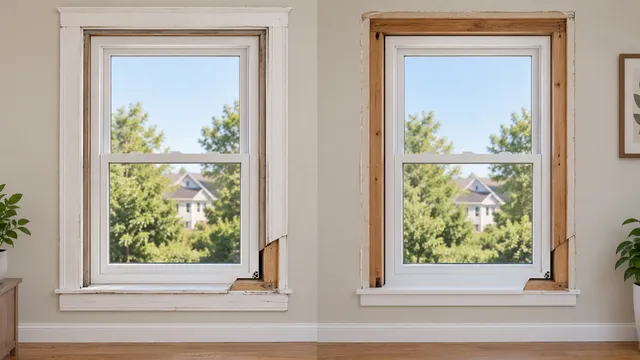
Recurring condensation can damage paint and wood until a sill looks like it has leaked. Cornell warns that moderate condensation away from wet rooms can signal potential concealed condensation in a wall or attic. Fix the indoor moisture source and have a window contractor assess softened wood.
Water on the inside face of an exterior storm pane can come from moist indoor air leaking past the primary window. Cornell recommends sealing the inner window; sealing the outer storm airtight can trap water. In a tight house, Cornell also notes that moist indoor air can pass through gaps around the frame and condense within or around the assembly. A window or air-sealing contractor should trace that route before sealing the frame. If you are comparing warmer glass options for sound frames, see storm versus replacement windows. A wet wall or ceiling above a dry window suggests a roof, siding, or plumbing source that a roofer, siding contractor, or plumber must trace. If fog is trapped between the sealed panes, the glass-unit diagnosis is different; lowering indoor humidity will not clear it. Dew on the outside face on a cool, humid morning is another separate condition, which Andersen describes as ordinary exterior condensation.
How quickly should you dry the window and check for damage?
Wipe an occasional bead and watch whether it returns. Daily pooling or peeling paint calls for prompt moisture control. A soft sill, rainwater in a wall, or spreading stains warrants a window contractor promptly. Press gently on accessible trim and look for swelling, a musty smell, or spots behind nearby furniture; do not open a wall to investigate yourself.
The EPA advises drying wet materials within 24–48 hours to prevent mold in most cases. Its roughly 10-square-foot line is guidance for when mold cleanup is beyond routine DIY, not a legal threshold. For a larger area or suspected hidden growth, call a mold assessment or remediation professional. The moisture source still needs a repair.
Who should find the leak, and what should the quote include?
Call a window repair or installation contractor who can trace water entry. If several repairs failed or the source could be the wall, a building-envelope consultant can investigate. A roofer or siding contractor fits wetting that starts above the opening. Bring the log, photos, window label if visible, and any installation or warranty paperwork.
A careful investigation may use controlled water spray, sometimes with indoor depressurization to mimic wind pressure. Building Science Corporation’s 2014 technical presentation explains that lab water ratings and installed, drained openings differ. Ask the contractor which part will be tested separately: glass and sash, frame corners, track, or window-to-wall joint. A window that passed a product test can still leak after installation.
An estimate should separate diagnosis and water testing; access; trim or siding removal; flashing, window repair or reinstallation; rot and interior finish repair; disposal; and any local permit. Check whether a manufacturer’s product warranty or an installer’s workmanship terms might apply. If the proposed fix is a bead of sealant without finding the entry point, get a second opinion. The lowest quote may leave water inside the wall if it covers only the visible stain.
Frequently asked questions
Is it normal for windows to sweat every morning in winter?
Some condensation on cold glass can happen, but daily dripping and paint damage need action. Measure indoor humidity and compare it with the outdoor temperature; reduce moisture sources before considering a new window.
Should I shut off my whole-house humidifier if the windows are wet?
Yes, if window moisture keeps recurring, turn it off. CEE says to lower the RH set point before restarting it; Cornell’s 1999 guidance advises against humidifier use in cold weather. Compare the outdoor temperature with the humidity table and watch whether condensation stops.
Will new double- or triple-pane windows stop condensation?
Warmer inner glass can reduce room-side condensation, but new windows do not remove moisture from indoor air. Investigate humidity first, and use the NFRC rating to compare products rather than treating replacement as a guaranteed cure.
Why is there water in my sliding-window track after rain?
It may be part of a contain-and-drain design. Check that it exits through exterior weep holes and does not spill into the room; a window repair contractor should assess persistent pooling or overflow.
Can I caulk around the window myself to stop the water?
Only after the entry path is known. Surface sealant will not correct hidden flashing trouble, and caulk over a weep hole blocks drainage. Ask a window contractor to locate rain entry when trim or wall materials are wet.
Does homeowners insurance cover leaking-window or condensation damage?
It depends on the policy, cause, and timeline. Document the loss and ask your insurer about your own terms; the distinction between sudden water damage and gradual wetting matters. See how coverage for a water leak is evaluated.
Correction
October 8, 2026: This article previously suggested turning down a humidifier when windows stayed wet. For recurring condensation, turn it off and lower its humidity setting before restarting it.
Sources
- Andersen — Important Product, Care, and Maintenance Information
- Andersen — Window Condensation 101
- Cornell Cooperative Extension — Moisture Condensation at the Windows
- NDSU Extension — Window Condensation Common Problem
- Center for Energy and Environment — Managing Humidity Levels
- U.S. EPA — A Brief Guide to Mold, Moisture and Your Home
- NFRC — Window Ratings
- Building Science Corporation — BSD-108: Investigating and Diagnosing Moisture Problems
- Building Science Corporation — PA-1904: How to Look at a House Like a Building Scientist
- Building Science Corporation — Windows and Water Leakage Testing
- DOE Building America — Clean Window Weep Holes
- DOE Building America — Look for Missing Window and Door Flashing