A cold spot beside the window may lead you to a roll of weatherstrip or a replacement quote. The useful first purchase is neither: find the exact place air enters. Weatherstripping seals moving joints. A cold pane, a gap behind trim, and a loose pane call for different work.
There is no verified authoritative national price for a weatherstripping labor visit or sealing a rough opening. An ENERGY STAR window guide gives a $400–$1,600-plus installed example for an energy-efficient 3-by-5-foot double-hung window, not a range for every replacement window. Product, region, and installation scope change the price. A small, sound sash deserves diagnosis before a whole-window expense.
Where is the draft coming from before you buy weatherstripping?
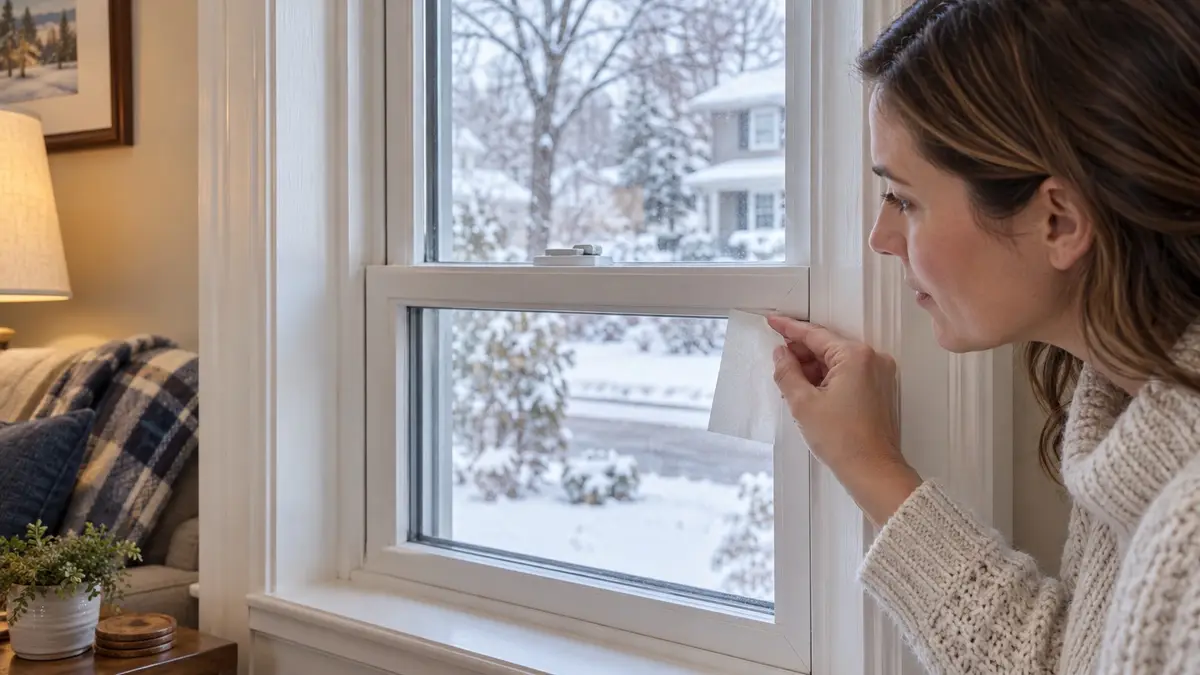
Only test an intact sash that already moves, stays up, and latches normally. If it binds, drops, hangs crooked, or has loose glass, do not force or repeatedly operate it; call a window repair contractor or glazier. In a pre-1978 home, stop before any test or surface preparation that would disturb paint; have a lead inspector or risk assessor evaluate it first. For a sound sash, close and latch it. Then, on a breezy day, hold a tissue near the sash edges, the meeting rail between two sashes, the glass-to-sash joint, and the trim-to-wall line. Watch where it moves. Virginia Tech Extension describes a similar tissue and paper check. Close a narrow paper strip in the sash at several points; a loose pull at one point suggests poor contact there. A helper can use a flashlight on the other side after dark to spot visible gaps, without climbing or leaning outside.
| Finding | Likely path | Better first fix |
|---|---|---|
| Air at sash edge or meeting rail | Moving joint | Fit or matched weatherstrip |
| Air at trim and wall | Rough-opening gap | Installer or window contractor checks air seal |
| Loose pane or missing putty | Glass-to-sash joint | Glazier or window restorer reglazes |
| Air at fixed exterior joint | Frame and siding joint | Suitable caulk, drainage kept open |
| No moving air, cold below glass | Cold-glass downdraft | Storm panel or warmer glass |
| Many windows and floor edges | House-wide leakage | Home energy assessment |
The last row matters. ENERGY STAR says the most significant leaks are often in attics and basements. A window quote may leave those paths untouched. Note the exact test spot and date so you can compare it after work.
Why does the window feel drafty when no air enters?
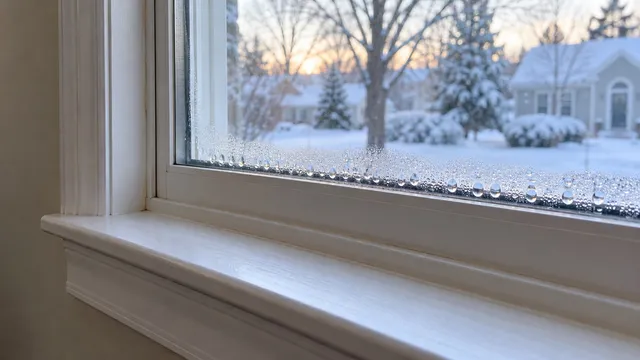
Room air cools against cold glass, sinks, and spreads along the floor. The NFRC consumer guide calls this a convective draft. You may feel it below a large pane even if a tissue at the joints hardly moves. It happens with old and newer windows to different degrees; it proves neither a good nor a bad installation by itself.
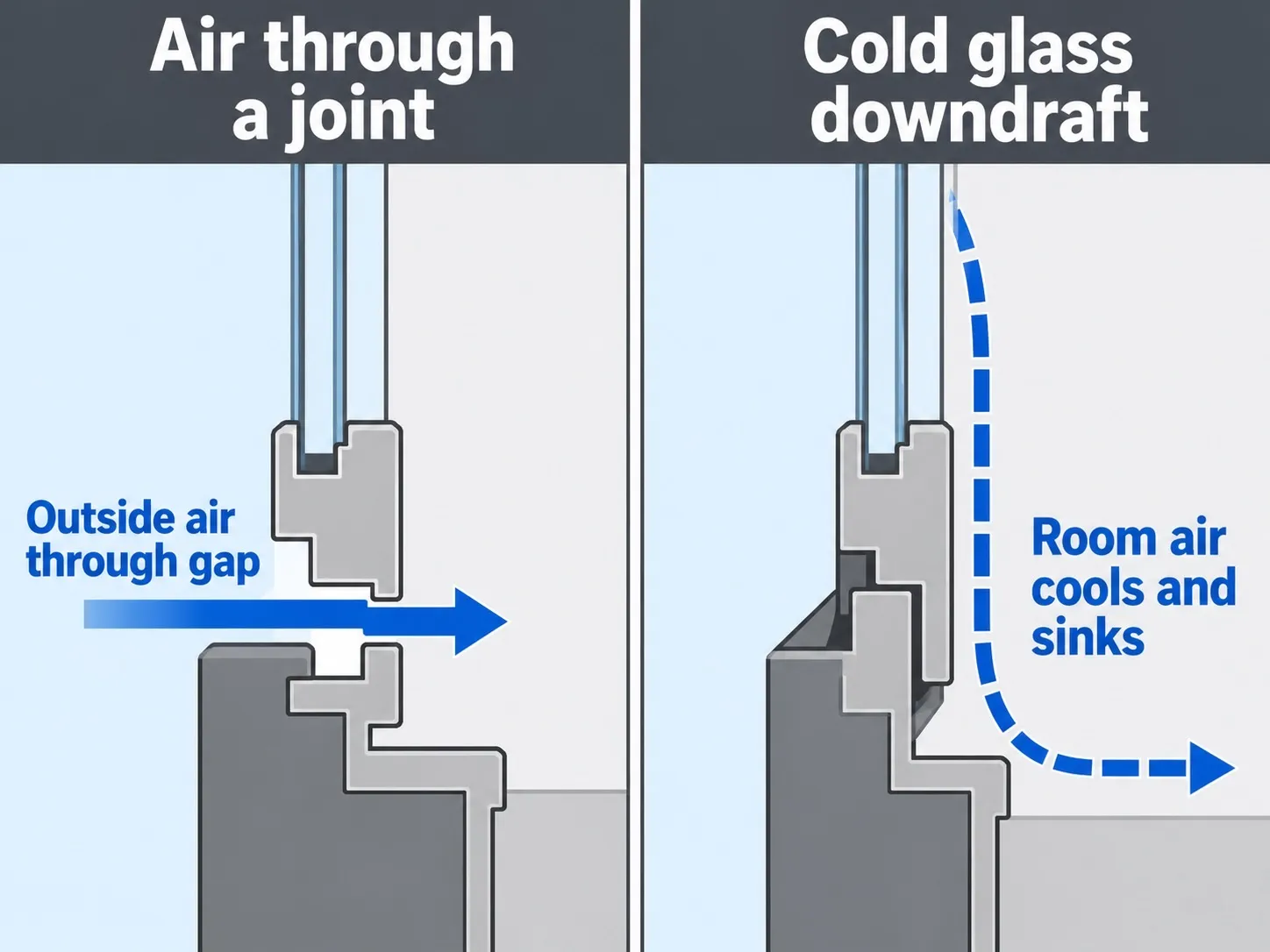
Weatherstripping addresses the sash gap on the left; it does not stop room air cooling beside glass on the right.
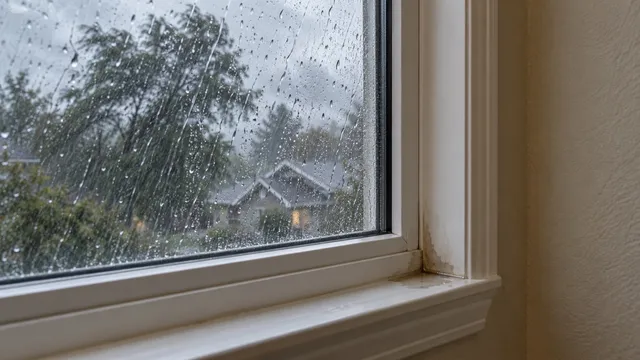
Weatherstrip cannot warm the glass. A well-fitted storm window, insulating glass, or an appropriate window treatment can reduce the cold-glass effect. Keep treatments open during the day if condensation appears: Cornell Cooperative Extension’s 1999 fact sheet notes that closed drapes make the pane colder. If water beads on the glass, use the condensation-or-leak guide before sealing more air paths.
When will weatherstripping actually stop a draft?
It belongs where a sash moves against a frame, along sliding tracks, at a double-hung meeting rail, or around an operable casement. Torn, flattened, brittle, or missing strips and a loose paper test at that exact joint make a good case. The DOE Building America guide matches materials to their location: V-shaped tension strip for sliding contact and compressible products for less abrasive closing contact.
Choose for the window design and amount of movement. A frequently opened slider may need its maker’s fin seal rather than a generic foam tape. DOE Building America’s weatherstrip table restricts felt in wet or high-friction locations. The National Park Service’s 1981 preservation brief also notes felt’s moisture retention and weak performance on old windows. For a branded vinyl, clad, or fiberglass unit, identify its maker and series before ordering a profile that may need to fit a shaped channel.
Apply a strip only to a clean, sound surface in the location its product instructions specify. If applying or removing a strip would disturb pre-1978 paint, stop. Have a lead inspector or risk assessor assess the paint; leave paid surface preparation to the certified renovation firm. Close and lock only a sash that already moves and stays up normally after a small test section. If the added thickness prevents latching, remove it and select the correct profile; forcing the lock can hide a fit problem. A sash that slides down or hangs crooked needs a balance diagnosis, not thicker weatherstrip.
When will weatherstripping not help?
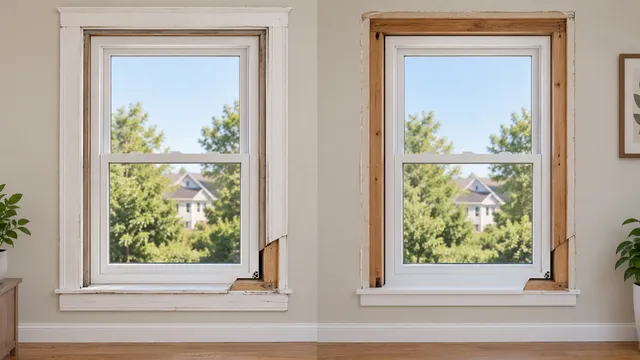
Air at the trim-to-wall line can pass through the gap between the window frame and house framing, called the rough opening. DOE’s rough-opening guide identifies low-expansion foam or backer rod as air-seal materials behind trim while preserving exterior drainage. Have a window contractor assess older sash-weight pockets and pre-1978 painted trim before anything is removed. For a newly installed window, contact the installer first and check the workmanship terms.
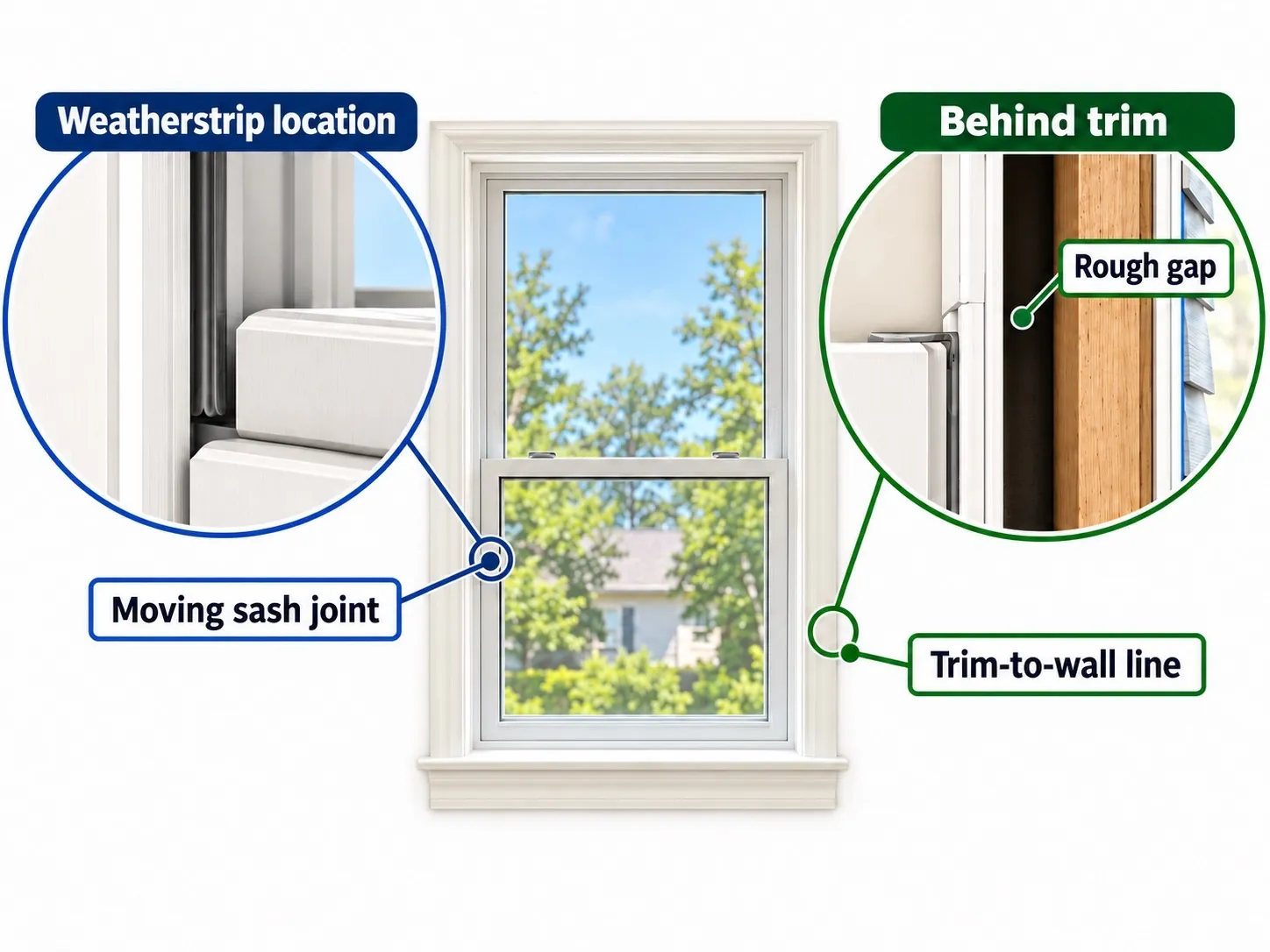
A moving sash joint and a gap behind the trim need different repairs. The enlarged views show locations, not a removal procedure.
Exterior caulk is for suitable fixed frame-to-siding joints, not moving sashes or weep holes. Loose glazing putty needs a glazier or restoration carpenter. A sash that will not close squarely or latch needs hardware or frame repair; a window that will not close or lock has its own diagnosis. Soft wood needs a window repair contractor to address the moisture source and substrate before any seal can hold.
The glass itself may be the cold source even after all air leaks are sealed. Replacing an insulated glass unit can help a failed seal, but it does not correct rough-opening air leakage. Ask the professional to name the path being repaired and how they confirmed it.
Can an old wood window be repaired and weatherstripped?
Yes, when the sash and frame remain sound. The National Park Service describes repair as a sequence: address loose joints and glazing, repair wood where needed, fit the sash and meeting-rail lock, then weatherstrip. An old felt strip or a painted-shut sash does not mean the whole assembly is beyond repair. A window restoration contractor can check the wood and cord-and-weight system without treating age alone as a reason to replace.
For a sound single-pane window, a storm can be an alternative to a new whole window. National Park Service weatherization guidance recommends repairing and sealing the primary unit first. Historic-district rules may affect replacement, so ask the local preservation office before ordering. Extensive rot or an out-of-square frame changes the scope; compare insert and full-frame replacement only after a contractor assesses what remains sound.
What changes in a pre-1978 home?
Windows and sills in pre-1978 homes may have lead paint. EPA’s 2026 lead pamphlet notes that rubbing painted window parts can produce dust. A peel-and-stick strip that leaves paint intact differs from sanding, scraping, or planing a sash to make a seal fit. Stop before disturbing old paint and have a lead inspector or risk assessor assess it.
The EPA RRP program applies to paid paint-disturbing renovation work in pre-1978 housing; use an EPA- or state-certified firm. Homeowners working on their own homes are exempt from certification, but EPA recommends lead-safe practices. Do not treat a homeowner exemption as evidence that the paint is safe to abrade.
Are temporary film or caulk fixes safe on a bedroom window?
Removable film, rope caulk, and insulating shades can be useful seasonal measures when they are compatible with the window. They may also prevent it from opening. The model IRC escape-opening language shown in Colorado’s adopted code calls for a sleeping-room escape opening operable from inside without keys, tools, or special knowledge; local adoption and amendments vary. Keep the designated escape window fully usable. Do not paint or caulk a sash shut.
Treatments that block room heat from the pane may increase condensation. If you use film or a shade, keep checking for water on the glass and sill, and remove a treatment that traps moisture against wood. A temporary comfort fix is not a repair for rot or water entering from outside.
Would a storm window or insert be a better next step?
A storm adds another layer over a sound primary window. ENERGY STAR says its certified low-e storm windows can cost about one-half to one-quarter as much as common replacement windows. It estimates national-average savings of about 20% on annual heating and cooling bills when certified low-e storms go over single-pane clear glass without existing storms. That is bill savings under that baseline, not a forecast for your house or all energy use. The primary sash still needs to close and seal; exterior storm weeps must stay open.
Water on the inside of an exterior storm pane points to humid room air escaping through the primary window, according to Cornell. Have a window restoration contractor seal the inner unit while preserving the exterior storm’s designed drainage and ventilation. Compare storm windows and replacement windows when the existing frame is sound.
When does replacing the window make more sense?
Widespread rot, an irreparable operating mechanism, or an out-of-square frame can make weatherstripping a short-lived patch. Replacement may also make sense when several defects coincide or the glass package itself is due for change. Have a window repair contractor state which part is unsound and whether an insert would leave damaged framing or flashing in place.
Replacement solely for energy savings deserves careful math. ENERGY STAR’s published figures are averages and depend on the starting window. Vermont Energy Saver says replacement is rarely as cost-effective as air sealing and insulating. The federal 25C window credit applied to qualifying property placed in service through 2025; IRS guidance does not support claiming it for a new 2026 installation. State and utility programs vary.
Ask replacement bidders to specify the unit, glass, insert or full-frame method, trim work, disposal, access, lead-safe setup where relevant, and locally required permit. A weatherstripping quote should specify the exact product, surfaces, fit correction, and an opening and locking test. Compare installed scopes, not just the advertised unit price.
How can you tell whether the draft fix worked?
For a sash that still moves, stays up, and latches normally, repeat the tissue or paper test at the same spots on a similarly windy day. If it binds, drops, or hangs crooked after installation, stop operating it and call a window repair contractor. Air no longer moving at the sash edge suggests that seal is doing its job. If the draft now appears at trim, have a window contractor inspect the rough opening. If no air moves but the floor still feels cold, revisit the cold-glass explanation.
Open, close, and latch the window normally; verify any bedroom escape opening still works. Watch for new condensation after sealing and ask an HVAC contractor about ventilation if humidity rises throughout the house. If drafts remain at many windows and floor edges, a home energy auditor can locate larger building leaks before you order more window work.
Frequently asked questions
Should weatherstripping go on the inside or outside of a window?
Put it at the moving joint specified for your window, not at a generic inside or outside line. Keep exterior drainage openings clear and confirm the sash still closes and locks.
Why is my new replacement window still drafty?
Air may enter at the rough opening behind trim, or cold glass may create a downdraft. Call the installer first with the exact test location and check the workmanship documents before changing the installation.
Is it OK to caulk a window shut for the winter?
No for a bedroom escape opening, and it is a poor repair for a sash that should operate. Check local escape-opening rules and use a removable, compatible measure only where the window can still serve its purpose.
Can I weatherstrip a vinyl or aluminum sliding window?
Often, yes, if the track or sash seal is worn and a compatible replacement exists. Identify the maker and series; a generic adhesive strip may bind in a sliding track.
Does plastic window film stop drafts or hide them?
An interior film barrier can reduce air movement at a leaky assembly while installed, but it does not repair the joint behind it. Keep escape windows usable and check for trapped condensation.
Why do I feel cold air when the tissue does not move?
Cold glass can cool nearby room air so it sinks along the pane. A storm panel or warmer glazing addresses that mechanism; more weatherstrip at an already sealed joint does not.
Sources
- DOE Building America — Add Weatherstrip to Windows and Doors
- DOE Building America — Air Seal and Insulate Window Rough Openings
- ENERGY STAR — Locating Air Leaks
- ENERGY STAR — High Performing Windows or Storm Windows
- Virginia Cooperative Extension — Caulking and Weather-Stripping
- NFRC — Control Comfort
- National Park Service — Preservation Brief 9
- National Park Service — Weatherization of Historic Buildings
- U.S. EPA — Protect Your Family From Lead in Your Home
- U.S. EPA — Lead Renovation, Repair and Painting Program
- Cornell Cooperative Extension — Moisture Condensation at the Windows
- ICC model code via UpCodes — Emergency Escape and Rescue Openings
- Vermont Energy Saver — Windows and Doors
- IRS — Energy Efficient Home Improvement Credit