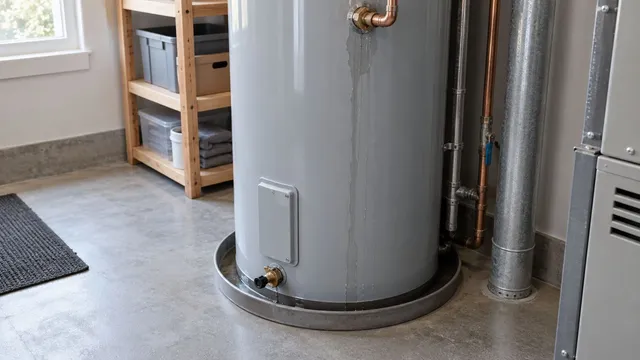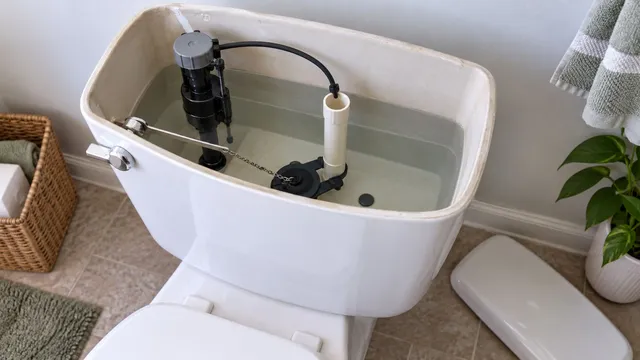
Brown water at the hot tap points toward the hot-water path, but it does not identify the water heater as the source. A storage tank is a reservoir. If the utility or a well supplied discolored water yesterday, the tank can continue delivering that batch after the cold line has cleared. Maine CDC includes discolored hot water among its triggers for a professional water-heater flush; color alone does not condemn the tank. The useful question is where the color first appears.
No independent nationwide cost dataset covers this combination of sampling, flushing, anode work, piping repair, and heater replacement. A good quote prices the confirmed cause, not merely the color.
What does “hot taps only” actually tell you?
After little or no hot-water use, Bradford White warns that flammable hydrogen can collect. Follow your model manual’s precaution: open the kitchen hot tap for several minutes before using any electrical appliance connected to the hot-water system. Keep smoking and open flames away. Let the hot water run into the sink, not a container held by hand; keep hands, face, children, and pets clear of the stream. This is a safety step, not an appliance test.
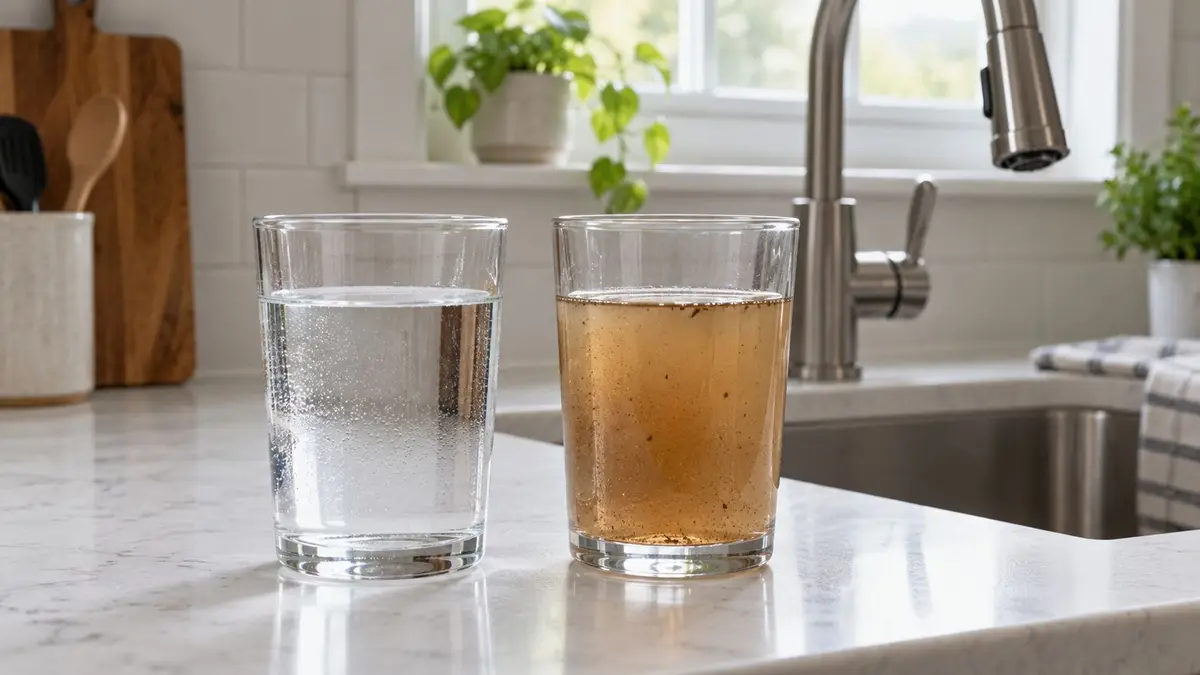
Start with clean, heat-safe clear containers. Set each container stably in the sink before gently opening the hot tap; keep hands and face away from the stream and never hold the container under it. Let the sample cool before lifting it, and keep children and pets away. Compare cold and hot water at a fixture near the heater and one farther away. A mixing valve or crossover can blend hot and cold streams and distort one tap’s result. Note the initial color and particles, then leave a covered sample in a safe place for about an hour. Particles visible immediately were already in the water; a sample that begins clear and browns later suggests dissolved iron or manganese oxidizing in air. Penn State Extension explains that distinction.
Cold water clear now does not prove it was clear when the tank last filled. A utility’s discolored-water guidance can help municipal customers identify a water-main disturbance. A well owner should investigate the source and treatment system too. Call the utility if neighbors or cold taps are affected; a private-well owner should arrange appropriate water testing.
| What you see | What it suggests | Next comparison |
|---|---|---|
| Hot brown at all fixtures; cold clear now | Tank or earlier supply event | Ask about recent utility work; compare tank sample |
| One hot faucet brown | Fixture or hot branch | Compare nearby hot fixture |
| Clear at first, darkens while standing | Dissolved metal in source water | Test well or supply water |
| Particles visible immediately | Oxidized sediment already in water | Compare hot, cold, and tank samples |
These are clues, not lab results. Give your plumber a photo of the fresh sample and its appearance after an hour.
How do you separate a tank problem from hot piping?
The reasoning is to compare water before and after it travels through the hot piping. The most useful professional comparison is a carefully collected sample from the heater’s drain valve versus samples from affected hot fixtures. If the tank sample is clear while several hot taps run brown, the material is likely entering or being released downstream in the hot piping. If the tank sample contains the same particles, investigate the tank and the water entering it. A plumber should collect the drain sample because hot water can scald and a neglected valve may fail to reseal.
Do not assume a rusty-looking sample identifies iron or the tank shell. Older hot piping can shed corrosion. A faucet aerator can hold particles from an earlier event, making one fixture look worse. The sample location and timing matter. Ask the plumber to write down which tap, tank valve, and cold-side point produced which result before recommending a new heater.
The tank-versus-piping distinction is especially valuable when replacement is proposed. A new heater connected to a deteriorating hot branch can deliver the same brown water. For a separate flow problem, use the one-faucet versus whole-house pressure guide. Conversely, repeated brown sediment from the tank plus corrosion or leakage at the shell moves the decision toward replacement.
When is the cause outside your house?
Municipal customers can ask the water utility about main work, hydrant flushing, pressure changes, and nearby reports. Follow the utility’s instructions for clearing or sampling cold water; do not assume a long hot-water flush will diagnose the source. The stored hot water may simply take longer to turn over. A utility can also tell you when to stop using water or seek a water-quality advisory.
For a private well, use an independent certified laboratory for iron, manganese, and other tests your state health department recommends. CDC’s well-testing guidance calls for regular testing and additional tests after changes in taste, color, or smell. Penn State’s guide explains why metal form and concentration change treatment choices. A licensed well contractor handles a well problem; a water-treatment professional interprets treatment options, while a plumber determines whether heater or piping contributes.
Red-orange color commonly suggests iron. Brown-black or black particles can suggest manganese. Slimy deposits or an odd swampy, oily, or musty odor call for laboratory testing for iron bacteria. Minnesota’s health department says these bacteria are not themselves a direct health threat, but they can create conditions where disease-causing organisms grow. That distinction matters because manganese has more than an appearance concern in some circumstances. Minnesota’s health department gives an infant-specific limit of 100 micrograms per liter when an infant drinks the water or formula made with it and 300 micrograms per liter otherwise. These are Minnesota recommendations, not a federal standard for your address. Ask your own state health department and obtain a lab test rather than interpreting color as a concentration.
Is brown water safe to drink or use?
For water you plan to consume, follow any utility advisory and take the sample from a cold tap. The EPA says never to use hot tap water for those purposes because lead dissolves more readily in hot water. Its lead information page says boiling does not remove lead. That rule applies even when the water looks clear.
The EPA’s secondary drinking-water standards address color, taste, and staining from iron and manganese and are non-enforceable aesthetic guidelines. They do not prove a brown sample is safe: color alone does not identify every substance in it. Well households, especially those preparing infant formula, should get testing and state-health-department guidance for manganese. If a public system issues a notice, follow that notice rather than a generic flushing suggestion.
Do not change the heater setting as a discoloration fix. CPSC urges 120°F to reduce scald risk, while CDC’s potable-water guidance calls for storage above 140°F with mixing valves close to fixtures. That tradeoff is real. A plumber should assess the model, household needs, and mixing equipment; a casual temperature change can create a different hazard without removing the source of color.
What inside the tank can turn water brown?
A tank can collect supply sediment and corrosion products. It also has a sacrificial anode rod, designed to corrode in place of exposed steel. A depleted anode can leave the tank more vulnerable. Brown water by itself does not prove the rod is spent or the steel shell has failed. A plumber can check model-specific maintenance requirements, inspect the rod where serviceable, and assess the tank for active leaks and rust streaks.
A Bradford White manual calls for anode inspection every two years and says water conditions can change that interval. It notes that softened or phosphate-treated water may increase anode consumption, so more frequent inspection is needed. For the cited Bradford White model, replacement anodes and consumption inspection are not covered; leaving a consumed rod in place risks voiding the tank warranty, while other component coverage remains intact. Those terms apply to that model, so read your own manual and warranty. A qualified plumber should isolate power and water for any anode service; removing the rod without replacement is not a fix. Avoid generic “replace every three years” advice detached from water conditions and model.
Flushing can remove some loose sediment, but it does not restore corroded steel or solve a well-water problem. An old drain valve that has not been opened in years may not seal afterward. That can convert an exploratory flush into an urgent service call. Have a plumber decide whether to sample, service, or leave that valve alone, especially if the heater is in a finished area.
When does brown water mean replace the heater?
Replace the heater when a plumber confirms a leaking tank shell or seam, or when condition and repair options make replacement the sound choice. Brown water without a leak calls for source and piping comparisons first. If the tank is wet, use the leaking-water-heater repair decision to trace the highest wet point. There is no verified universal service-life figure for this decision. Use the unit’s rating plate, model-specific warranty, maintenance history, and actual inspection findings. A separate hot-water-capacity problem can also influence the replacement decision.
If a plumbing professional proposes an anode replacement or cleaning, ask what sample or inspection supports it and what improvement to expect. If replacement is recommended, ask whether the color was found at the tank valve and whether the cold supply was tested. The answer should separate a tank problem from hot piping and source water.
What moves the price, and what should be in the quote?
No independent national price series was found for anode service, flushing, branch piping repair, or replacing a discolored-water heater. Quotes depend on access, whether a valve can be reused, water testing, piping material, heater type, and whether the problem extends into walls. Compare written scopes, not a headline average.
Ask for the diagnostic sampling and tests as one line, tank service as another, and any piping repair separately. If replacement is proposed, the quote should include appliance model, capacity, labor, removal, connection work, local permit and inspection requirements, and warranty terms. A water-treatment proposal should identify the tested substance and the water conditions it addresses. If there is actual water damage, the water-leak insurance guide helps document cause and timing. The cheapest answer is only useful if it treats the source of the color.
How can you keep the color from coming back?
Once the source is established, follow the specific heater manual for anode inspection and flushing, and follow the utility or well-testing plan for the incoming water. If piping released the particles, a new tank will not correct it. Keep a photo of the samples and note dates; recurrence after utility work, heater service, or a period of no use will be easier to interpret. The next step is the comparison that isolates the source, then a repair aimed at that source.
Frequently asked questions
Can I bathe in brown hot water?
It depends on the cause and any current utility advisory. Ask the utility or local health department before using it, especially if the source is unknown. Keep children away from a potentially scalding sample or fixture.
Should I do laundry while the water is discolored?
Wait until the discoloration clears and follow utility guidance. Iron and manganese can stain fabrics, and a washer load can hide that color until the cycle ends.
Will a filter or water softener fix it?
Only if testing identifies a contaminant and form the selected equipment treats. Dissolved metal, oxidized particles, and iron bacteria call for different approaches; a filter or softener will not repair corroded hot piping.
Will a new anode undo tank corrosion?
No. An anode protects remaining tank steel; it cannot restore metal already lost. Have a plumber assess the tank shell and warranty before authorizing anode work.
Sources
- EPA — Secondary Drinking Water Standards
- EPA — Hot Tap Water and Lead
- EPA — Basic Information About Lead in Drinking Water
- Maine CDC — Water Heater Checklist
- Minnesota Department of Health — Iron Bacteria in Well Water
- Penn State Extension — Iron and Manganese in Private Water Systems
- City of Madison Water Utility — Discolored Water
- CDC — Testing Well Water
- CDC — Legionella Control Toolkit
- Minnesota Department of Health — Manganese
- Bradford White — Installation and Operation Manual
- CPSC — Tap Water Scalds