A thin lawn, a puddle and a springy feel can all prompt the same sales pitch: aerate and dethatch. Yet those symptoms can come from different layers, or from shade and watering instead. A machine can stress a lawn that had neither problem.
Start with a small turf wedge and a soil probe. The results, together with your grass type, are more useful than an annual service calendar. University of Kentucky Cooperative Extension says compaction is uncommon on many lawns and warns that excessive cultivation can be as harmful as doing too little.
Cost depends on lawn area, access, method and number of passes. As a dated national commercial estimate, LawnStarter’s December 2025 update lists a typical aeration job at $107–$202 and a core-aerator rental around $100 per day plus a refundable deposit. Local quotes vary; there is no similarly verified dethatching price here.
What is the difference between core aeration and dethatching?
Thatch is a layer of living and dead stems, roots and runners between green grass and the soil surface. A thin layer cushions the lawn. A thick layer can block water and fertilizer and leave roots in the organic material instead of soil. Compaction is soil pressed so tightly that air and water have less room to move. One problem lies above the soil; the other is in it.
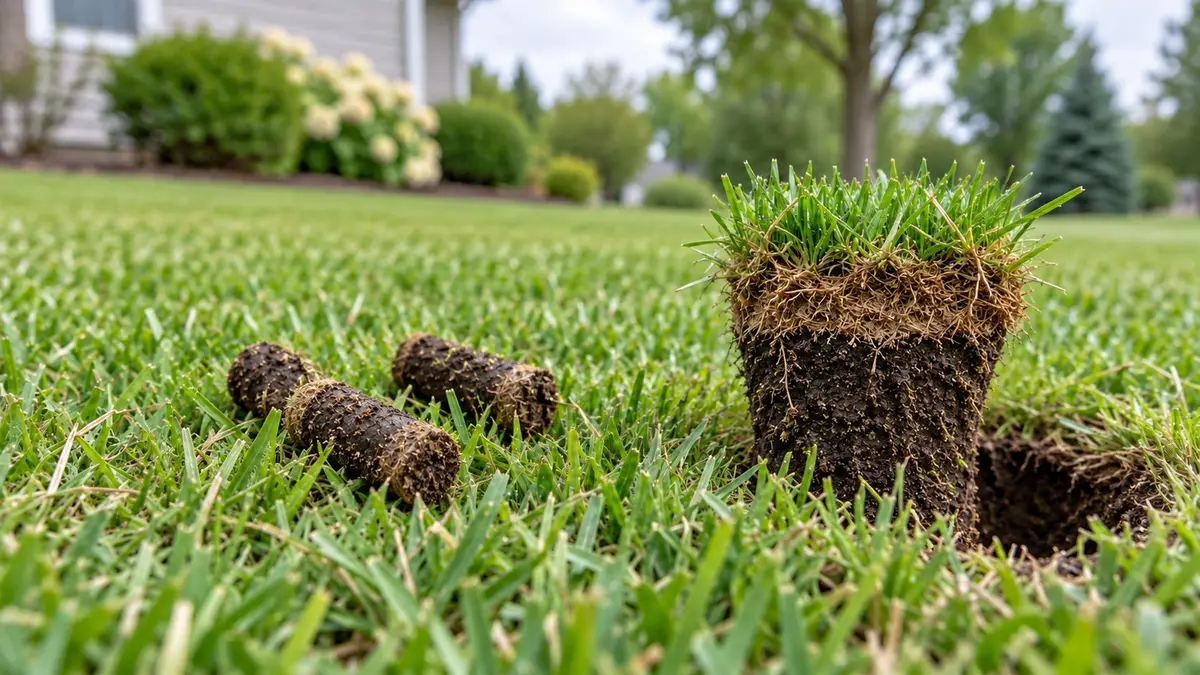
Dethatching, also called vertical mowing or power raking, cuts and pulls excessive thatch out. Core aeration uses hollow tines to remove soil plugs. The openings relieve compaction near the surface, while soil from the plugs can gradually help break down thatch. Wisconsin Extension’s lawn aeration guide describes both effects. Neither machine creates sunlight, fixes a broken sprinkler, or treats insects and disease.
| What you find | First direction |
|---|---|
| Thick brown layer above soil; moist soil probes easily | Consider dethatching for a thatch-prone grass. |
| Thin organic layer; moist soil resists the probe in traffic areas | Consider core aeration. |
| Both thick thatch and compacted moist soil | Discuss both treatments; no universal order is required. |
| Thin layer and easy probe | Do neither; investigate another cause. |
Does a spongy or hard lawn prove it needs treatment?
No. A spongy feel can suggest thatch, but a hard surface on a dry day can simply be dry soil. Purdue and Illinois turf specialists, in their 2006 guidance, associate heavy thatch with quick browning in heat and reduced water movement. Traffic, especially over wet soil, is a common cause of compaction, according to Kentucky. Newer lots can also have thin topsoil over dense subsoil.
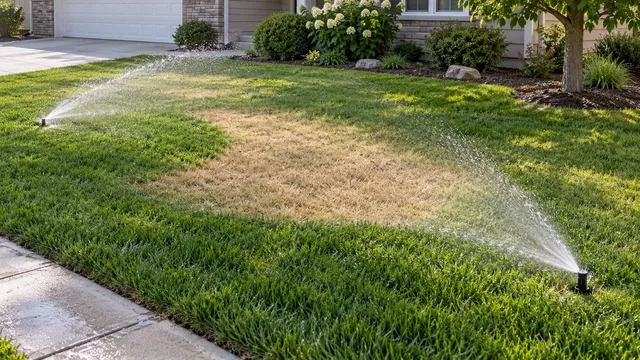
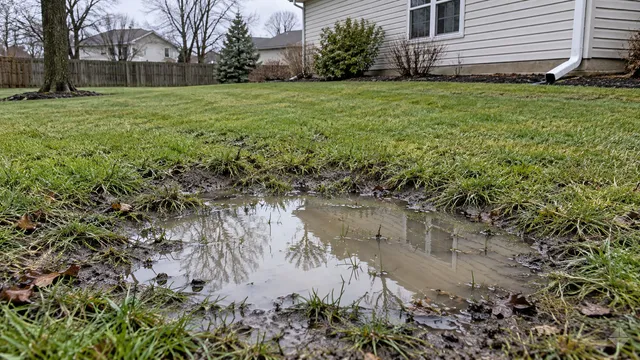
Look for a pattern. Is the hard strip where people or pets cross? Does water pond in a low area while the nearby ground is easy to probe? That can point toward grade or drainage; persistent muddy yard conditions need their own diagnosis. If just one arc stays dry while sprinklers run, compare actual sprinkler coverage before treating the soil.
Tall fescue is an especially important exception. It grows in bunches and rarely develops enough thatch to be a problem. A service recommending dethatching for tall fescue needs to show the measured layer, not just point to a springy step.
How do you check thatch and compaction before renting anything?
First identify your grass. Your county Cooperative Extension office can help if you cannot distinguish tall fescue, Kentucky bluegrass, St. Augustinegrass and other common types. Then make both checks in several parts of the lawn, including a healthy comparison spot.
- Cut a small triangular wedge of turf, about three inches long and two inches deep, as Wisconsin recommends. Keep away from sprinkler lines and any marked utility. Look at the side: green blades, a brown fibrous layer, a soil-mixed mat, then mineral soil.
- Measure only the brown organic thatch, excluding the mat where soil and decomposed stems mix. Record depths at several sites. Replace the wedge.
- When soil is slightly moist but not waterlogged, press a screwdriver or blunt probe into a traffic area and a quiet comparison area. Kentucky’s test asks whether a knife enters moist soil with modest thumb pressure. Resistance in wet or moist soil where traffic occurs supports compaction; a dry-ground test does not.
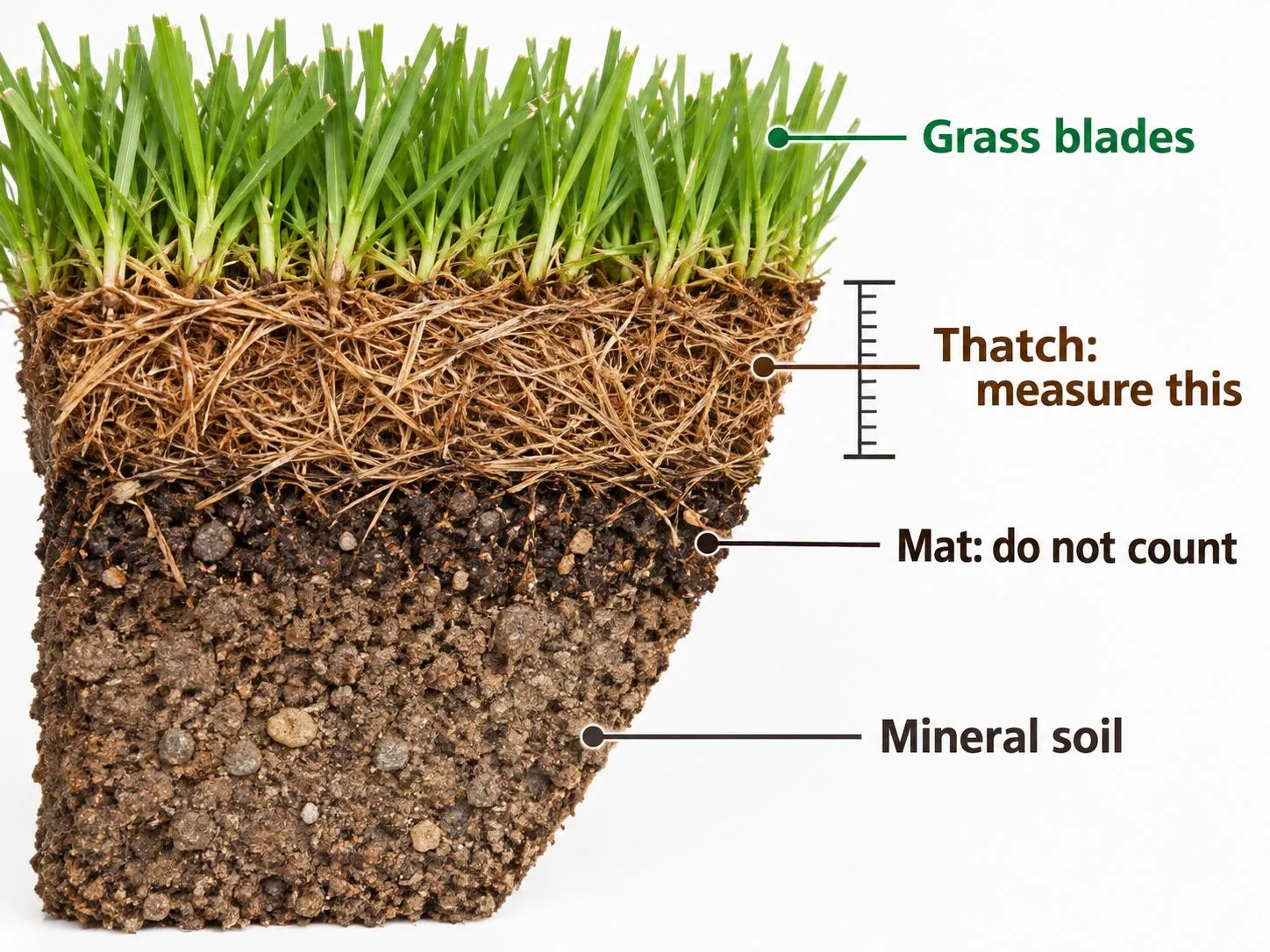
Measure the fibrous thatch above the soil-mixed mat; exclude the mat from the thatch depth.
Avoid a made-up rule such as “the probe stopped at two inches, so aerate twice a year.” The test compares places under similar moisture; it does not set a service frequency. Sandy soil is less prone to compaction, Wisconsin notes, so a hard surface there deserves another look at moisture before you pay for coring.
How thick must thatch be before you dethatch?
There is no one depth for every grass. Kentucky, Clemson and Purdue commonly use about one-half inch as an action point. University of Florida IFAS uses over one inch for St. Augustinegrass. Wisconsin says aeration is generally unnecessary for thatch under three-quarters of an inch and discusses treatment over an inch. Measure the right layer and use your species’ local guidance.
If thatch exceeds about an inch across the lawn, aggressive dethatching may cause more damage than improvement. Kentucky and Purdue discuss renovation as a realistic alternative. The overseed-or-start-over decision helps with that broader choice. Core aeration is gentler but slower for thatch; Purdue says repeated years can be needed to bring a heavy layer down.
The grass itself changes how much recovery it can tolerate:
| Grass type | What to know before dethatching |
|---|---|
| Tall fescue or perennial ryegrass | Bunch grasses; meaningful thatch is rare. Check for compaction or another cause. |
| Kentucky bluegrass | Can build thatch; work in cool-season active growth, not summer heat. |
| Hybrid bermudagrass | Can build thatch; plan work after full green-up while growth is strong. |
| Zoysiagrass | Can build thatch, but extensions disagree about vertical mowing; ask the state extension office. |
| St. Augustinegrass or centipedegrass | Use a professional familiar with wider blade spacing and limited passes. |
Clemson’s thatch guide calls for roughly two- to three-inch blade spacing and restrained passes on St. Augustinegrass and centipedegrass. NC State warns that a one-inch-spaced power rake can severely damage centipedegrass. Zoysia is a genuine disagreement: Kentucky advises against dethatching because recovery can take months, while Purdue and Clemson allow summer vertical mowing. Ask your state extension office before accepting a standard machine setting.
When should you aerate or dethatch for your grass type?
Do either job during active growth, when the lawn can fill openings. Cool-season grasses usually recover best in early fall; spring is a second window but overlaps with weed germination. Warm-season grasses need to be fully greened up, generally late spring through early summer, with several weeks of growing weather left. Exact dates change by climate and season.
Slightly moist soil helps a core machine pull useful plugs. Saturated soil can be smeared and compacted; drought-hardened soil makes coring difficult. Wisconsin cautions that coring during hot, dry periods can dry the grass. Postpone a scheduled job when conditions are wrong rather than treating the date as a deadline.
Opening the canopy can also let weeds establish. Clemson’s aeration guide recommends applying some pre-emergent herbicides after aeration, but the product label governs its use and the seeding interval. If you plan to seed as well, coordinate both with that label. Why weeds keep returning explains how an open lawn invites another generation.
What does an effective core-aeration job look like?
The machine should pull actual soil plugs, not just poke holes. Iowa State Extension and Purdue describe tines around two to three inches deep and roughly 20 to 40 holes per square foot for effective coverage. That often takes more than one pass. Purdue’s table makes the limit visible: three-quarter-inch tines at two-by-two-inch spacing affect only about 11% of the surface. A quick, widely spaced pass may leave most compacted ground untouched.
Ask the provider what tine depth, hole density and number of passes they intend, and what they’ll do if soil is too wet or dry. Soil plugs can stay on the lawn and break down. A proper dethatching job uses suitable blades, then removes the pulled debris; a flexible rake-tine mower attachment is not a substitute. Expect some ragged appearance during recovery. Water according to your grass and local extension guidance, and avoid guessing a single fertilizer rate after the work.
Spike shoes and rollers push soil aside rather than removing a core. They may worsen local compaction. University of Nebraska–Lincoln Extension says there is no evidence liquid aeration products have been scientifically evaluated for effectiveness and describes no chemical substitute for core aeration. Don’t pay for either as equivalent to a hollow-tine job.
Should you rent a machine or hire a lawn service?
The small checks are straightforward. The full job depends on equipment weight, slope, obstacles and buried lines. Flag every sprinkler head and valve box, and identify shallow irrigation, landscape lighting and pet-fence wires. 811 directs homeowners to their state center for utility notices; rules and notice periods vary. Public utility marks do not necessarily identify private lines. OHIO811 specifically notes private systems may need a separate locator. Skip areas where a line may be shallower than the tines until it is identified.
For a quote, give the grass type, wedge measurements, moist-soil test result, recent herbicide applications and planned seeding. Ask for measured lawn area, core versus spike method, tine depth, passes, debris haul-away for dethatching, and separate prices for overseeding or fertilizer. Seek another opinion if someone proposes annual aeration without a soil check or aggressive dethatching on tall fescue or a sensitive warm-season lawn.
What if neither treatment matches your lawn?
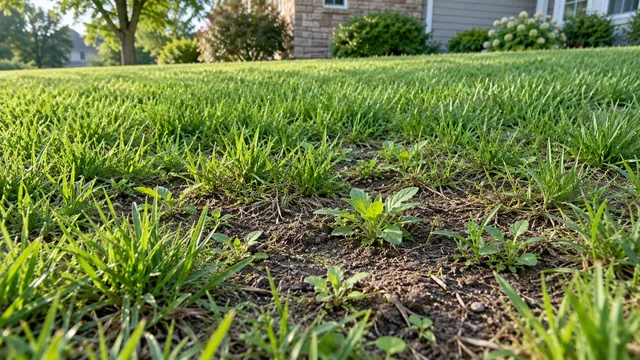
Move to the visible pattern. Brown patches in the lawn can come from watering, insects or disease. Grass failing under trees points toward light and roots. Poor mowing can also cause widespread stress; Purdue calls improper mowing a leading cause of lawn problems.
If thatch keeps rebuilding, look at the management behind it: heavy nitrogen, excess watering, acidic soil and reduced decomposition can contribute. Leave normal grass clippings; multiple extension sources say they do not make thatch. A soil test and an irrigation check may prevent the next unnecessary machine pass.
Frequently asked questions
Can I aerate and dethatch in the same season, and does the order matter?
Yes, when both a thick thatch layer and compacted soil are confirmed and the grass is actively growing. The extension sources describe complementary effects but no universal order. Have the provider plan intensity and recovery for your grass type.
My lawn is tall fescue. Should I ever dethatch it?
Rarely. Tall fescue usually does not build a problem thatch layer. Show a measured layer before agreeing to dethatch; compaction, shade, irrigation and disease are more plausible things to check.
Will aerating ruin the crabgrass preventer I already put down?
Don’t assume either outcome for every product. Clemson recommends applying some pre-emergents after coring, while labels vary. Check your product’s label and ask your state extension office how to coordinate aeration and seeding.
Should I pick up the soil plugs after aeration?
No. Leave cores on the lawn; they break down with rain, watering and mowing and help mix mineral soil into the organic layer.
How long does a lawn take to recover after dethatching?
It depends on grass, season and treatment intensity. Expect a ragged appearance during regrowth; Kentucky warns zoysia can take several months after aggressive work. Do it during active growth, not heat or dormancy.
Is my mulching mower causing thatch?
No. Kentucky, Wisconsin, Purdue and Florida extension guidance say ordinary grass clippings do not cause thatch buildup. Thatch comes chiefly from stems, roots and runners accumulating faster than they decompose.
Sources
- University of Kentucky Cooperative Extension — Aerifying and Dethatching Lawns
- University of Wisconsin-Extension — Lawn Aeration and Topdressing
- Purdue University / University of Illinois Turfgrass Programs — Mowing, Dethatching, Aerifying and Rolling Turf
- Iowa State University Extension — Core Aeration of Lawns
- Clemson Cooperative Extension — Aerating Lawns
- Clemson Cooperative Extension — Controlling Thatch in Lawns
- University of Florida IFAS Extension — St. Augustinegrass for Florida Lawns
- NC State Extension — Centipedegrass Lawn Maintenance Calendar
- University of Nebraska–Lincoln Extension — Liquid vs Mechanical Lawn Aeration
- OHIO811 — Homeowners
- 811 — 811 Before You Dig
- LawnStarter — How Much Does Lawn Aeration Cost in 2026?