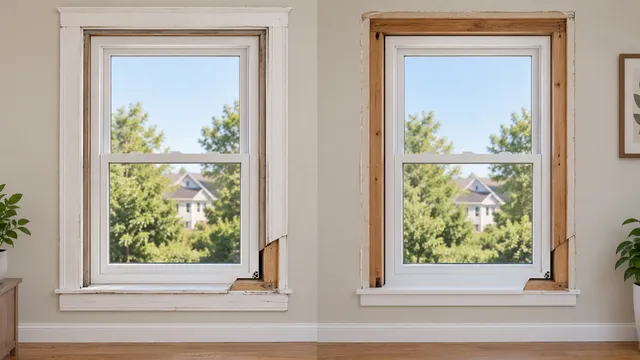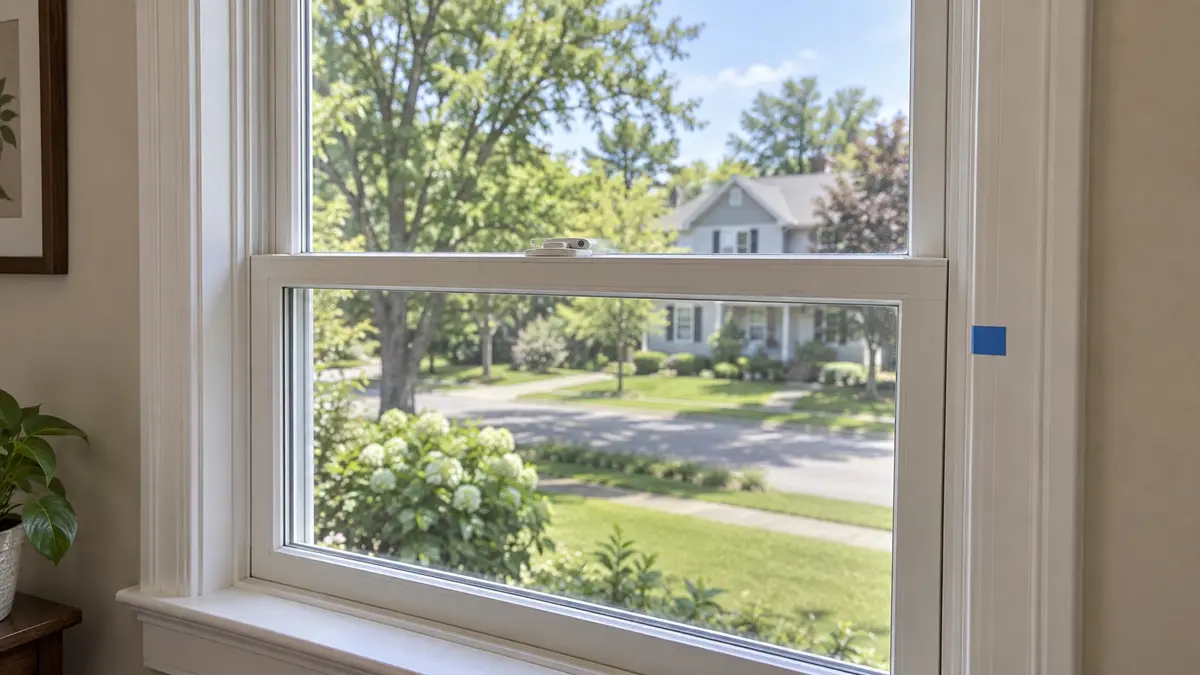
You lift the lower sash and it slowly slides back. Or it drops right after you tilt it in for cleaning. The window may look worn out, but a failed or disconnected balance is a different expense from a new assembly.
Two commercial cost guides disagree on typical ranges, and neither is a quote for your window. This Old House’s June 2026 guide lists $35–$110 for sash-cord repair and $180–$530 for a double-hung repair. Fixr’s January 2026 guide lists $75–$500 for cords, balances, or springs and $180–$600 for a double-hung repair. Access, parts, sash size, wood work, and local labor change the total. Identify what failed before comparing it with replacement.
What should you do now if a double-hung window won’t stay open?
Keep a dropping sash closed and locked. A loose prop can slip, and a falling sash can pinch fingers. On an upper floor, do not lean out or remove the sash to investigate. Arrange a window repair technician to assess the dropping sash even if you do not plan to open it now.
If children use the room, treat a failed sash as urgent. The Consumer Product Safety Commission recommends window stops that limit an opening to 4 inches, opening from the top when possible, moving furniture away, and never relying on a screen to prevent falls. A top sash that drifts down defeats the intended opening limit. For a sleeping-room escape opening, a sash that cannot be opened and kept usable also needs prompt repair. Saint Paul’s Minnesota code handout shows IRC-based language calling for normal operation from inside without keys, tools, or special knowledge. Codes are adopted and amended locally; ask your building department about this opening.
What holds up a double-hung sash?
The balance offsets the sash’s weight as it moves in the side jamb. Older wood windows often use a cord over a pulley connected to a hidden counterweight. Modern windows may use a spiral tube, a block-and-tackle channel, or a constant-force coil. Tilt windows also have a pivot bar on the sash that engages a shoe in the jamb. A failure on either side can leave the sash crooked or heavy.
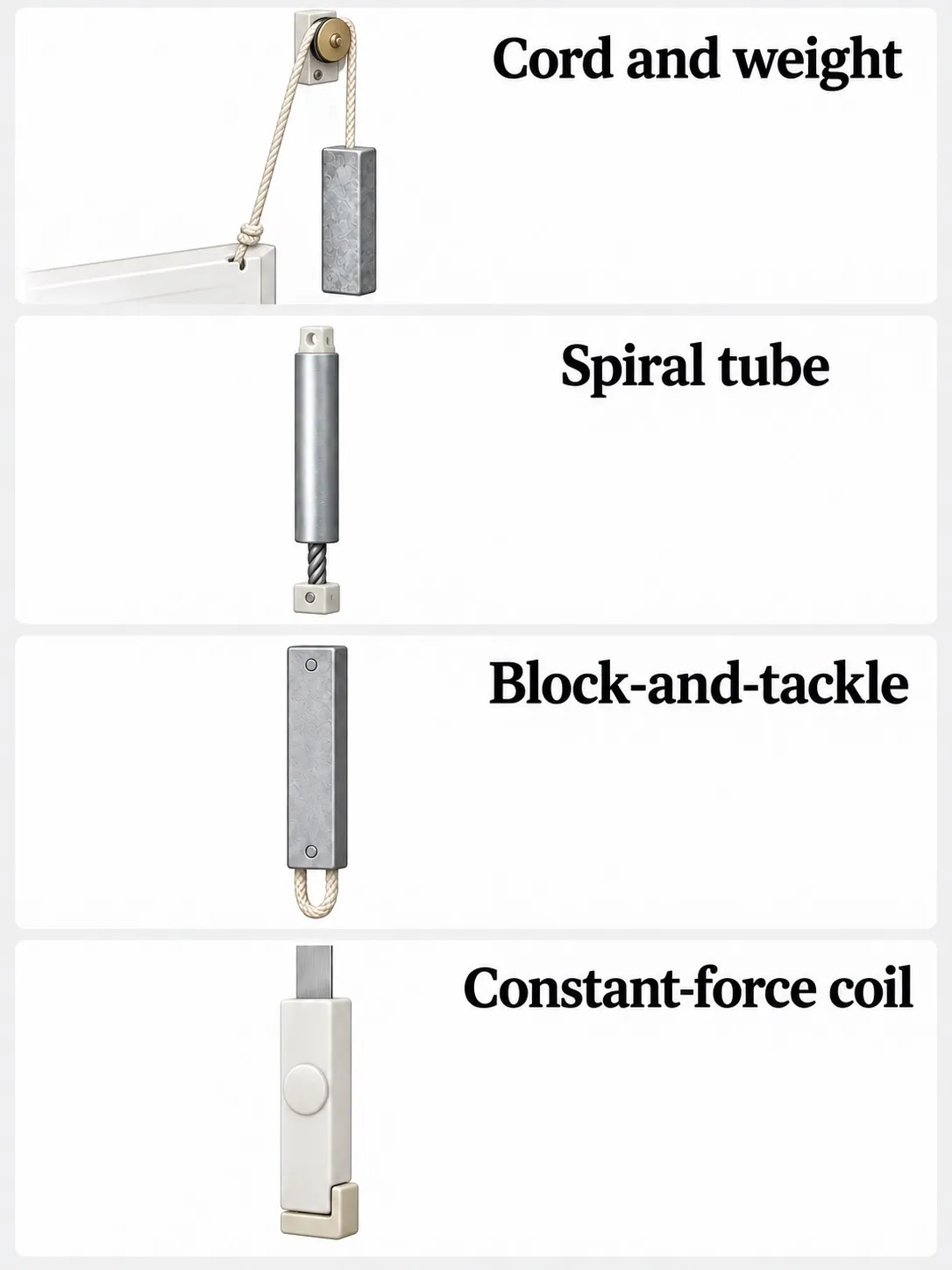
These are generic recognition cues, not exact replacement parts. A window repair technician identifies the system without opening a tensioned balance.
Window Hardware Direct’s identification guide describes the visual cues for these systems. From inside, with the sash closed, you may see a cord near a pulley or a narrow channel, tube, or shoe in the jamb. Do not remove a balance to identify it. Photograph a visible maker label or glass etching and the entire window; a technician can identify less obvious systems from the model and parts.
What does the way the sash moves tell you?
Use the failure pattern to describe the problem to a window repair technician. It is a clue, not a substitute for checking both sides of the jamb.
| What you see | Possible cause | Safe next move |
|---|---|---|
| Drops after tilt-in cleaning | Pivot not seated in shoe | Find maker’s reset instructions |
| Hangs crooked | One side disconnected or broken | Photograph; call repair technician |
| Slowly drifts down | Weak or mismatched balance | Ask for weight-matched diagnosis |
| Suddenly slams shut | Balance or cord disconnected | Keep closed; call repair technician |
| Creeps up after repair | Replacement too strong | Have installer check part rating |
| Top sash drifts down | Upper-sash balance or seating | Keep closed; call repair technician |
A sash that will not move at all may have paint, swelling, debris, or hardware trouble rather than a weak balance. See why a window will not close or lock before buying a balance. A drifting top sash also creates a gap that may feel like a weatherstripping problem; the sash must be held in place first.
What can you check without taking the sash apart?
With the sash closed and locked, compare the visible shoes or parts at both jambs. Is one visibly lower, bent, or detached? Look for a broken cord or a cord painted into an old pulley. Note whether the upper sash fully seats. Record which sash fails, when it started, and whether the window tilted for cleaning immediately beforehand. Check the maker’s care instructions for any model-specific reset guidance.
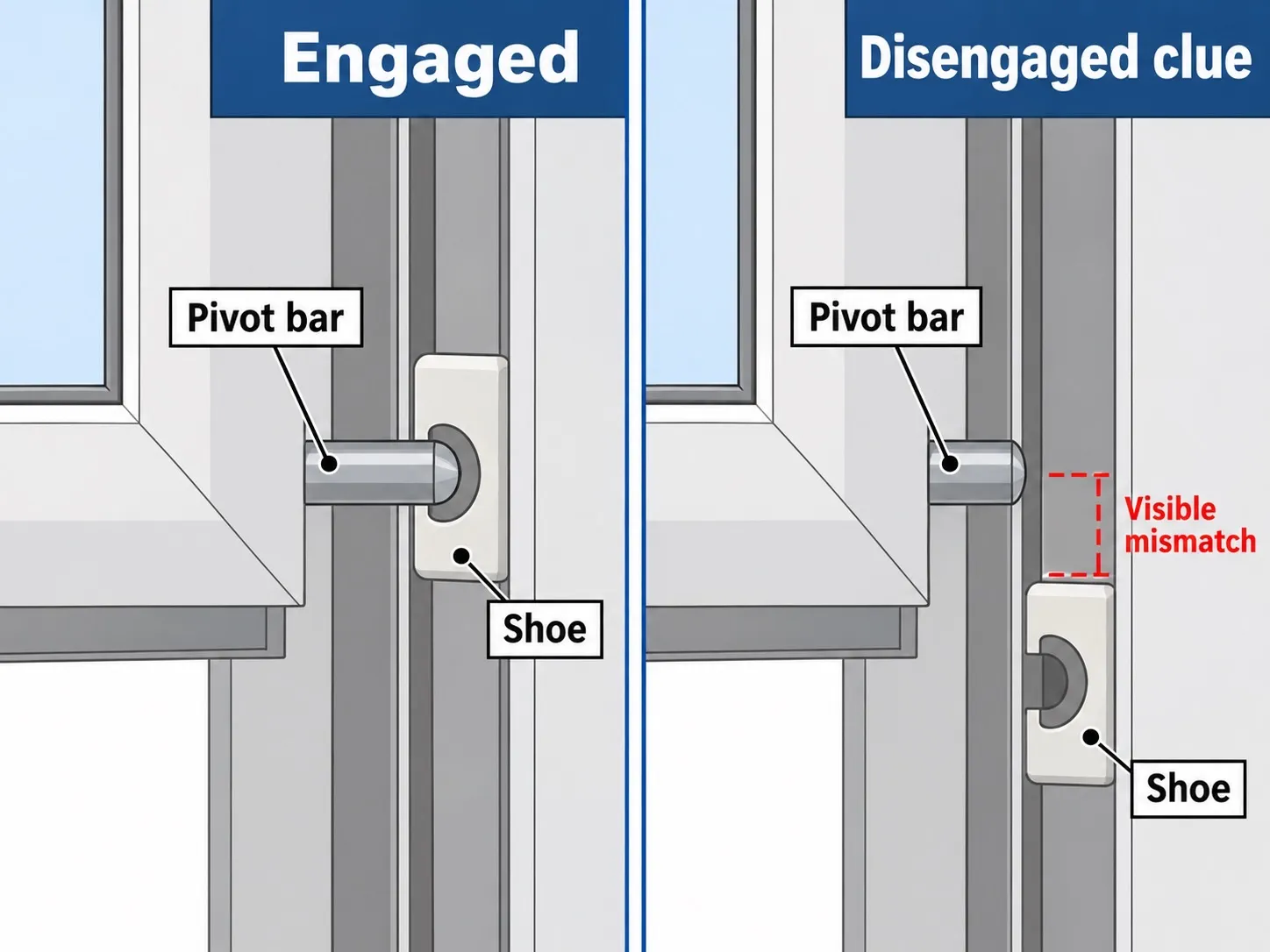
A visible mismatch is a clue for a window repair technician. These cutaway parts are not visible on every closed window.
A pivot shoe can become disengaged during tilt-in cleaning. Re-seating can be a manufacturer-documented homeowner task on some tilt windows, but the movement and lock position vary by design. Do not follow a generic spring-release tutorial. Tensioned balance springs can release suddenly and cause injury. Stop and call a window repair technician when a part is broken, loose, or requires spring handling, or when the sash is too heavy to control. On a pre-1978 painted window, avoid scraping or prying until a lead inspector or risk assessor evaluates the paint.
Why must replacement balances match the sash?
A balance of the correct length can still be wrong for the window. AmesburyTruth’s balance catalog lists specific lengths and sash-weight capacities. A weak pair lets the sash sink; an overly strong pair can make it creep upward or resist closing. Tilt and non-tilt hardware, shoe shape, pivot bar, and lock engagement also matter.
Before buying parts, gather the maker and series, a visible balance stamp, dimensions, whether it tilts, and the sash’s approximate size. A window repair technician can identify or weigh the sash, match parts, inspect both sides, and test several opening heights. Ask the repairer whether this model requires both sides to be replaced together; part rating and condition on each side determine the scope. A balance swap will not repair a rotted frame, failed insulated glass, or a sash that no longer fits squarely.
Are old wood windows with cords and weights worth repairing?
Often, yes, if the wood is sound. The National Park Service’s 1981 preservation brief calls re-cording a common repair and describes adjusting weights. Peeling paint alone is not proof of rotten wood. A window restoration carpenter can check the wood, pulleys, weights, putty, and sash joints while planning a cord repair.
The same visit can address a rattling pane, worn weatherstrip, or a meeting-rail lock that does not pull the sashes together. The DOE’s 2012 wood-window guideline describes old weight pockets as air-leak paths and spring jamb liners as one rehabilitation option. A restorer can explain whether that approach suits the opening. To improve comfort while keeping sound frames, compare storm windows with replacement. Historic district rules may constrain a replacement; check with the local preservation office.
What changes if the house was built before 1978?
Painted window friction surfaces may contain lead. For paid work in pre-1978 housing, EPA says fixing a broken balancer or replacing a pane is not “window replacement”. The work is still covered by the Renovation, Repair and Painting rule unless it fits the minor-repair exception. EPA’s thresholds are 6 square feet or less of interior paint per room and 20 square feet or less outdoors. For a removed painted component, its full removed surface area counts. Jobs in the same room within 30 days are combined under EPA’s minor-repair explanation. The contractor must verify every exemption condition, including that the work uses no prohibited or restricted practice and involves no demolition of painted surfaces.
EPA’s sash-swap FAQ says removing and replacing a sash by releasing its jamb liner is not window replacement and is likely under the minor threshold when only small painted areas are disturbed. Replacing the entire window, of any size, is a renovation rather than minor repair. These are different scopes. Do not assume an old window contains lead or that a small repair is exempt without assessing paint disturbance. EPA recommends certified firms for paid work and lead-safe practices for homeowners; some states run their own programs. Ask the contractor how they will contain and clean the work. For the broader paint decision, read what to check before scraping or sanding in a pre-1978 home.
Repair the balance, buy a sash kit, or replace the window?
Think in increasing scope. A technician might first confirm a disengaged shoe or pivot. Broken or under-rated balances require parts matched to the sash; an old weight window may need new cords. Next come sash-joint, wood, glazing, or jamb-liner repairs. A factory sash kit changes the sashes while keeping the existing frame. Insert or full-frame replacement comes last when frame condition and installation details justify it.
Do not assume the kit is the bargain middle option. The DOE’s 2012 guideline describes sash replacement kits as costing as much as, or more than, an equivalent replacement window; actual prices vary. Sound frames, available parts, one or two failed windows, and historic value favor repair. Rot, an out-of-square frame, missing parts, or several defects push toward a larger quote. Fog between panes can require new sealed glass or a sash alongside the balance work. Compare insert and full-frame replacement when the frame is suspect.
If changing the style or opening size of a bedroom window, ask the local building department about escape-opening rules before ordering. The Saint Paul handout is one local example; it describes conditions for a replacement-window exception, not a nationwide pass for any smaller opening.
What should a balance repair quote include?
Call a window repair specialist or the manufacturer’s authorized service network for branded tilt units. For old wood, call a window restoration carpenter. Give them the maker, floor, sash that fails, failure pattern, home age, and photos. Ask them to identify the balance type, check both jambs, shoes, pivots, lock, sash fit, rot, and glass seal before quoting.
The estimate should separate service and diagnostic fees, parts per sash, labor, wood or glazing repair, upper-floor access, lead-safe setup when applicable, disposal, and a test at several opening heights. Ask whether parts are original or equivalent, whether both sides are being replaced, and what parts and labor warranties apply. If a first quote replaces every window because one sash drops, get a repair opinion that names the failed part. Check your product warranty documents; balance coverage differs by maker, product, purchase year, and ownership transfer.
Frequently asked questions
Why did my window stop staying up after I tilted it to clean?
A pivot may no longer be seated in its jamb shoe. Keep the sash closed and use only the maker’s instructions for that model; a window repair technician should handle a broken shoe or tensioned spring.
Can I replace just one balance?
That depends on the model and what failed. Ask a technician to inspect both sides, match each part to the sash weight, and explain whether one or both sides need replacement.
Why does a new balance make the sash creep up?
It may be rated too strong for that sash or mismatched with the opposite side. Have the installer check the part number, sash weight, and both balance assemblies instead of adding friction or a prop.
Is re-cording old wood windows worth it?
Often, when the wood and frame are sound. A restoration carpenter can quote cords, pulleys, weights, and related sash work; compare that scope with replacement only after the wood condition is known.
Is a dropping window a problem in a child’s bedroom?
Yes. Keep it closed and locked and arrange prompt repair. CPSC says screens are not fall barriers and recommends limiting child-accessible openings; an escape window also needs reliable operation.
Does the warranty cover broken balances?
Coverage varies. Find the maker, series, purchase information, and your warranty documents, then ask the maker or dealer about parts, service labor, and transfer rules before paying out of pocket.
Sources
- U.S. EPA — Window Repair and the RRP Rule
- U.S. EPA — Sash Replacement and the RRP Rule
- U.S. EPA — Minor Repair and Maintenance Activities
- U.S. EPA — Renovation, Repair and Painting Program: Consumers
- National Park Service — Preservation Brief 9
- DOE Building America — Wood Window Repair, Rehabilitation, and Replacement
- City of Saint Paul — Emergency Escape and Rescue Openings
- U.S. CPSC — Window Falls Warning
- AmesburyTruth — 135 Series Balances
- Window Hardware Direct — Window Balance Guide
- This Old House — Window Repair Cost
- Fixr — Window Repair Cost