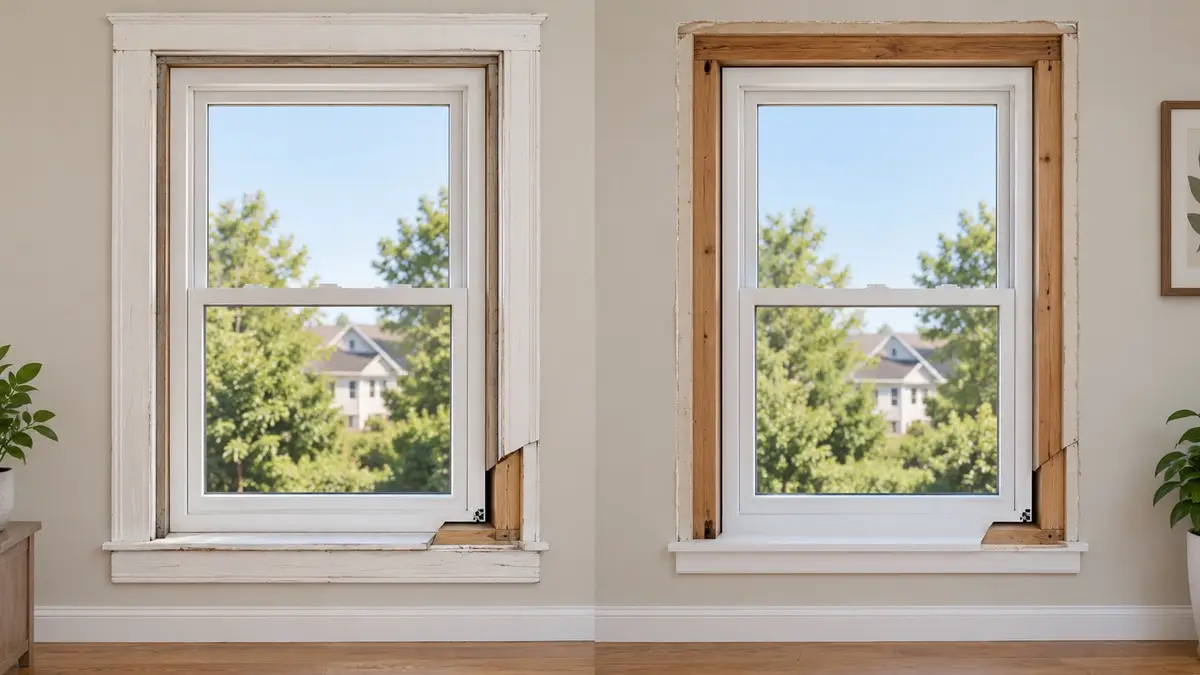
One contractor wants to slide new windows into the old frames. Another wants to remove the frames and trim. Those bids buy different work, so the price gap means little until someone shows you what condition each opening is in.
There is no reliable national per-window average that compares identical insert and full-frame scopes. The cladding, trim, frame repairs, access, and local labor differ. Ask for itemized bids on the same windows before deciding which price has better value.
What do window inserts and full-frame replacement actually remove?
An insert, also called a pocket or retrofit window, places a new framed unit inside the retained old frame. The old sash and balance hardware come out; interior and exterior trim generally stay. A full-frame installation removes the sash and old frame to expose the rough opening, the wall opening around the window. That permits inspection and new flashing integration, but trim, siding, stucco, or interior finish may need restoration. The U.S. DOE Building America guides describe insert and complete window-and-frame work as distinct scopes.
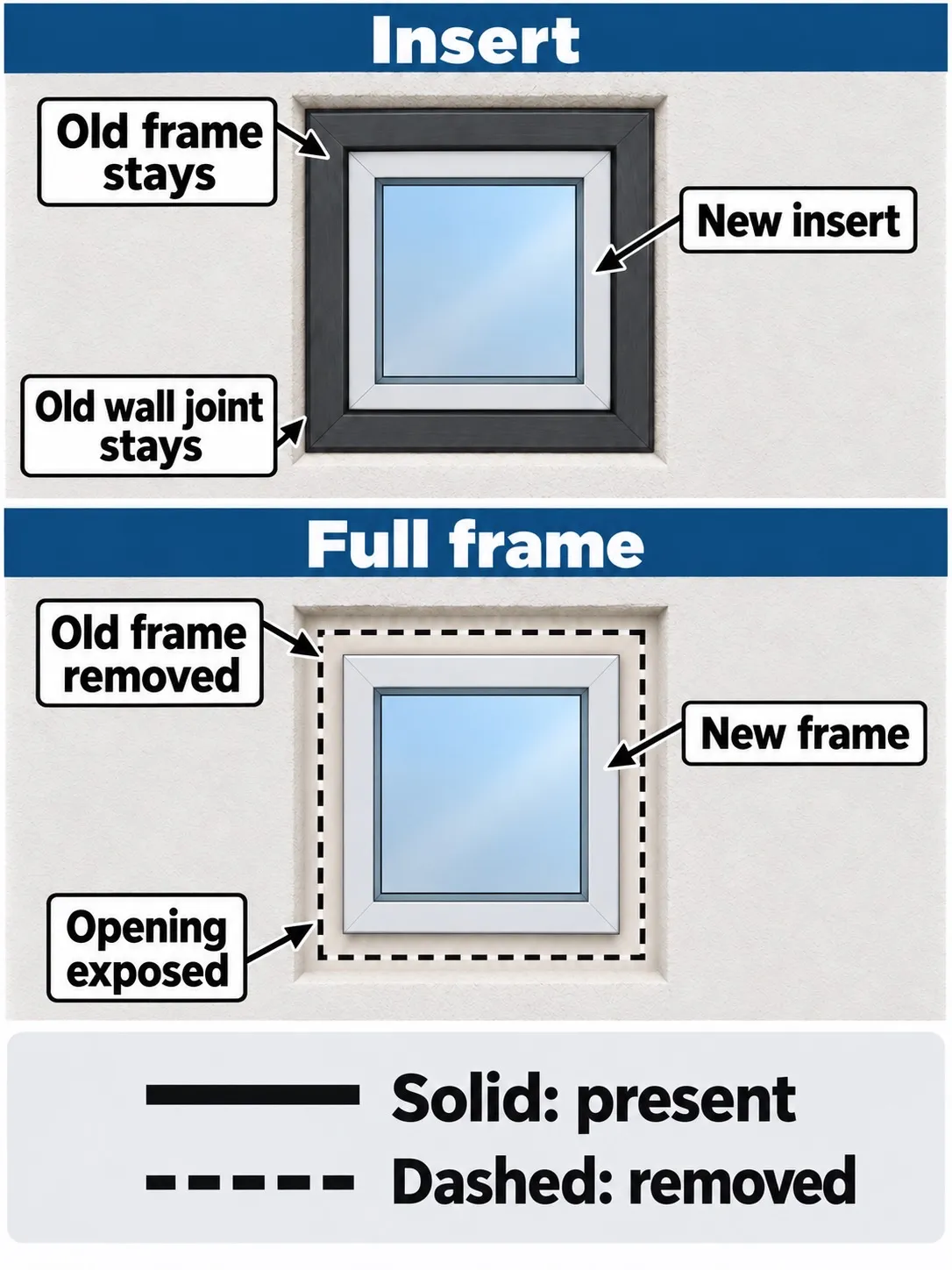
Solid outlines show retained material; dashed outlines show the removed old frame. This is a scope comparison, not an installation detail.
The terms block frame, flush fin, and Z-bar describe particular product and installation forms; contractors sometimes use them loosely. Ask each bidder to write down which old components remain, what new frame goes in, and how the opening will be sealed and drained. An insert can preserve valued trim and reduce disruption. Its nested frame also narrows the view. Full-frame opens that joint for correction, with more finish work and cost.
There are other paths. A sash replacement kit changes moving sash parts while retaining the frame. An old, sound wood window might be repaired and paired with a storm window; see storm windows versus replacement windows. Those are different quotes again.
Is the old frame sound, usable, and dry?
Treat “good frame” as three questions, asked for each window:
| Question | What to look for | If it fails |
|---|---|---|
| Is the material sound? | Sill and lower jambs without splits or decay | Repair damaged material before an insert |
| Is the shape usable? | Sash closes evenly; frame is square enough for selected unit | Installer checks product tolerances; reframe if needed |
| Is the opening dry? | No recurring stains or leaks around frame-to-wall joint | Trace water path before covering it |
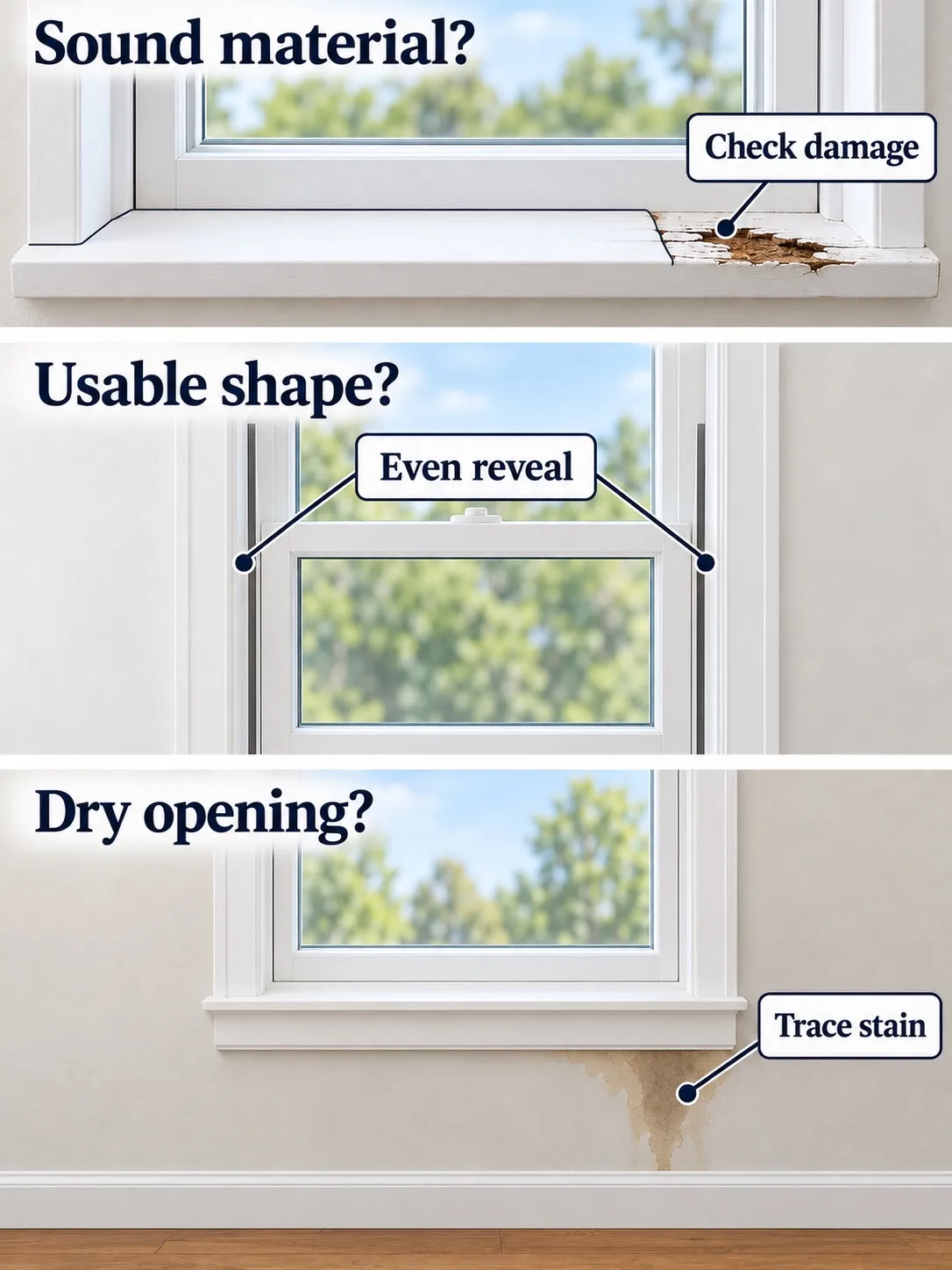
Material condition, shape, and water entry are separate checks. A stain needs its source traced before choosing the replacement scope.
A frame can be solid and square while rain slips around it into the wall. JELD-WEN’s measurement guide says a replacement window does not eliminate existing decay or water leaks around the existing frame; those need fixing first. Ask which contractor warrants leakage around the opening, along with the product warranty.
Frame geometry has measured limits, but there is no universal homeowner pass mark. JELD-WEN gives particular square, level, plumb, width and height tolerances for its products. The chosen unit’s own instructions control. The material also matters: old wood frames are the classic insert base, while Marvin says inserts usually are not an option in vinyl frames. That is one manufacturer’s guidance, not a rule for every system. Stucco work may use a flush-fin unit in a retained frame when the opening is dry.
What can you check before a window quote?
Make a simple window list: room and wall, frame material, when water or sticking appears, and photos. Indoors, look below the corners for bubbled paint, staining, swollen trim, or soft-feeling wood. Outside, only from the ground, note low paint failure, sill drainage, visible gaps at sill-to-jamb joints, and any wrap or capping that blocks the view. Does the sash bind or meet the sill unevenly? A rough diagonal measurement, taken without prying trim, can tell a bidder where to check square; it is not a final installation measurement.
The National Park Service’s 1981 guidance describes surveying windows one by one and notes that decay often begins at sills and lower joints. A contractor can probe suspect wood and may need to remove trim to see its condition, as JELD-WEN notes. Do not dig into painted wood yourself, particularly in pre-1978 housing. Ask the contractor to photograph what they find and explain whether any discoloration is in the frame, surrounding wall, or merely the finish.
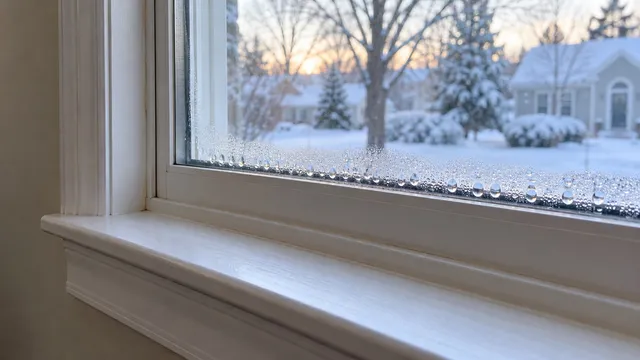
A stain does not by itself tell you where water entered. If it appears only during storms, trace a wind-driven rain leak before ordering inserts. If moisture collects on the room side of glass and then runs onto a sill, distinguish condensation from a leak before concluding that the wall joint failed.
Does peeling paint mean the frame is rotten?
No. The National Park Service warns that paint failure should not be mistaken for proof that wood is beyond repair. Paint can hide a sound frame or a damaged core; a qualified contractor’s probe helps distinguish them. Do not accept either “it is all rot” or “it is only paint” based on a photo of flaking finish.
Small, localized decay may be repairable by a window restoration specialist or carpenter. DOE’s insert guide says cracked or rotting sills need replacement before insert work. That does not mean an insert is impossible afterward. Advanced decay in the sill or lower jamb, or rot continuing into a rough sill or wall, changes the scope. Frame rot can indicate water reached adjacent wall materials; it cannot establish unseen damage without opening the area.
Aluminum capping over old trim can hide what is underneath. Ask the contractor how they confirmed the wood’s condition before proposing to retain it. In a pre-1978 home, any paint-disturbing inspection must follow lead-safe rules. A repair followed by an insert can be the right middle path when the water source is fixed and enough frame remains sound.
When is an insert a reasonable choice?
A dry, sound, sufficiently square existing frame, with trim worth keeping, is the straightforward case. Inserts limit disturbance to plaster returns and exterior cladding. In brick or stucco walls, that can save substantial finish work. Andersen’s stucco guidance describes flush-fin units that fit retained frames and preserve stucco; the cited 100 Series flush-fin units are limited to openings with an aluminum frame with a 3/8-inch-wide exterior surface and are not permitted for tear-out replacements or openings over three stories above grade. These restrictions are product-specific. Other products have their own instructions.
The installation still needs more than a unit fitted into a hole. DOE’s insert guide calls for old sash-weight pockets to be air-sealed and insulated and for water drainage at the sill to remain workable. Ask the bidder how it will treat pockets, the sloped sill, sealing, and drainage under the chosen manufacturer’s instructions. This is a scope question for the installer, not a reason for a homeowner to open the wall.
An insert does not fix an established leak behind the existing frame. Before accepting one at a stained opening, ask the contractor to demonstrate that water was coming from a solved sash or condensation problem rather than the frame-to-wall connection. “The wood feels firm” answers only one of the three frame questions.
When does full-frame replacement earn its price?
Full-frame work makes sense when a sill or jamb cannot support an insert without substantial repair, the old frame cannot meet the new unit’s fit requirements, the window size or operating style changes, or water damage around the frame needs access. It lets a contractor inspect the rough opening and connect new flashing to the weather-resistive barrier, or WRB, the drainage layer behind cladding. DOE’s complete replacement guide calls for deteriorated materials to be removed and replaced and describes cladding removal to integrate the window with the wall.
If siding will come off anyway, the contractor may have practical access to that wall layer. Conversely, stucco and brick can make opening and restoring the finish more involved. Ask for a region- and wall-specific method rather than a universal recommendation. Full-frame replacement is also irreversible; a historic home may need local preservation approval before that work.
The method has a limit: DOE says replacing the window alone leaves some risk because the rest of the wall’s water-management system is unchanged. A contractor should identify what water problem the full-frame scope will correct and whether damage beyond the opening requires a general contractor or carpenter. Do not pay for a full-frame label that does not specify the work at the wall joint.
Can you repair some frames and mix replacement methods?
Yes. NPS Preservation Brief 9 sets out repair and parts replacement for historic wood windows, including options short of total removal. A carpenter or window restoration specialist can repair a limited sill or jamb defect, then the installer can decide whether an insert fits. If only the sash or balance fails, repairing a double-hung balance may resolve the reason you sought replacement at all.
A house does not need one method on every elevation. Three dry frames might take inserts while the rain-exposed, stained opening needs full-frame investigation. Ask for a per-window schedule marking insert, repair-then-insert, or full-frame, with photos supporting each call. The contract should say who stops and shows you hidden decay after removal, who approves a change, and how additional repair is priced. That keeps an unknown from becoming an open-ended invoice.
What do bids miss about glass area, escape, energy, and lead?
An insert’s second frame narrows the visible glass and, often, the clear opening. The loss is proportionally more noticeable in a small window. Ask both bidders for the finished visible glass width and height, plus the operable clear opening. In a bedroom or basement, that last dimension affects escape. A model-code replacement provision includes an exemption under specific conditions, such as the largest standard size fitting the frame and an equivalent operating style. Local jurisdictions may adopt or amend it, and section numbers vary by edition. The local building official decides how it applies; inserts do not automatically require full-frame work.
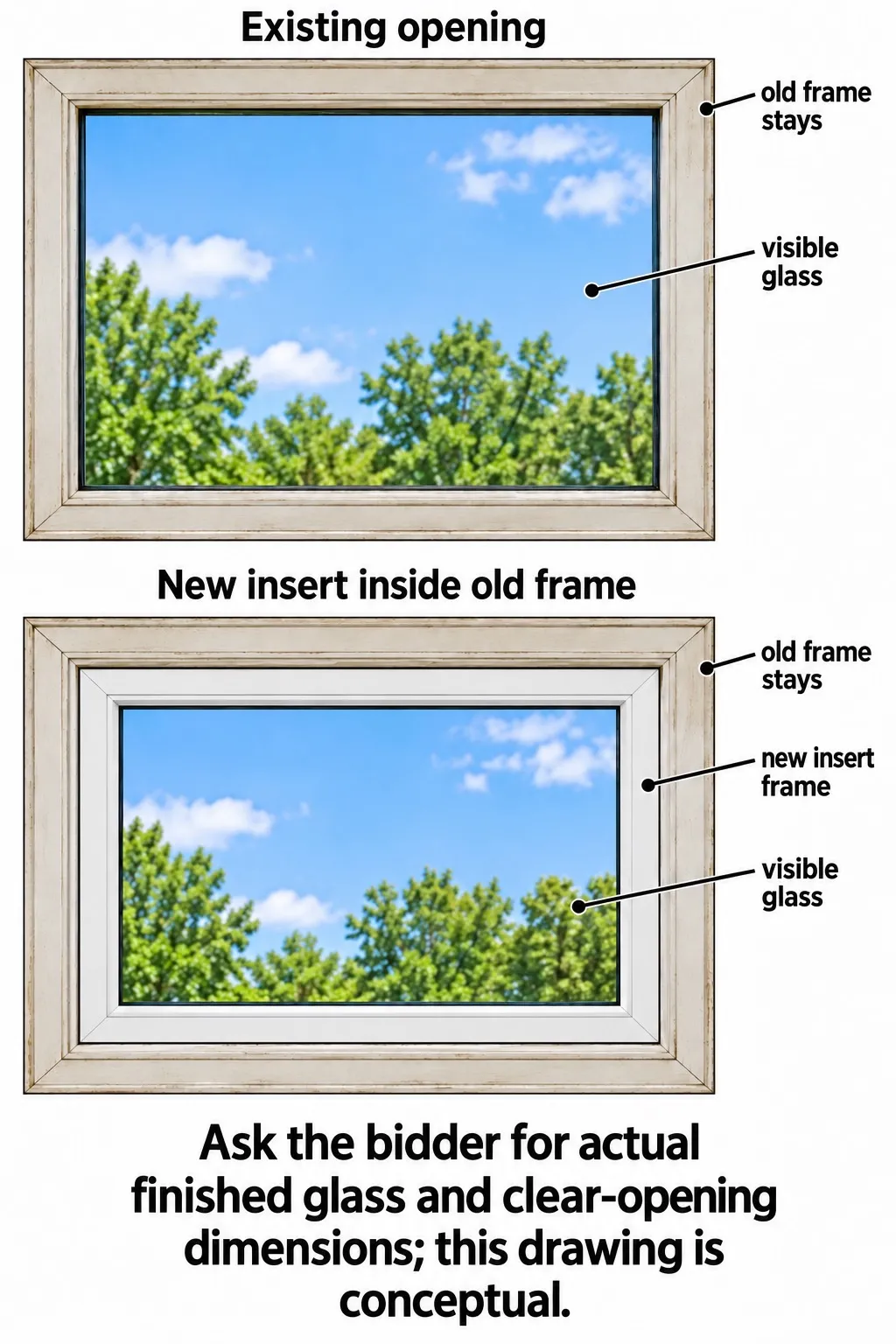
The reduction depends on the chosen products; request actual finished dimensions in the bid.
For energy performance, compare the NFRC label and local climate-zone requirements rather than an unsourced savings promise. DOE’s code brief on the 2009, 2012, and 2015 code editions covers U-factor, a measure of heat loss, and solar heat gain coefficient, or SHGC, for replacement units. ENERGY STAR recommends checking its label and the NFRC label before old windows are removed. Marvin notes that old frame air leaks can remain after an insert unless the work addresses them. Neither method has a reliable fixed energy-savings advantage for every house.
Federal RRP rules treat any window replacement in pre-1978 housing as a renovation, regardless of window size; some states administer their own programs. Hire an EPA- or state-authorized certified firm and ask how containment, cleaning, and verification appear in the bid. Full-frame generally disturbs more painted trim, so scope affects that work. The federal 25C window credit ended for property placed in service after December 31, 2025; a 2026 installation does not qualify. A local utility may have its own rebate, which you can check directly.
Why is the full-frame quote higher, and what should each bid include?
Ask bidders to price the same product performance and identify these work items per window:
| Scope item | Insert bid | Full-frame bid |
|---|---|---|
| Existing trim and interior finish | Usually retained; note repairs | Removal and restoration often priced |
| Old frame and sill | Condition check; damaged sill repaired first | Removal and opening repair priced |
| Wall flashing and cladding | Existing wall joint often retained | Access, integration, and patching priced |
| Weight pockets and air seal | State treatment if present | State new opening air seal |
| Lead-safe work, access, permits, disposal | Itemize where applicable | Itemize where applicable |
Unit size, material, glass package, operating style, custom dimensions, upper-story access, masonry or stucco patching, regional labor, and hidden rot can all move the total. Permits vary by jurisdiction; ask who checks and pulls one if required. Separate product, installation, and leakage warranties. A low insert number that omits sill repair is not comparable with a full-frame bid that includes opening repair.
Have each bidder document suspect sills and lower jambs and record squareness against the chosen product’s instructions; the scope table should state how hidden damage will be handled. JELD-WEN says trim may need removal to inspect properly. In older housing, the certified firm must manage paint disturbance under RRP rules. Get a second opinion if one bidder proposes inserts over visible sill decay or another recommends full-frame on every window without individual reasons. The best quote shows you what it found and prices the work needed at each opening.
Sources
- U.S. DOE Building America — Insert Replacement Window
- U.S. DOE Building America — Complete Window and Frame Replacement
- U.S. DOE Building America — Window and Frame Replacement Code Compliance Brief
- JELD-WEN — Measurement Guide for New Construction and Replacement Windows
- National Park Service — Preservation Brief 9
- Marvin — Insert vs. Full Frame Window Replacement
- Andersen — Stucco Window Replacement
- ICC Model Code — Replacement Windows for Emergency Escape and Rescue Openings
- ENERGY STAR — High Performing Windows or Storm Windows
- U.S. EPA — RRP Minor Repair and Maintenance FAQ
- Internal Revenue Service — Energy Efficient Home Improvement Credit