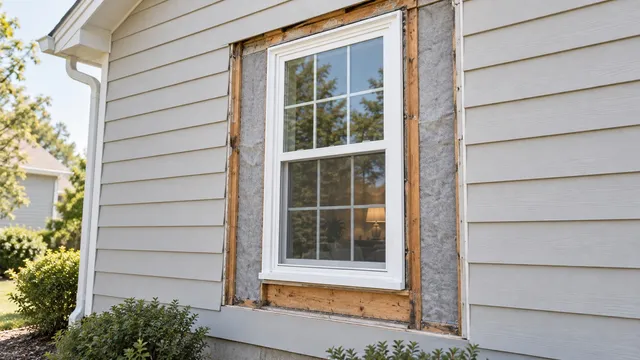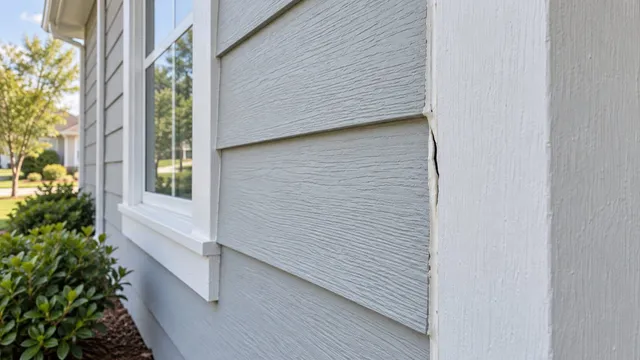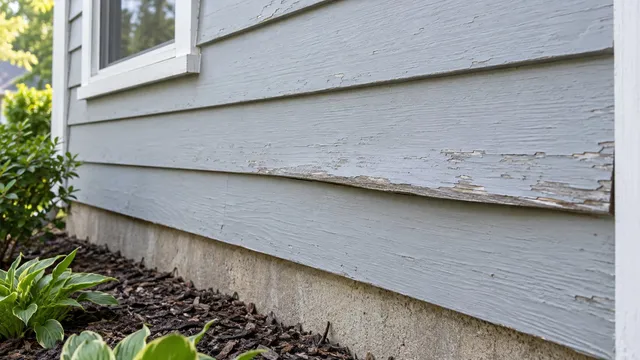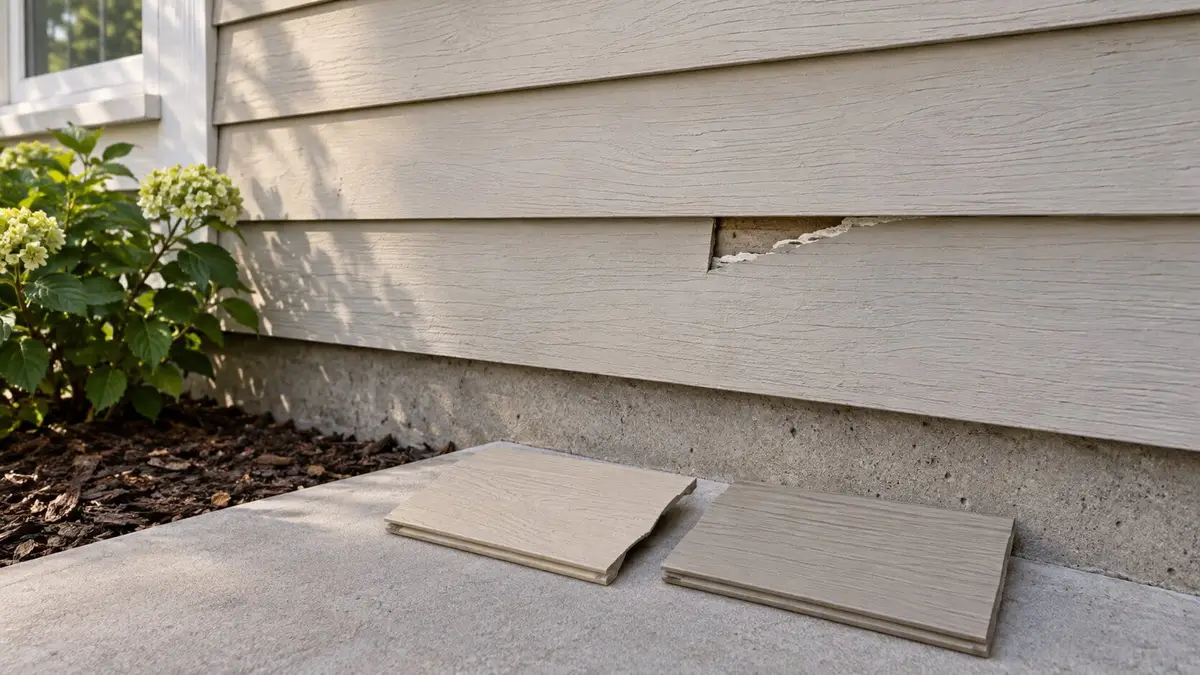
A broken panel on an otherwise sound wall seems like a small job until the store says the beige color is discontinued. That news answers a supply question, not how much siding must be replaced. A panel that looks close could fit poorly; a panel that fits could stand out beside the weathered wall.
There is no reliable national price for matching this kind of repair. Sourcing, access, the damaged area, trim, finishing, and any wall work all change the scope. Ask contractors to price the smallest sound repair and any appearance upgrade separately.
Does an unavailable color mean replacing all the siding?
No. The Vinyl Siding Institute’s 2020 manual describes individual panel replacement. That does not promise a matching product for every house or an invisible finish. Begin with three distinct questions: Can the wall be repaired correctly? Will you accept the visible result? What does the applicable warranty or claim process actually cover?
A compatible small repair may be enough even if it remains visible. An approved repaint or replacement to a natural boundary, such as a corner, may make sense if the appearance matters to you. A whole-house project needs a wider condition or owner-preference reason. For that larger decision, see how to judge one-wall versus whole-house siding work.
Do not wait for the perfect shade if a panel is missing, backing is exposed, or water enters. A siding contractor should assess and protect the wall promptly. Loose material above a path also needs prompt professional attention while you keep clear. An intact wall with only a cosmetic mismatch is a different timetable.
What information should you gather for a siding match?
Start with invoices, the original installer’s records, packaging, and an already stored offcut if you have one. Write down what is confirmed: manufacturer, product line, material, profile, nominal dimensions, finish type, color name or code, and installation date. Keep guesses separate. Some installed pieces may have identifying markings, but do not pry one free to look for them; a contractor can inspect safely if needed.
Photograph the whole wall and the damaged area from ground level. Include adjoining courses, corners, window trim, texture, and a safe, existing sample if available. Do not break a fragment off old siding for the store. The EPA advises leaving suspect asbestos material undisturbed and using trained professionals when assessment is needed. If a pre-1978 painted surface may be disturbed, EPA lead-safe guidance points to lead-safe planning and certified renovation help. Neither age nor appearance alone identifies the substance.
Ask the original supplier or manufacturer which exact item is unavailable. Is the color discontinued, the finish changed, the profile retired, or only the local branch out of stock? CertainTeed directs product-availability questions to distributors; James Hardie notes regional availability. Neither statement means a matching piece is currently on a shelf near you.
An actual manufacturer example shows why wording matters. LP lists ExpertFinish colors discontinued in 2023, including Canyon Brown, and calls Timberland Suede a comparable option. Comparable does not mean physically interchangeable with every older board or visually identical beside a weathered wall.
What if you do not know the brand or color name?
Give the supplier or siding contractor your records and photographs, then ask them to identify what they can verify and what still requires inspection. A similar online picture narrows candidates; it does not identify a product. For leftover or secondary-market stock, ask who made it, its condition, quantity, return terms, and provenance before paying. Availability and sound condition must be established for that specific lot.
Will a new panel fit even if the color looks right?
A repair succeeds only if the new material works with the installed system. A profile is the panel’s shape; its exposure is the height of the face you see after courses overlap. Similar nominal widths can conceal different projection, edge, lock, fastening, or trim details. The VSI manual covers multiple vinyl profiles and directs installers to product-specific instructions and applicable local rules. It is not a cross-brand interchange chart.
Ask the siding contractor to document the proposed product, profile, exposure, edge engagement, fastening and joint details, adjoining trim, and any accessory changes. The surrounding courses also matter: a small damaged patch does not prove adjacent pieces can be removed and reused intact. Paint and caulk cannot turn an incompatible lock into a sound repair. If new panels bow or fail to sit properly, vinyl buckling and installation problems require a separate diagnosis.
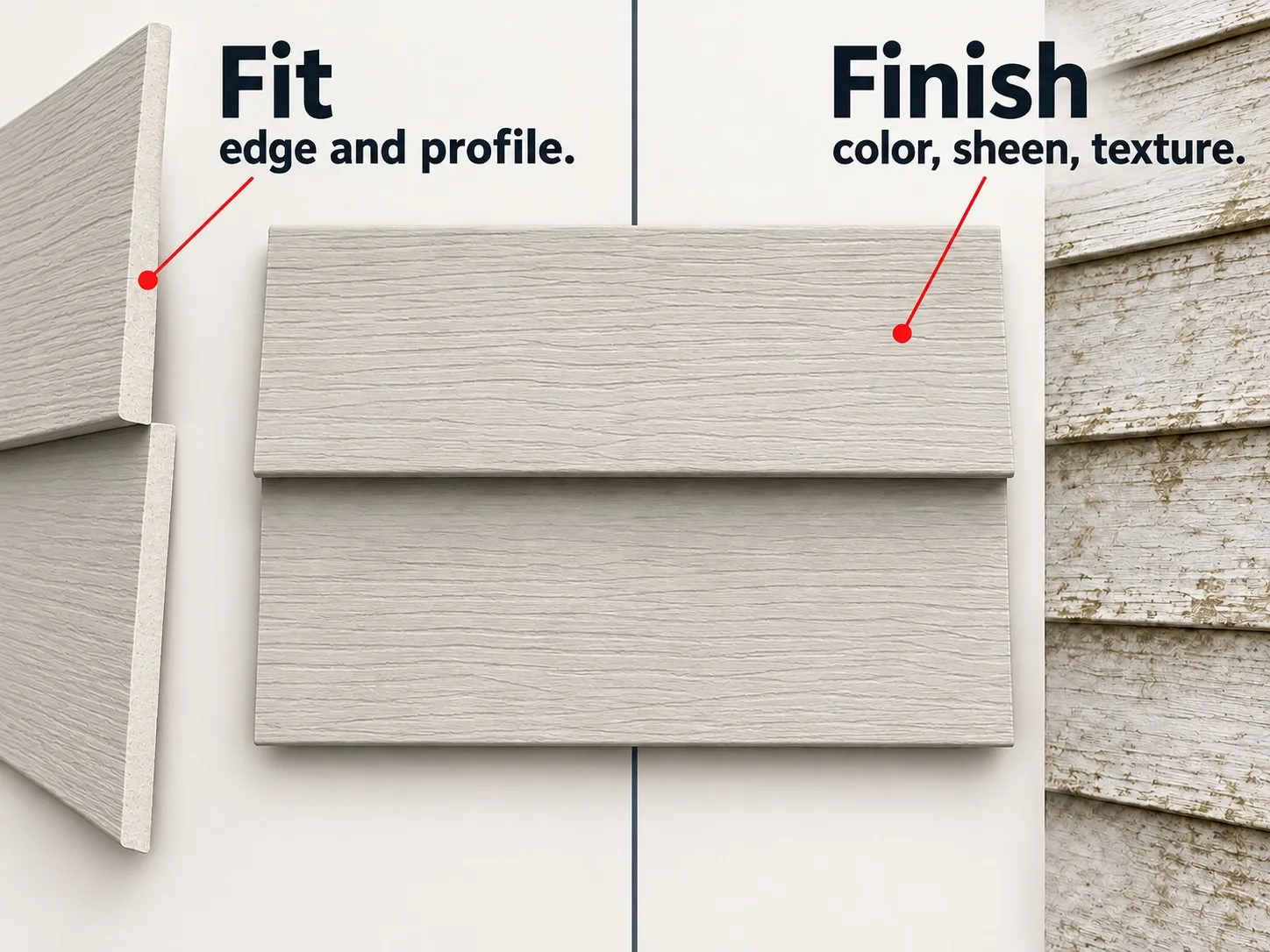
Fit and finish are separate checks. This conceptual drawing does not show a manufacturer-approved joint.
The material and finish change the matching problem. Vinyl and other polymers need their actual interlocking product and accessory instructions. Fiber cement can be factory finished or supplied primed for field painting. Engineered wood may have an LP substrate with a finish applied by another company, so the substrate name alone does not identify the coating. Metal and solid wood have still other profiles and coating systems. Ask for the installed product’s guidance before treating any one material’s method as universal.
How should you judge color and texture before buying?
Hold a physical sample beside the existing wall, rather than approving a screen image or color name. James Hardie’s sample guidance cautions that display settings change apparent color, and some samples do not represent the full product texture. Compare hue, sheen, texture, and the shadow line created by the profile separately.
View the sample from the normal approach to the house and close up, in daylight and shade if practical. A dry surface gives a fairer comparison than a just-washed patch. If dirt or green film obscures the wall, choose a compatible method from the siding stain-cleaning guide before treating the wet wall as a color standard. Photos help record the choice, but the actual sample beside today’s siding is the useful test.
A stored piece in the original color can differ from an exposed wall. LP explains that air-dried ExpertFinish touch-up can look different from factory-cured finish, and James Hardie’s touch-up information notes that vinyl and paint fade in sunlight. Those statements do not supply a timetable for a fresh panel to blend in. Ask for a small mock-up using the proposed product and method, then record which wall area and amount of contrast you accept.
Which repair options deserve a side-by-side quote?
| Option | Confirm before approval | Main compromise |
|---|---|---|
| Verified new or leftover stock | Identity, fit, sound condition, quantity | Finish may differ from aged wall |
| Donor panels from another location | Intact removal, fit, donor-wall repair | Two locations need work |
| Accept a close physical match | Correct system and accepted sample | Visible contrast may remain |
| Approved refinish of a defined area | Substrate, coating, warranty, painter plan | New coating maintenance |
| Replace a defined wall section | Boundary, trim, wall condition | More material and access work |
Moving panels from a less visible wall is a possibility to ask a contractor to evaluate, not a reliable trick. The donor pieces must come off intact, suit the damaged area, and leave a repairable donor wall. Compare the finish on both walls, the labor in both locations, and what will replace the donated material.
If a uniform elevation is important, mark the proposed stop line at a corner or other intentional boundary and ask how trim and transitions will work. A mismatched patch may be acceptable to one owner and not another. Keep the appearance choice separate from documented physical damage. A project reaching a window also needs a siding contractor to coordinate flashing at the window opening.
Could painting fix the mismatch for your siding?
Possibly, after the substrate, existing finish, and proposed coating are identified. A paint-store color scan only gives a color formulation; it does not establish adhesion, texture, weathering behavior, or whether a vinyl color will absorb too much heat. A minor touch-up product may also be unsuitable for coating a full board or wall.
For vinyl, Sherwin-Williams describes specific products and VinylSafe color choices, with cautions about darker colors and instructions to check the siding maker’s warranty. That is coating-maker guidance, not permission from every siding maker. Ask the siding manufacturer and exterior painter for the exact approved system; do not assume an arbitrary dark match is suitable.
For factory-finished engineered wood, LP’s May 2024 ExpertFinish care instructions describe repainting that named product. LP’s warranty effective for retail purchases on or after August 1, 2025 separately limits finish coverage involving added coatings, with an exception for compliant touch-ups. A maintenance method and factory-finish coverage answer different questions; the applicable purchase-date warranty controls your case.
For fiber cement, identify whether the board is primed or has a factory finish such as ColorPlus. A James Hardie 2014 primed-product bulletin distinguishes field painting from ColorPlus touch-up, but it is an older edition. Obtain current instructions for the exact installed product before approving repainting. The same product-specific check applies to metal or solid wood finishes. If an older coating might be disturbed, pre-1978 painting precautions come first. Chalky or faded exterior paint also needs a finish assessment before new coating is chosen.
What belongs in the contractor’s written scope?
Ask for the identified existing and replacement products; the evidence of fit; the exact repair area; any trim or flashing work; the sample or mock-up you accepted; and the plan if hidden damage appears. Have the contractor separate a functioning repair from optional refinishing or a larger appearance-driven area. Request clear line items for access, sourcing or freight, material, labor, finish, disposal, and any separately assessed wall repair.
Ask which warranty applies to the existing product and whether a claim requires notice before repair or inspection. Product, finish, coating workmanship, and paint-maker coverage can differ. Keep invoices, photos, and safely stored spares until those questions are resolved. No discontinued color alone proves an insurance entitlement to a matching wall or whole house; a disputed claim needs the actual policy and relevant local advice.
If the proposal jumps from “color unavailable” to whole-house replacement without verifying profile, stock, physical samples, and the wall’s condition, request a more itemized assessment. The next useful decision is which compatible, documented scope solves your damage and which appearance choice you are willing to pay for.
Frequently asked questions
What if the matching corner posts or window trim are discontinued too?
Ask the supplier and siding contractor to identify compatible accessories and explain the transition in writing. A matching panel alone does not establish that a corner or receiver will fit. Physical samples and manufacturer confirmation matter before an order is placed.
Can I buy one panel, or must I buy a full carton?
The answer depends on the actual supplier’s order terms and available stock. Ask about minimum quantity, special orders, shipping, returns, and whether enough matching accessories are sold separately. A distributor inquiry is more useful than assuming every product is sold the same way.
Is leftover touch-up paint still usable?
Age alone cannot answer that. Identify the exact kit, its storage history, and the maker’s current instructions; ask for a new compatible kit if its condition is uncertain. Test a permitted touch-up and judge it after drying as directed, knowing that factory finish and air-dried touch-up can differ.
How should I keep spare siding for a future repair?
Keep its manufacturer, line, color code, finish, purchase date, and warranty information with the stored pieces. For vinyl siding, the VSI installation manual says to keep cartons flat, supported along their full length, dry, and away from falling objects or other work that could damage them. Follow the actual product’s storage directions; other materials have different requirements. A labeled spare helps identification later without guaranteeing a match to a weathered wall.
Sources
- Vinyl Siding Institute — Installation Manual
- CertainTeed — Contact Us
- LP — ExpertFinish Colors Discontinued
- Sherwin-Williams — How to Paint Vinyl Siding
- LP — ExpertFinish Care and Maintenance
- LP — ExpertFinish Touch-Up Tips
- LP — ExpertFinish Limited Warranty
- James Hardie — Finishing Primed Siding Products
- James Hardie — Statement Collection Samples
- U.S. EPA — Lead-Safe Renovations for DIYers
- U.S. EPA — Protect Your Family from Exposures to Asbestos
- James Hardie — Frequently Asked Questions
- James Hardie — ColorPlus Touch-Up Kits