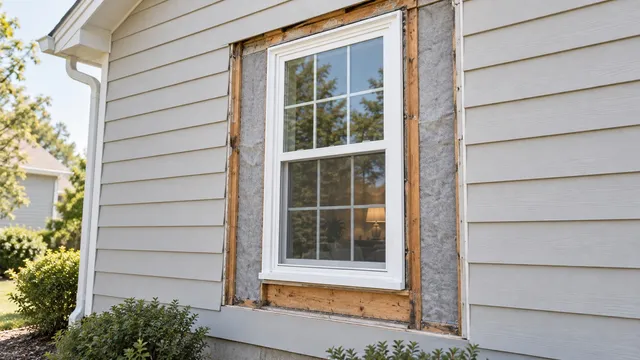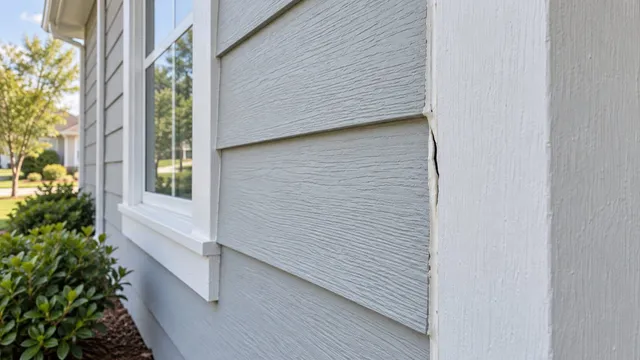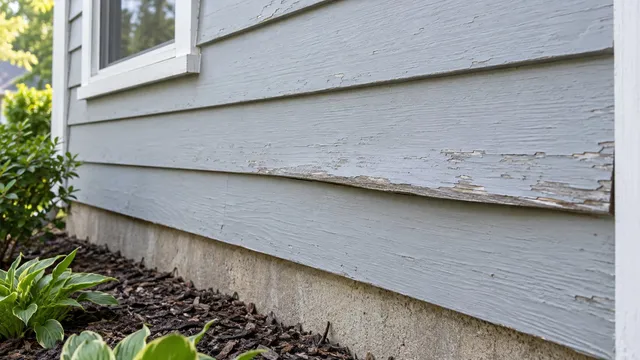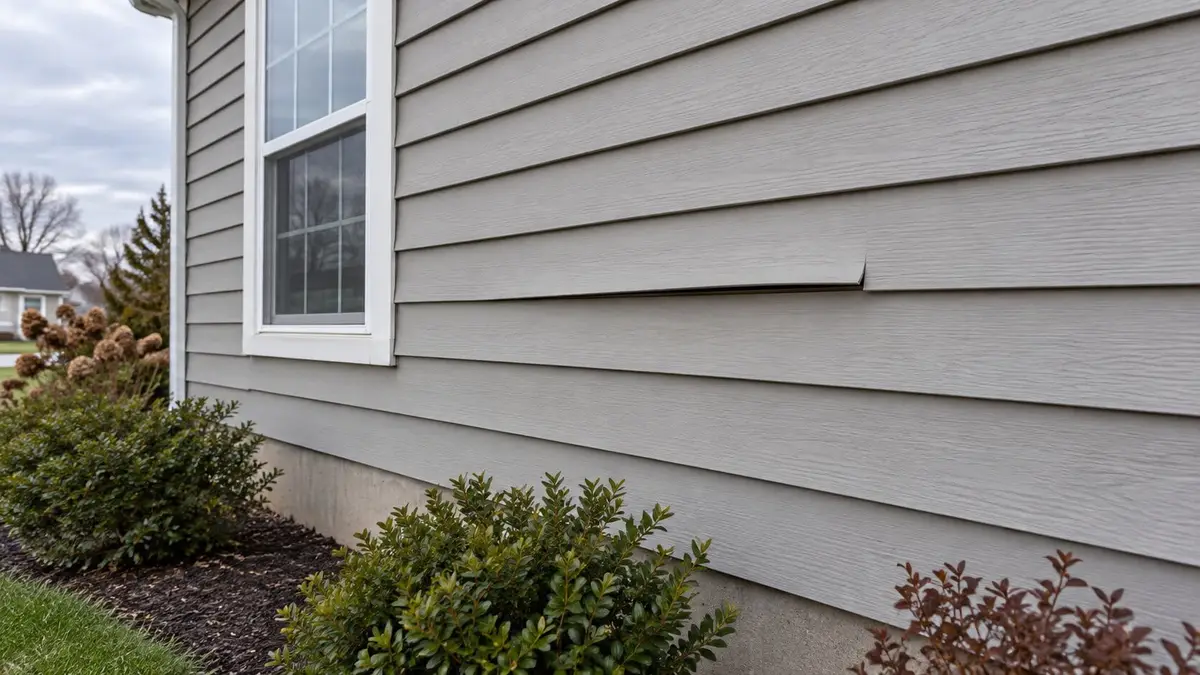
The same course rattles every windy night, even after someone pushed it back in place. That repeat matters. The piece you hear may be intact while the strip meant to hold it, its attachment, or the wall underneath is not.
There is no reliable national price for an unidentified loose-siding repair. Height, access, material availability, and any hidden wall work can change the job. Ask what failed before comparing a reattachment quote with a replacement quote.
How urgently should you address loose siding in wind?
From a protected place, separate noise from visible displacement. Do not approach an unstable wall during high wind. If a panel is hanging over a path, move people and pets away from the area beneath it and call a siding contractor urgently. Exposed backing or indoor water also needs an urgent siding-contractor or building-envelope assessment. If a wire is down or electrical equipment is involved, stay away and call the utility or emergency services as appropriate.
| What you can see from safety | Next action | What remains unknown |
|---|---|---|
| Rattle, with no visible lift | Arrange a siding-contractor inspection | The connection and backing |
| Edge repeatedly lifts | Request prompt siding-contractor assessment | Whether the piece can be reused |
| Hanging piece, exposed wall, or indoor water | Keep clear; call a siding contractor or building-envelope specialist urgently | Extent of wall and water damage |
These are response categories, not a test of how much wind the wall can resist. No fixed number of days is safe for every detached piece. Ask the repair contractor whether temporary weather protection is needed and how they will provide it.
What can you record from the ground before a siding inspection?
After the wind has passed, take one photograph of the whole wall and a closer view using zoom from secure ground. Note the affected course, the approximate height, and whether neighboring pieces moved. A lower course, a cut edge below a window, a top course, a corner, and the middle of a wall each raise different connection questions. None identifies the fault by location alone. The Polymeric Exterior Products Association’s coastal guidance singles out starter compatibility and retention at cut edges as details worth examining in high-wind work.
Record when the noise began, whether it follows a wind direction, what an earlier repair changed, and whether the loose area is expanding. Photograph visible cracking, missing corners, or exposed layers without touching them. Check indoors for a new stain near that wall, while allowing that a stain can have another source. Gather installation records, invoices, leftover packaging, and product names already at hand. Do not remove a piece to search for a label.
Ground photographs cannot confirm a hidden nail, interlock, or fastening base. Avoid ladders, reaching from a window, pulling at an edge, or pressing a board to see whether it is “soft.” If the material looks like older cement siding and would need disturbance, the EPA advises professional asbestos assessment; appearance alone cannot identify asbestos.
What part of the siding is actually loose?
A contractor should answer three questions: Did a connection disengage? Is the material damaged where that connection must hold? Can the specified attachment hold in the material behind it? They should also confirm that the moving piece is siding rather than trim, fascia, or soffit. Each has a different connection and repair detail.
Vinyl and other interlocking panels
Horizontal vinyl usually has a slotted upper fastening edge and a lower lock that engages the course below. Temperature changes require the installed panel to move lengthwise within its specified allowances. An edge repeatedly lifting out is not that intended movement. The Vinyl Siding Institute manual describes secure engagement alongside movement; the exact product’s instructions govern the repair.
An intact-looking face could hide a broken lower lock, torn fastening hem, mismatched starter, or poor retention where a panel was cut. The contractor needs to examine the mating piece and support, not simply press the loose panel back. If waves rather than lifting are the main issue, see why vinyl siding buckles before treating it as the same defect.
Fiber cement, engineered wood, and solid wood
Boards rely on the fastening pattern and holding base specified for their own profile. A contractor should assess cracks or splits around attachment points, the fasteners, and the relevant sheathing, furring, or framing. Foam by itself is not interchangeable with a structural fastening base; conversely, some identified products allow attachment to qualifying structural sheathing. LP SmartSide’s instructions show why product series and base matter. Western Red Cedar guidance also accounts for wood movement and splitting. Do not transfer either detail to an unidentified board.
James Hardie’s December 2019 HardiePlank fastening bulletin says pin-backs are for appearance only and will not improve wind-load resistance; they do not replace proper blind or face nailing. The bulletin describes qualified corrections for that product, not a generic extra-nail pattern. A silent wall is therefore not proof of restored wind performance. Cracks found during this assessment require the separate fiber-cement patch-or-replace decision. Soft or swollen wood calls for an investigation beyond the visible boards.
Metal siding has its own connections
The Quality Edge Vesta steel guide describes a steel system with interlocks and movement allowances. Other steel and aluminum products may be assembled differently. Have a contractor identify the system and examine distorted edges, attachment, and its permitted replacement method. Flattening or drilling an unknown panel can ruin the connection it needs.
| Identified material | Connection to inspect | Why “tighten it” may fail |
|---|---|---|
| Interlocking vinyl | Lock, starter, slotted hem | Needs secure engagement and lengthwise movement |
| Fiber cement | Board edge, approved fastening, base | Cosmetic restraint may not restore wind attachment |
| Engineered or solid wood | Product-specific fasteners, sound wood/base | Split or deteriorated material may not hold |
| Interlocking steel example | System lock, panel edge, attachment | Its movement detail differs from vinyl |
When can siding be reattached, and when should it be replaced?
This table is a discussion aid after a contractor examines the assembly. It is not a panel-count rule or a remote diagnosis.
| Inspection finding | Possible repair path | Condition to resolve |
|---|---|---|
| Sound piece and compatible connections | Re-engage or correct attachment per product | Why it released |
| Broken lock, split board, torn hem, or distorted edge | Replace affected piece and damaged mating parts | Proper fit and intended attachment |
| Poor holding base or water damage | Open enough wall for supporting and water-control work | Sound backing and drainage |
| Similar failures in several areas | Map extent before wider correction | Actual shared cause and affected area |
| Product or repair detail unknown | Seek manufacturer or second technical opinion | Verified compatible method |
Replacing one piece differs from replacing a wall, and neither automatically means residing a house. No reliable universal age, callback count, or damaged-area percentage makes that decision. A repeat failure in one location points to an unresolved question, not proof that every panel is defective. If replacement is appropriate, the profile and mating connection must fit; color is a separate question covered in matching discontinued siding panels. Broader confirmed damage leads to the one-wall-versus-whole-house decision.
Wind resistance depends on the identified product, installed assembly, and applicable site requirements. More fasteners, a heavier board, or no more noise does not by itself verify performance. The DOE/PNNL exterior-siding guide describes wind exposure and deterioration as connected design concerns; it offers no blanket safe wind speed for this wall.
What must be checked before the siding covers the wall again?
Siding sheds much of the rain, but it is not the entire water-control system. A water-resistive barrier, or WRB, is a layer behind cladding intended to manage water that gets past the face. Flashing directs water around openings and out. The DOE/PNNL drainage-plane guide explains why those layers and their connections matter.
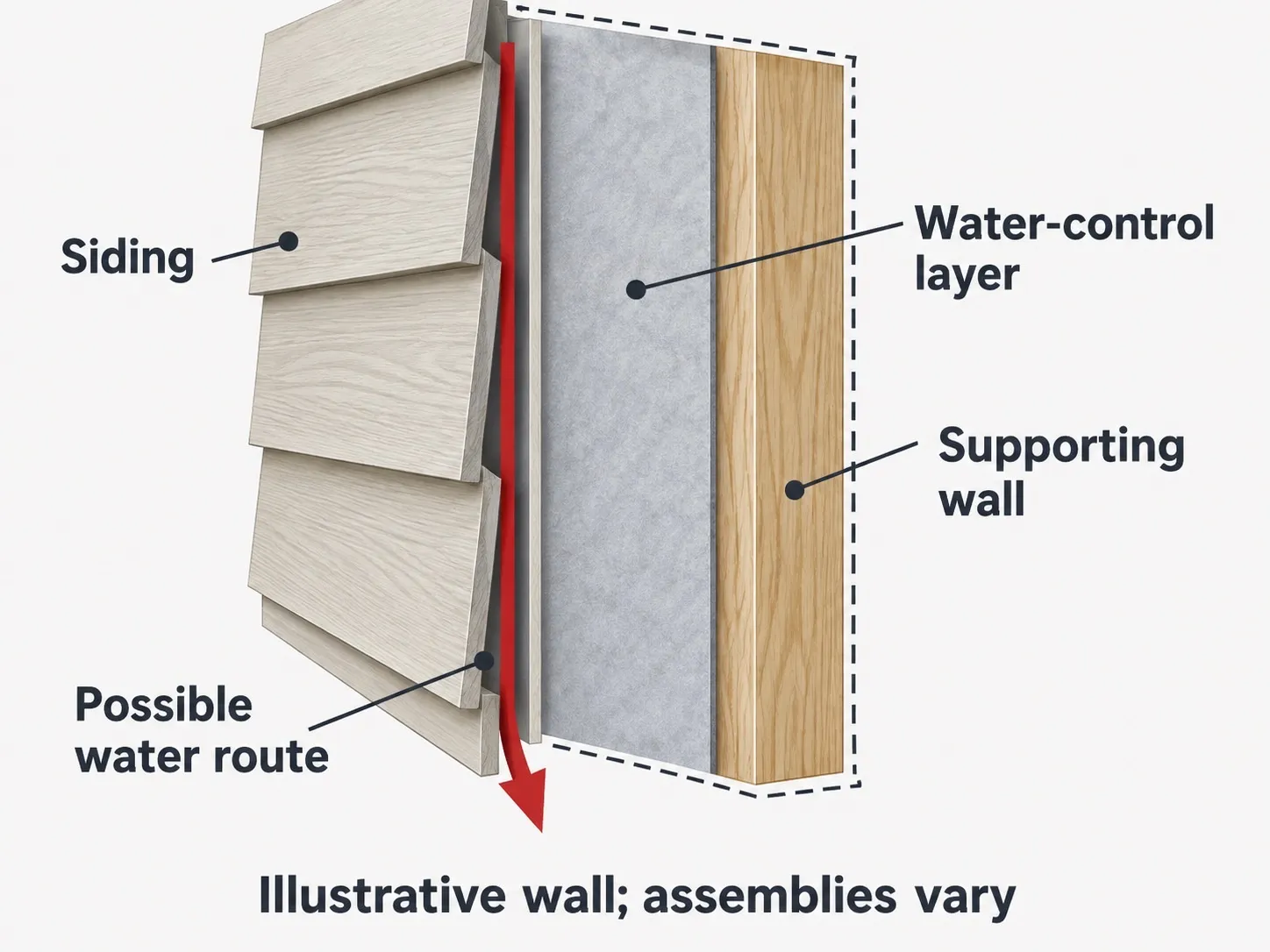
If the contractor opens the area, ask for photographs of the exposed fastening base, WRB, and nearby flashing before it is covered. That matters especially near windows, doors, roof intersections, and other penetrations. Ask what was actually damaged, what will be repaired, and whether the opening must expand. A loose piece does not prove concealed rot or mold. A clean exterior also cannot verify that hidden layers are dry.
Do not solve every opening with sealant. Some details need an outlet for water or room for movement. The exact joint decides whether it is a gap that should be sealed or left to drain. Around a window, siding and flashing work may need to be coordinated. If new siding hides a failed drainage route, a tidy appearance leaves the problem unresolved.
What should a loose-siding repair estimate include?
Choose a siding contractor experienced with the identified material and safe access at the location. A building-envelope specialist can investigate recurring leakage or unclear concealed water paths. If an opened wall shows substantial framing concerns, have a structural engineer assess them before the repair scope is finalized. For pre-1978 painted surfaces, plan disturbance with lead-safe certified help under applicable requirements; do not scrape or sand to inspect.
Ask the contractor to identify the failed piece or connection, the evidence, and the applicable product document and edition. When wind exposure is central, ask what assembly or design basis supports the proposed correction. The estimate should separate access and inspection, pieces retained or replaced, backing and flashing work, finish restoration, disposal, and the method for pricing concealed damage. Ask for photos and approval before added work proceeds. Local permit requirements depend on the actual job and jurisdiction.
Compare what each price buys. A cheap “push it back” quote and a wider wall-opening quote may be addressing different findings. Conversely, a full-house proposal needs evidence of its extent. Ask for a second experienced contractor’s opinion if the cause is unexplained or an asserted wind upgrade lacks a defined detail. Keep the final scope, hidden-work photographs, product information, and written workmanship terms. Observe the area after later ordinary wind from a safe position; recurrence calls for another assessment, not a viewing position below the panel.
Frequently asked questions
Can vinyl siding be repaired in cold weather?
Yes, a qualified contractor may be able to work in cold weather, but the product’s temperature-related movement instructions and the condition of the panel matter. The CertainTeed 2025 guide includes temperature-dependent directions for its products. Do not assume a winter snap-in will remain engaged once the panel warms.
Does a siding manufacturer’s warranty cover an installation mistake?
Do not assume it does. LP’s cited instructions say failure to follow the applicable instructions makes its limited warranty inapplicable to affected products; the installed product’s actual terms and findings govern your case. Keep product coverage separate from the installer’s workmanship terms. Save installation records and photographs before requesting a written coverage decision.
Can I pressure-wash repaired fiber-cement siding?
Avoid it for James Hardie siding: Hardie’s FAQ says a pressure washer can damage the surface and recommends low-pressure water from a garden hose with a soft, medium-bristle siding brush instead. Other fiber-cement products need their own care instructions, and the repair contractor should confirm what is suitable for the new finish.
Can factory-finished fiber-cement siding be repainted after a repair?
Yes for Hardie’s ColorPlus siding: Hardie’s FAQ says it can be repainted to change color. For another finish, follow that product’s instructions and warranty terms. Paint will not restore a broken board or attachment, so establish the repair scope first.
Sources
- Polymeric Exterior Products Association — Installing Polymeric Cladding and Soffit in Coastal Areas
- Vinyl Siding Institute — Vinyl Siding Installation Manual
- LP — SmartSide Lap Siding Application Instructions
- Western Red Cedar Lumber Association — Siding Pre-Installation
- James Hardie — Fastening Tips for HardiePlank Lap Siding
- Quality Edge — Vesta Installation Guide
- DOE/PNNL — Moisture-, Impact-, Fire-, and Pest-Resistant Exterior Siding
- DOE/PNNL — Drainage Plane Behind Exterior Wall Cladding
- EPA — Protect Your Family from Exposures to Asbestos
- CertainTeed — Vinyl & Polymer Siding Installation Guide, 2025 Edition
- James Hardie — Frequently Asked Questions