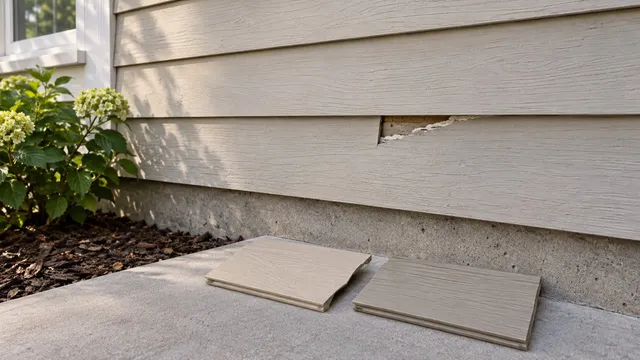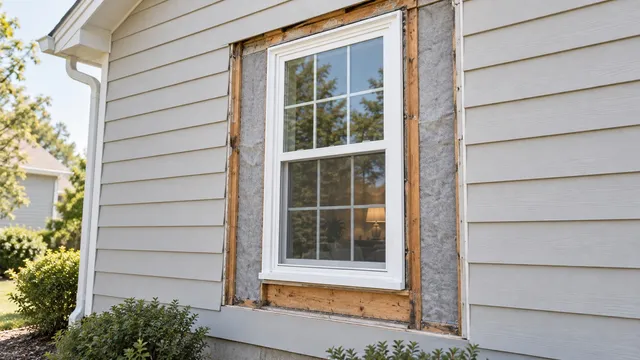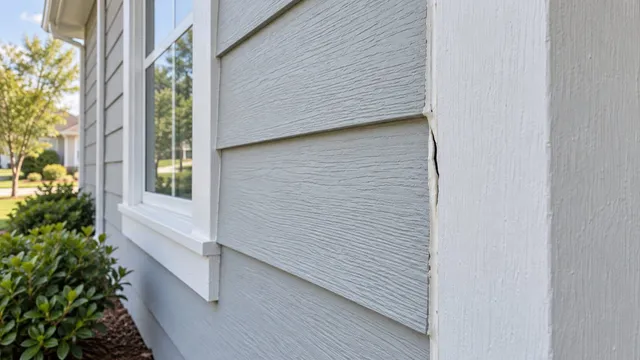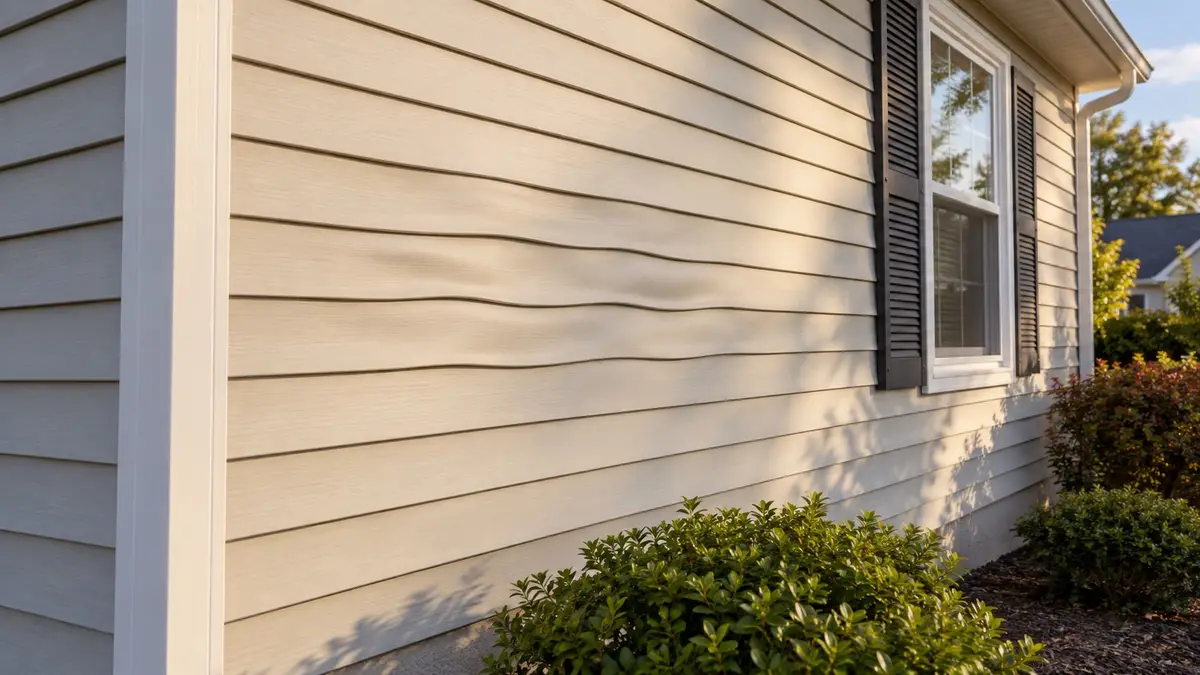
A row of waves across a new wall can look worse in afternoon light. An older wall may show one bulge by a window or a band at floor height. Those shapes matter, but they do not tell you on their own whether the problem is heat, fasteners, another installation detail, or the wall behind the cladding.
There is no reliable national price for fixing an unidentified buckling cause. The cost depends on whether the job needs diagnosis, panel and trim work, or correction to the base and water-management layers. Get the cause and scope in writing before comparing prices.
What should you record when vinyl siding buckles?
“Buckling,” “rippling,” “bowing,” and “warped” all describe a changed surface. Start with two photographs from safe ground: one of the entire wall and one closer view of the affected courses. Repeat at a different time or temperature. Record date, sun or shade, approximate weather, and whether the change appears near a window, trim, a fixture, or a floor line. This is a history for an inspection, not a home test that proves the cause.
Add the installation or repair date, recent fixture or window work, repainting, nearby heat sources, wind events, and whether an earlier repair failed at the same spot. Do not press on panels, pull a lap free, climb to the area, or probe a concealed wall. A ground-level view cannot show how a hidden fastener sits in its slot or what the backing looks like.
An intact stable wave can be scheduled for a siding contractor’s assessment. Detached material or panels hanging above a walkway need a siding contractor’s prompt assessment; stay outside the fall area. Significant active leakage needs a siding contractor or building-envelope specialist promptly; a visibly changing wall calls for a structural engineer. Smoke or flames call for emergency services. No photographed shape establishes a guaranteed safe waiting period.
What can the pattern suggest without proving a cause?
| Pattern you can record | Possible line of inquiry | What an inspection still needs to establish |
|---|---|---|
| Waves vary with warmth | Restricted movement or heat history | Fastener, end, overlap, and product condition |
| Distortion at trim or a fixture | A clamped or crowded panel | Actual clearance and attachment detail |
| Lower edge opens or course flaps | Interlock or support issue | Engagement and holding base |
| Narrow band near an upper floor | Floor-band movement or installation | Wall and panel relationship |
| Small softened-looking patch | External heat source | Exposure and whether panel shape is permanent |
| Broad persistent unevenness | Base flatness or damaged panels | Substrate and prior heat history |
These are prompts for a site visit, not a ranking of likely causes. A sunny photo may exaggerate a wave; a shaded photo may hide it. If the main symptom is a course that keeps flapping in wind, the fastening and engagement question needs its own assessment.
Why does siding need to move while staying attached?
Vinyl changes length with temperature. A conventional horizontal panel hangs from fasteners through slots in its nail hem, the slotted edge hidden by the course above. Its lower edge locks into the course beneath. Those details are meant to hold it securely while allowing specified movement. The Kaycan 2026 guide and Mastic 2026 guide both address movement and fastening, with product-specific details.
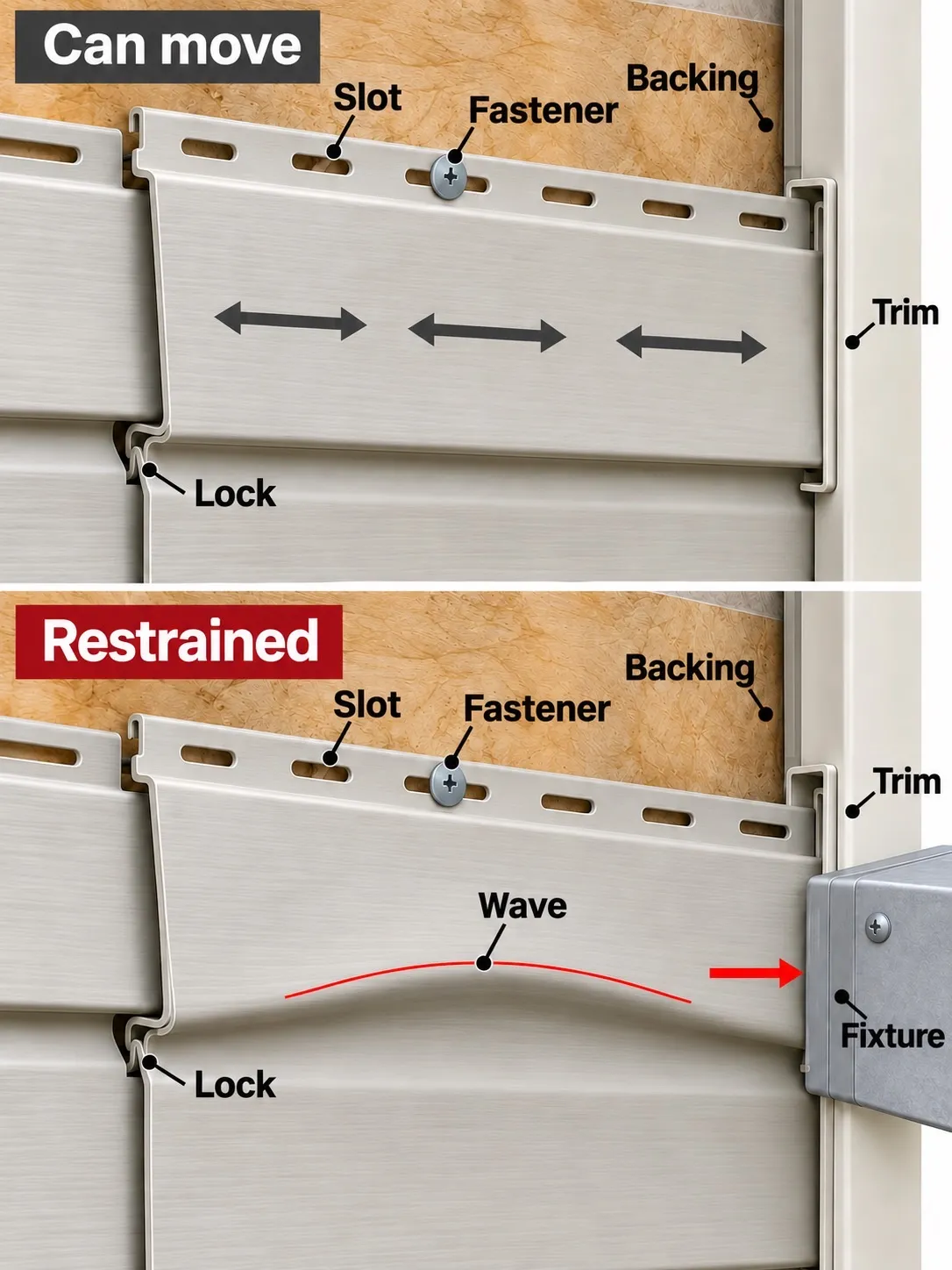
The panel remains attached and interlocked while moving lengthwise. This schematic gives no universal fastener or clearance dimensions; the product instructions govern them.
“Too tight” can mean more than a fastener pressed hard against the hem. A fastener’s angle or position, a crowded panel end, tight overlap, receiving trim, or a later fixture can restrain the course. When the panel cannot shift as intended, it can bow outward. Yet making a panel indiscriminately loose would create another problem: the locks and attachments still have to engage securely. A contractor should check both conditions against the exact product’s instructions.
Do not treat a cooler-day improvement as proof that everything is fixed. The panel may still be restrained when it warms again, or its shape may already be damaged. Date-matched photos help the contractor see the change. They cannot tell whether a fastener is correctly positioned under the lap.
Generic nail spacing, head gaps, and end clearances can mislead because the reviewed Kaycan, Mastic, Wolverine, and VSI industry guide differ by product and detail. Do not “pin the wave flat” with a face screw or glue, or caulk an opening before its drainage role is known. Have the contractor identify whether that opening is meant to drain or needs sealing.
Does a winter installation explain a summer wave?
It is part of the history, not a diagnosis. Temperature at installation can affect the specified movement allowance, but product length, profile, and installed details matter too. Today’s visible gap cannot reconstruct a concealed clearance from months earlier. Ask the contractor which manual applied to the actual product and which observations support the conclusion.
Could a loose lock or uneven wall cause the waves?
Yes. The Mastic installation guide calls for proper interlock, starter and receiving support, and a prepared base. A panel can have room to move yet be inadequately engaged. Cut panels around openings can need compatible support. Fasteners also need sound material behind them. These are professional checks, because the relevant details are hidden under the courses.
A wavy base can telegraph through a new finish. Deteriorated backing needs attention before new siding covers it. Vinyl cladding also is not the entire water-control system: a water-resistive barrier (WRB) and flashing direct water behind the outer siding. A wave alone proves no rot, mold, termite damage, or WRB failure. Visible leaking or stains require a building-envelope specialist or siding contractor to assess the actual water path. The VSI manual distinguishes cladding from the underlying water-resistive assembly.
Near an upper-floor line, there is a documented additional possibility. The Wolverine guide describes new-construction buckling associated with shrinkage or compression at a floor-joist band; Mastic also discusses floor-band compression. This does not turn every horizontal wave into foundation failure. Have a contractor inspect panel installation and the wall context. If findings point to structural movement, a structural engineer should assess that condition before a repair scope is set.
Where water or window work is involved, ask whether siding and flashing around the window need coordinated work. Simply covering a wet or uneven base with fresh courses can leave the original problem in place.
When does heat mean more than normal expansion?
Routine temperature change and concentrated heat are different questions. Kaycan and Wolverine caution against significant external heat exposure. Record whether a grill or another heat source was used near the wall. Follow the appliance’s placement instructions; there is no universal distance or temperature threshold in these sources for diagnosing a particular wall.
A darker repaint can change how a panel absorbs sunlight. Sherwin-Williams’ vinyl-warping guidance treats repaint history as relevant and says already warped siding may need replacement. That does not mean factory dark vinyl is equivalent to painting a lighter product dark. Nor does lighter paint restore a panel that has permanently changed shape.
Concentrated sunlight reflected from another surface is another possible cause of a small distorted area, sometimes outside summer. The Polymeric Exterior Products Association explains that mechanism and the limits of product substitutions. A photo cannot assign blame to a particular window. Ask the contractor to assess that localized exposure separately from ordinary panel movement. Do not use a heat gun, hot water, or an improvised reflector test to see whether a wave flattens.
What should a siding inspection establish before replacement?
Start with an experienced siding contractor and share the dated photographs, installation timeline, product paperwork, paint details if applicable, and recent wall changes. For new work, ask the installer or builder for a written assessment. An assertion that “all vinyl waves” or “this is a bad batch” is not a finding without site observations and product guidance.
The written report should identify the brand, line, profile, orientation, and applicable manual revision. Ask what the contractor actually checked: fastener-slot relationship, end and overlap room, trim and fixtures, interlock and starter engagement, backing and attachment base, and signs of water or concentrated heat. Product labels and purchase records are more useful than guessing by color. A current online guide may not be the version that applied to an older installation or warranty claim.
If opening the assembly is necessary, have the contractor define the area, document concealed findings with photographs, and explain how it will be restored. A building-envelope specialist can examine suspected leakage or WRB and flashing issues. Where wall movement is substantiated, involve a structural engineer. For a pre-1978 wall that may involve lead paint, use a lead-safe certified renovation firm; for possible asbestos siding, contact a qualified asbestos professional or the local environmental authority before work. Appearance alone does not identify either hazard, so leave old wall layers undisturbed.
Ask which local code and permit rules, product evaluation, and installation instructions apply to the proposed correction. They vary with location and product. If two contractors disagree on the cause, a second independent assessment or the manufacturer’s technical department can help resolve the product-specific question. Ask each to separate what was verified from what remains concealed.
Which repairs address both the cause and damaged panels?
| Confirmed finding | Repair proposal should address | Remaining decision |
|---|---|---|
| Movement restraint | Correct applicable fastening/trim detail | Which panels remain serviceable? |
| Failed engagement or support | Restore compatible lock and holding base | Is local panel work sufficient? |
| Uneven or deteriorated backing | Correct base and affected water-control work | How far does concealed damage extend? |
| Concentrated heat and deformed vinyl | Resolve verified exposure, replace damaged material | Can recurrence be prevented? |
An individual panel can sometimes be replaced, as the Mastic and Wolverine manuals show. That does not guarantee a specific wave will flatten once a fastener is corrected. A panel whose shape or lock is no longer serviceable may need replacement, while sound adjacent courses may remain. Profile and color availability can complicate local work; matching discontinued siding panels is its own decision. A broader problem can justify more work, but one-wall versus whole-house replacement should follow the cause and extent, not precede them.
Get an itemized scope for diagnosis, correction, replacement material and trim, access, disposal, and an allowance or decision process for hidden conditions. Ask why each panel will be reused or replaced and how the contractor will verify engagement and movement afterward. Keep the photos, product documents, and written findings so a recurring wave can be compared with the repaired condition.
Frequently asked questions
Does a lifetime siding warranty automatically cover buckling?
No automatic coverage follows from the word “lifetime.” Product, workmanship, heat-source, paint, ownership, and claim terms can differ. Locate the warranty applicable to your product and installation date, document the observed cause, and ask the manufacturer and installer for their written positions.
Do the same movement rules apply to vertical board-and-batten siding?
The general need for secure attachment and temperature movement still matters, but horizontal-panel fastening details should not be copied onto a vertical profile. The Kaycan and Mastic manuals include profile-specific directions. Ask the contractor to identify your product’s instructions and inspect its actual engagement and support.
Will repainting buckled vinyl a lighter color undo the damage?
No such recovery is established. A lighter coating may change future heat absorption, but a permanently deformed panel may need replacement. Have the contractor assess panel condition and the heat or installation cause before choosing a finish.
Can foil-faced foam behind vinyl siding affect installation or warranty instructions?
Yes. Kaycan’s 2026 guide says its vinyl siding must not be installed over foil-backed foam with the foil facing the siding; the guide says doing so voids the Kaycan warranty. That is a product-specific installation rule. PEPA’s solar-reflection discussion concerns concentrated heat distortion, a different question. Neither source diagnoses your wall or establishes a rule for every siding product. Get the exact product’s written assembly guidance and applicable warranty terms before covering or revising the wall.
Sources
- Kaycan — Vinyl Siding Estimating and Installation Guide
- Mastic Home Exteriors — Mastic Siding Installation Guide
- Wolverine — Vinyl Siding Installation Guide
- Vinyl Siding Institute — Installation Manual
- Sherwin-Williams — Vinyl Siding Warping
- Polymeric Exterior Products Association — Understanding Concentrated Solar Reflection