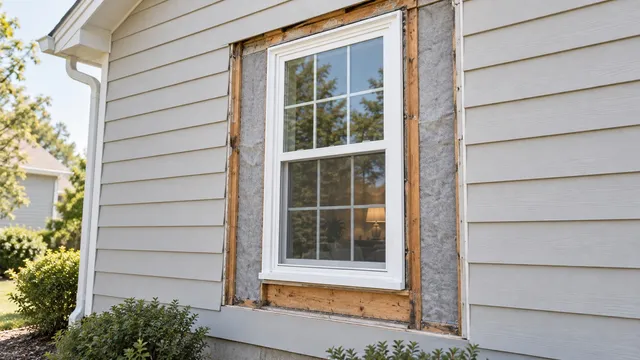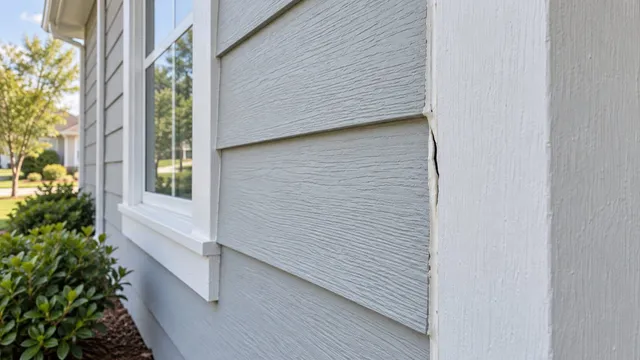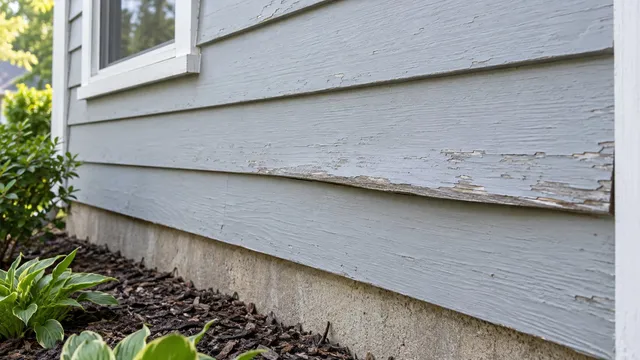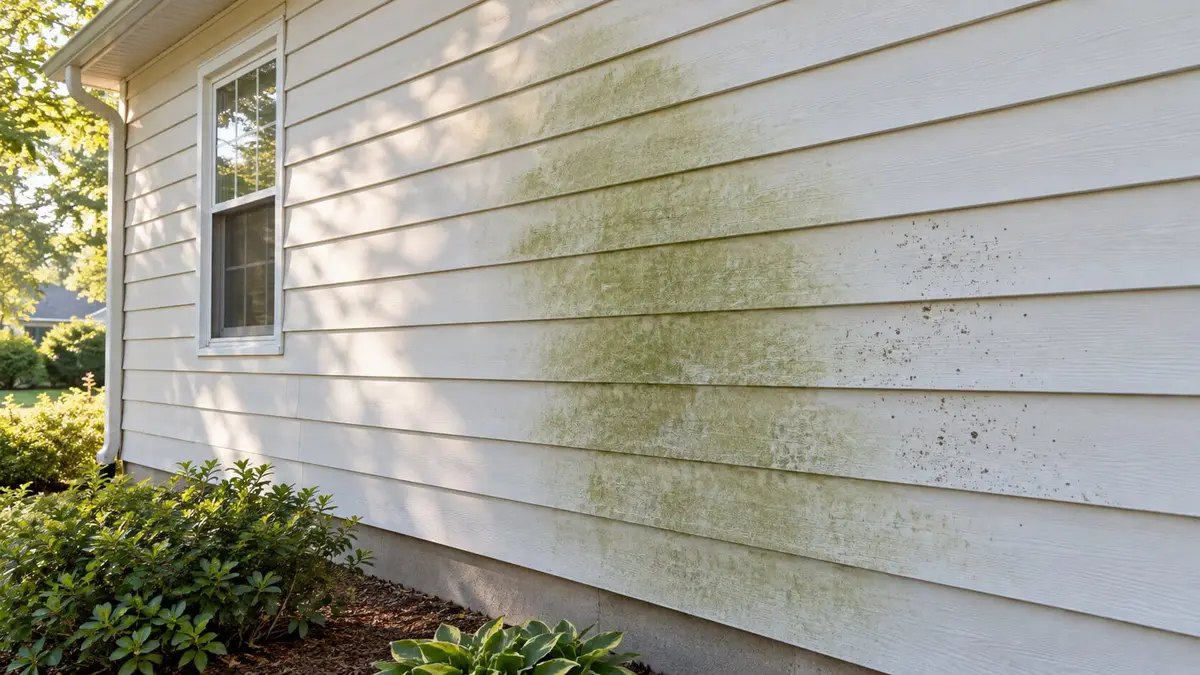
A green film on the shady side and black dots by the garden can make one cleaning job look like two. The real risk is treating both with the strongest online recipe, then discovering that the coating changed color or water went behind the cladding. Safer cleaning choices start with the surface you actually have and a small trial.
There is no reliable national price for this particular cleaning problem. Height, area, finish sensitivity, protection, and any separate repair change the work. A cleaning quote should say what it includes and what it will leave for a siding contractor or painter.
What should you check before washing stained siding?
Find the material and finish first. An invoice, spare package, paint record, or care document can tell you whether you have vinyl, fiber cement, engineered wood, cedar, or coated metal, and whether it is factory finished or painted later. A coating on top of a substrate has its own care limits. Do not pry a course off to identify it. Photograph the wall and note earlier cleaners or coatings from stable ground.
Look for loose boards, open joints, swelling, flaking paint, exposed wiring, or a height that would require climbing or overreaching. Pause routine washing and have a siding contractor assess damaged cladding; an exterior painter can assess failing finish. Keep spray away from electrical equipment and let an exterior-cleaning professional plan safe access for upper areas. A high-pressure spray can injure skin and create electrical hazards, as CDC pressure-washer guidance explains.
Unidentified older cement-like siding needs a qualified asbestos professional’s assessment before disturbance. EPA says appearance cannot confirm asbestos and advises leaving suspect material alone. A pre-1978 painted wall needs lead-safe planning before coating disturbance; EPA’s renovation guidance recommends certified help. See what to check before scraping or sanding pre-1978 paint. Age is a reason to check, not a diagnosis. Cleaning that would disturb either material is outside this homeowner trial.
Can green or black color tell you what the stain is?
No. A broad green or dark film on a damp shaded wall could involve biological growth, but grime can look similar. CDC/NIOSH guidance says color does not identify a mold’s danger. An outside stain by itself does not establish indoor contamination, rot, or a leak behind the wall.
| Pattern you can describe | Possible explanation | Next decision |
|---|---|---|
| Broad film in shade | Growth or ordinary deposit | Check finish and permitted cleaning |
| Tiny stuck black dots near mulch | Artillery-fungus spore deposits | Seek identification; avoid scraping |
| Streaks by cedar fasteners or water tracks | Extractive or iron staining | Ask a wood-finishing professional |
These patterns are clues, not an organism or hazard identification chart.
The University of Connecticut Extension describes artillery-fungus spore masses as small dark deposits associated with mulch and hard to remove from nearby surfaces. Those dots differ from a continuous film growing across a coating. A stubborn dot does not prove you need a stronger chemical. On cedar, Real Cedar’s care guidance discusses extractive and iron staining, which a mildew cleaner may not address. Chalky or flaking paint moves the decision toward finish repair; see how to assess chalky exterior paint.
Which safer cleaning choices fit your siding and finish?
Read the installed product’s current care instructions and the cleaner’s current label together. “Exterior cleaner,” “natural,” and “soft wash” are descriptions, not proof of compatibility. A low-pressure application can still use a chemical that harms a coating; an approved cleaner does not authorize forceful rinsing.
| Siding and finish | Starting category in the named guidance | Check before use |
|---|---|---|
| Vinyl | Gentle, nonabrasive washing in PEPA guidance | Actual siding maker’s cleaner and pressure rules; paint if coated |
| James Hardie fiber cement | Low-pressure water and soft, nonmetal tools in Hardie’s guidance | ColorPlus or field-paint instructions; chemical approval |
| LP ExpertFinish engineered wood | Mild detergent, soft tools, hose rinse in LP’s 2024 instructions | Confirm it is ExpertFinish; avoid high-pressure washer |
| Cedar or other wood | Coating-specific gentle maintenance | Stain type and finish condition |
| EDCO coated metal | Finish-sensitive test cleaning in EDCO care guidance | Exact metal product and coating; stronger cleaners |
These are examples, not substitute instructions for another brand. LP’s general SmartSide care article also advises against pressure washing, but a third-party finish can have different care requirements. EDCO’s steel-product page does not prescribe a method for every aluminum or metal wall.
Does “soft washing” settle the pressure and cleaner question?
No. Ask an exterior-cleaning professional for the named cleaner, its intended concentration, how it is applied and removed, and the siding and coating instructions that permit each step. PEPA allows pressure washing conditionally on the product maker’s permission; Hardie discourages high pressure; LP ExpertFinish says not to use a high-pressure power washer. EDCO discusses power washing but cautions about low pressure. One PSI, nozzle, or distance does not settle all these products.
Directions can also differ. PEPA’s general vinyl advice describes a bottom-up sequence; Hardie’s dirt example describes top-down. Follow the applicable product and cleaner directions rather than combining both into a universal procedure. The same caution applies to chemical choices: cedar refinishing guidance, paint-preparation advice, and Hardie’s warnings about harsh bleach cover different materials and tasks. Do not borrow a recipe from one to use on another.
If you suspect mold and have allergies, immune suppression, underlying lung disease, or chronic respiratory disease such as asthma or COPD, do not clean it yourself. CDC says these groups should not take part in mold cleanup. Have an exterior-cleaning professional follow a plan compatible with your siding and finish.
How do you test a small area without damaging the finish?
Only proceed if the siding is sound, identified, and reachable from stable ground without spray near electrical equipment. If the product instructions and cleaner label conflict, stop and ask the siding manufacturer. A small test cannot make an unapproved product safe.
- Choose an inconspicuous patch and the least aggressive option both documents permit. Use only the allowed cloth or soft brush; avoid abrasive pads, metal brushes, scraping, and hard rubbing.
- Follow the complete label process on that patch, including whether it is a rinse-off or leave-on product. Keep wash water from being driven upward into laps and openings.
- Let the patch dry. Compare its color, sheen, texture, and any coating transfer with the nearby wall. This is a surface-compatibility check, not a mold test.
- If the finish remains sound and the mark responds, continue only in manageable reachable sections under the same directions. If the finish changes or the mark persists, stop. An exterior painter, siding contractor, or product manufacturer can assess what the result means.
For a rinse-off cleaner, follow the directions so residue does not dry on the finish. A leave-on product has different instructions and may depend on weather. PEPA recommends a test area, while Hardie and LP describe soft tools and controlled rinsing for their products. None authorizes increasing pressure or concentration when a mark remains. If access requires upward spray, a ladder, or overspray you cannot control, hand the work to an exterior-cleaning professional.
What about bleach, runoff, plants, and nearby surfaces?
Do not mix cleaning products. In particular, never combine bleach with other cleaners, including ammonia or vinegar, and do not refill a sprayer that may contain an unknown product. CDC’s mold-cleanup guidance warns against mixing bleach and cleansers. It addresses indoor mold cleanup, not a universal exterior bleach recipe or ban.
The cleaner’s current label should govern dilution, protective equipment, weather, application, plant and pet precautions, and when people can reenter treated areas. The siding and finish maker must also permit it. Protect glass, trim, metal, decking, outdoor furniture, and nearby plants as both sets of directions require. “Biodegradable” or “plant safe” on a marketing page cannot replace those instructions. If the runoff path is uncertain, ask the cleaning professional and local wastewater authority before washing; do not assume every drain accepts the same product.
Extensive wet building materials or indoor dampness need a building-envelope specialist to assess the moisture problem. EPA’s advice against routine biocides for indoor mold cleanup does not itself approve or forbid a cleaner on a particular exterior finish.
What if the stain remains or comes back?
Compare photos only after the surface dries. A damp wall can make a mark look stronger or hide a change in sheen. For recurring film, observe from ground level where sprinklers hit, where gutters discharge, and whether vegetation keeps a patch shaded and wet. Sherwin-Williams notes damp, shaded exposure in its mildew guidance, and LP’s care guidance calls out sprinklers and gutters as maintenance concerns. A surface stain alone still does not prove a hidden water leak.
If the black dots are concentrated near wood mulch and remain after an approved test, seek identification or landscape advice rather than scraping harder. If paint chalks or peels, a qualified exterior painter should evaluate the finish. If boards are soft or swollen, a siding contractor should assess whether wood-siding damage extends behind the boards. If water appears to enter at a window, see how to distinguish window-frame, flashing, and drainage problems; the building-envelope specialist can trace the actual path.
Do not seal every wet-looking opening with caulk. Some siding gaps need to drain, and a siding contractor should identify their role before changing them. A sound surface with removable growth may need cleaning only; damaged coating needs a finish plan; damaged boards need a repair assessment. Staining by itself is not a whole-house replacement decision.
What should a siding-cleaning proposal say?
Give the exterior-cleaning professional photographs, the affected wall area, material and finish records, any prior cleaners, and where you have seen repeated wetting. Ask for a small test, how it will be judged after drying, and the exact cleaner and application method. The quote should identify access equipment, protection of openings and surroundings, runoff handling, included area, cleanup, and what happens if a deposit cannot safely be removed.
A siding contractor or building-envelope specialist should take over where cladding is damaged or water enters. A qualified exterior painter handles failed coatings. Suspect asbestos and potentially disturbed pre-1978 paint need their respective qualified professionals before routine cleaning. These are separate scopes that an all-purpose “wash the whole house” quote can obscure.
A promise to remove every black mark without inspecting the finish, a single high-pressure or chemical method for all materials, or a proposal to replace sound siding based on stain color alone deserves another opinion. Compare the method and limits as carefully as the price.
Frequently asked questions
Will a weather-activated cleaner work inside a screened porch?
Maybe not as advertised. As one product example, Wet & Forget says its Outdoor cleaner works with wind and rain to lift stains over time. A sheltered wall may not get that exposure. Check the current label for the exact product and the siding maker’s approval; ask the cleaning professional for a different compatible plan if the directions cannot be met.
When is cleaned wood siding ready for paint or stain?
The coating and wood-product instructions control preparation and dryness. A visually clean surface can still have moisture or deteriorated finish that affects coating work. Have a qualified exterior painter follow the actual wood and coating makers’ requirements rather than using a universal waiting period.
Can the same cleaner go on glass, trim, and gutters?
Only if its label and each adjacent material’s finish guidance allow it. A siding cleaner can contact coatings with different restrictions. Protect those surfaces or have the cleaning professional plan a compatible method for each; rinse or leave-on directions cannot be swapped casually.
When can children and pets return to a treated area?
Follow the current product label’s access and drying directions for that exact cleaner and the actual conditions. The manufacturer marketing FAQ is not a substitute for the container label. Keep people and pets clear until the stated conditions are met and any runoff or overspray concern is resolved.
Sources
- Polymeric Exterior Products Association — How to Clean and Maintain Your Vinyl Siding
- James Hardie — Tips for Cleaning Your Siding
- LP — 7 Tips for Care and Maintenance of SmartSide Siding
- LP — ExpertFinish Care and Maintenance
- Real Cedar — Western Red Cedar Siding Care and Maintenance
- EDCO — Care and Maintenance
- University of Connecticut Extension — Mulch Molds
- Sherwin-Williams — Mildew
- CDC/NIOSH — Mold, Testing, and Remediation
- CDC — Mold Clean Up Guidelines
- U.S. EPA — Lead-Safe Renovations for DIYers
- U.S. EPA — Protect Your Family from Exposures to Asbestos
- U.S. EPA — Should I Use Bleach to Clean Up Mold?
- CDC — Pressure Washer Safety
- Wet & Forget — Top Wet and Forget Outdoor Summer FAQs