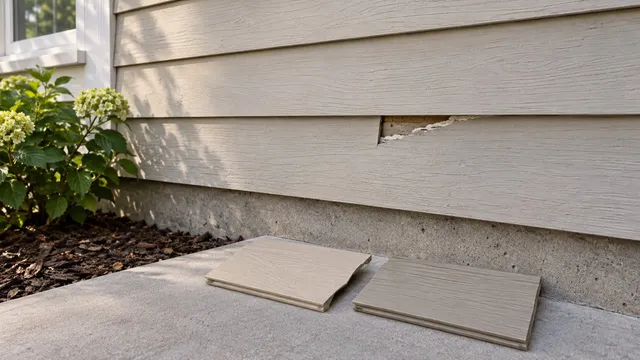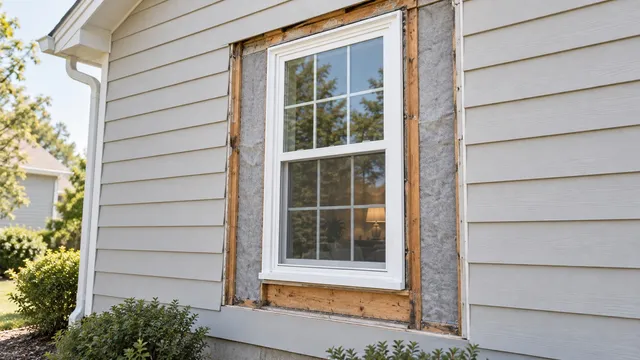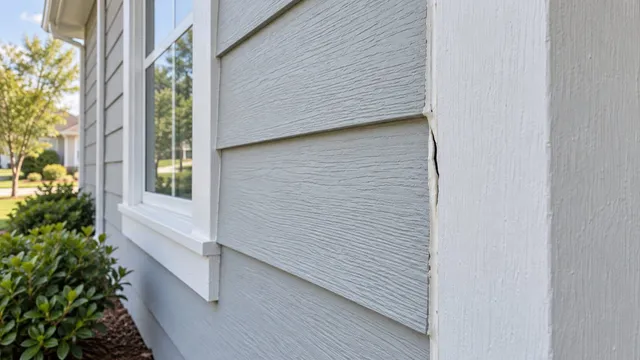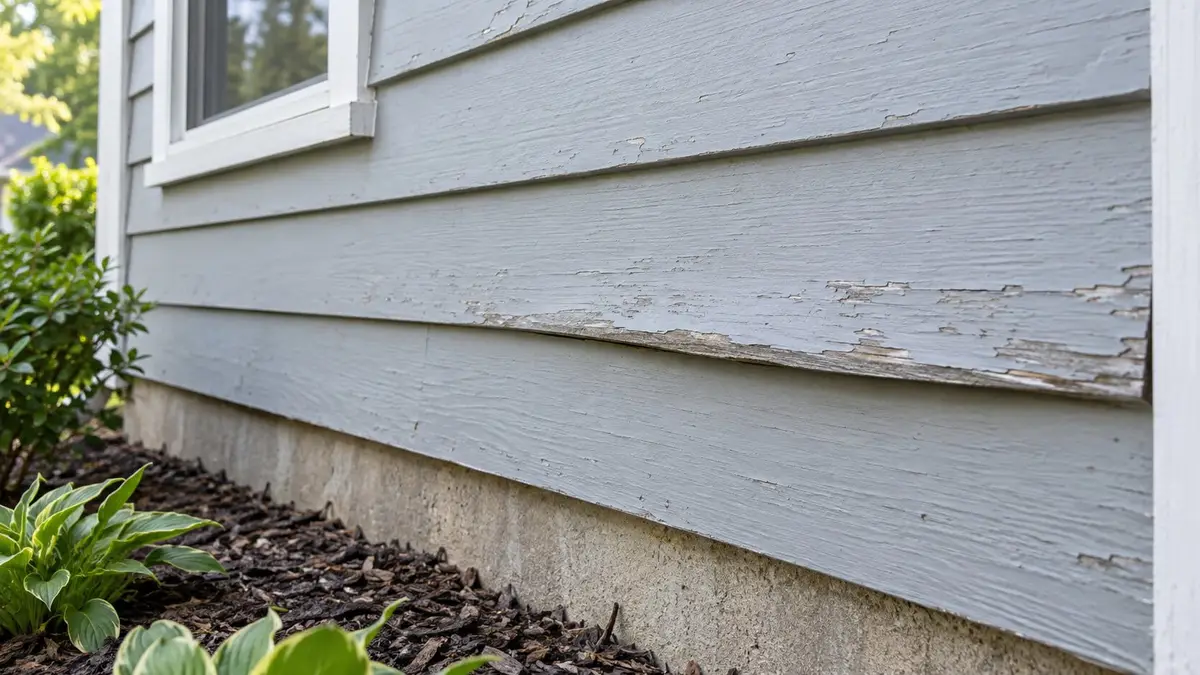
A puffed board edge or peeling paint near a window can make the whole wall seem suspect. You may be looking at moisture movement in a single board, lasting distortion, decay, or a problem that reaches the layers behind it. Those findings call for different scopes, so the visible siding should start an investigation rather than decide its size.
There is no reliable national price for this work before the affected layers are known. Replacing siding, correcting flashing, and repairing sheathing or framing are different line items. A useful estimate makes the known work and the possible concealed work separate.
Can soft or swollen wood siding reveal damage behind the boards?
It can, but the outside face does not reveal the depth. In a typical framed wall, siding covers a water-control layer and sheathing, which covers framing and the interior finish. Some assemblies differ. A leak at a window, roof intersection, or wall base can affect more than the visible board; PNNL’s window-flashing guidance documents concealed damage at those transitions. That possibility is a reason for an inspection, not evidence that this house has damaged studs.
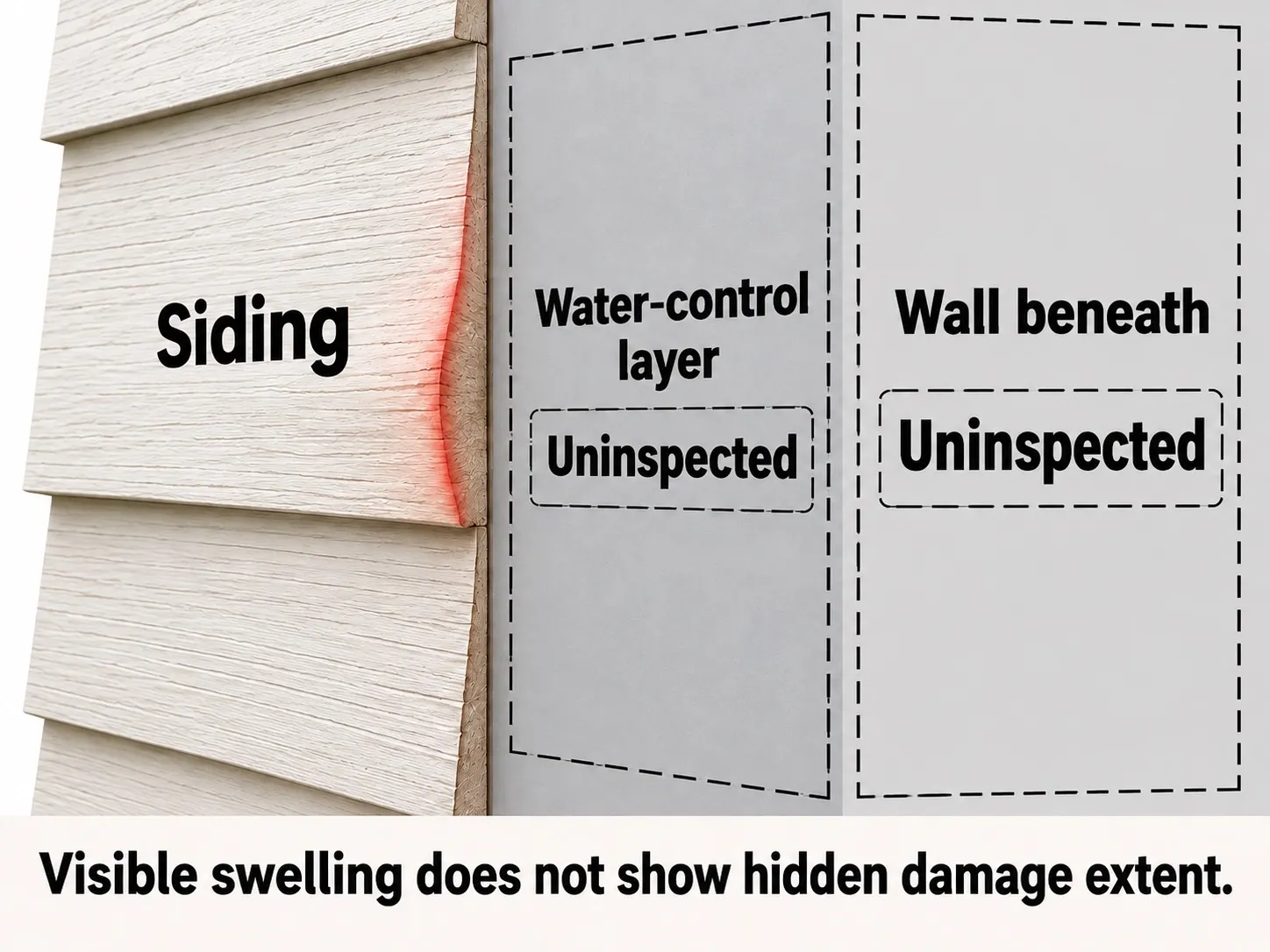
Wood changes dimensions as it takes up and releases moisture. The USDA Forest Products Laboratory’s 2021 wood handbook explains that swelling as a material response. Decay is a different process in which organisms degrade wood. The handbook’s biodeterioration chapter distinguishes fungal stains from decay that affects strength. Peeling coating or a puffed edge alone does not establish decay. A board that feels soft to someone doing prior maintenance deserves assessment, but do not probe it yourself to score its depth.
Identify what material is installed before applying a repair rule. Solid wood boards, modern engineered wood, older hardboard, and plywood siding do not share one moisture tolerance or patch method. Sheathing is a separate structural wall layer even when it, too, is made of plywood or oriented strand board (OSB). A painted woodgrain face cannot identify the exact product. Existing records and the professional’s examination can narrow it down.
When should you seek prompt help for soft siding?
Arrange a siding contractor’s inspection for visibly soft, swollen, or deteriorating siding instead of waiting for the next painting cycle. For active water entry or worsening damage, contact that contractor or a building-envelope specialist promptly; no universal number of safe days to wait has been established. Keep clear of loose material or a displaced wall.
Keep the observation to safe ground and accessible interior areas. Do not climb, pull trim, drill a test hole, or press a screwdriver into painted material. If a pre-1978 surface would be disturbed, EPA lead-safe guidance supports planning with appropriately qualified help; age alone is not a positive lead test. Check the older-paint work plan before any scraping or sanding is proposed. Opening a damp cavity may also expose hidden mold, which EPA says needs care during investigation. An odor does not identify mold or the leak route.
What can you map from the ground without opening the wall?
Take one photograph of the entire wall and one zoomed view of the affected area. Record the date, the first time you noticed the change, whether it looks different after rain, and prior window, roof, siding, or painting work. Describe visible gaps, edge swelling, coating loss, or a changed board shape without touching it. Note any matching interior stain or musty area, while remembering that an indoor symptom may have another source.
| Visible location or pattern | Question for the inspection | What it does not prove |
|---|---|---|
| Beneath a window or door | Is opening drainage and flashing working? | That this opening is the only water source |
| Below a roof-to-wall junction | Is roof runoff directed away? | That siding itself caused the wetting |
| Low edge near paving, soil, deck, or sprinkler | Is repeated wetting reaching the material? | That the entire wall is decayed |
| Matching interior stain or musty area | Which path connects the observations? | Mold or a rain leak by itself |
These location clues guide a site visit, not a remote diagnosis. If sprinkler controls are accessible, redirect or stop spray hitting the siding without approaching unstable material. LP’s SmartSide care page flags repeated irrigation and drainage wetting for that product. Arrange gutter or roof access through the appropriate contractor. Do not use a hose or pressure washer to recreate a leak or seal every opening while the water path is unknown.
Window-adjacent damage may call for coordinating siding and flashing. A visible gap may be a failed seal or a drainage space, as the siding gaps and caulk guide explains. If a musty indoor area persists, tell the inspector; it should not be diagnosed from the outdoor board.
What should an inspection establish about the water source and each layer?
Start with a siding repair contractor or exterior carpenter experienced with water-damaged walls. An unclear or recurring water path can justify an independent building-envelope specialist. A roofer or window professional may be needed at the relevant transition. Give them the photos, rain history, known siding identity, house age, repair records, and indoor observations. Ask them to distinguish what they see from what they infer.
The inspection should address the water source and the condition of siding, water-control details, sheathing, and any framing that may be exposed. PNNL’s wall-base flashing guide describes how drainage and flashing connect and why an opening may need to expand if damage continues. A repair can begin locally and legitimately grow when new material is exposed. That does not make every proposed expansion necessary; the new finding should be photographed and explained before the scope changes.
Moisture readings can help document tested locations and conditions. One low reading is not a certificate for the whole wall. PNNL calls for multiple readings before enclosure in new construction. For an existing wall, ask the contractor which materials and locations were checked and what remains untested.
Before any opening, agree on the initial location, weather protection, lead-paint and possible mold precautions, photographs, and who approves expansion. The contractor, not the homeowner, should handle destructive access. Any suspected framing impairment needs a structural engineer’s assessment. EPA’s structural-integrity course supports specialist escalation when structural damage is suspected; it does not turn a swollen siding board into that finding.
What evidence supports a much larger repair?
Ask for photographs identifying each affected layer, the reason for extending the opening, and a written boundary for replacement. “The wall is rotten” without showing which material has decayed is too vague to compare with another bid. Two scopes may differ because one includes flashing or sheathing and the other does not. If extensive work is proposed without mapped findings, or contractors sharply disagree, obtain an independent second opinion. A change order for documented concealed damage is a normal possibility; its necessity and price still deserve review.
How does the confirmed damage change the repair?
Damage stays in the cladding
If a contractor confirms the underlying layers are sound and finds a manageable water source, localized siding repair or replacement may be enough. They still need to identify the product, suitable replacement profile, attachment, and finish. A filler or hardener on the face does not establish that the water source has stopped. A swollen but dry-looking edge can remain distorted depending on the material and prior saturation.
Sheathing or drainage details need work
A contractor may need wider access to restore the water-resistive barrier, flashing, and affected sheathing. PNNL’s wall-base guide says damp sheathing will dry with improved drainage, while rotting sheathing should be removed and replaced. The contractor must establish the actual condition through professional access, not guess from the siding. PNNL also notes that saturated OSB or plywood panels may not regain their original dimensions after drying. That finding concerns those panels, not every wood-siding product.
Framing or the interior wall is involved
Confirmed framing damage raises the repair beyond a siding job; a structural engineer should define what needs structural assessment before work proceeds. Interior water damage or suspected hidden mold may call for an experienced water-damage professional. Neither is inevitable because an exterior board is swollen. Ask how the water source, wet materials, repaired wall layers, and finish will be handled together. Changing siding materials alone does not correct faulty flashing or a failed drainage route.
Across all three paths, the wall should be ready for enclosure before it is covered. Ask what was repaired, what conditions were checked, and how drying readiness was documented. If confirmed damage is extensive, repairing one wall versus residing the house requires its own comparison.
What should the repair agreement say about concealed work?
Have the quote separate investigation and access, known repairs, possible hidden repairs, and finish restoration. It should say who provides weather protection and cleanup, how old paint will be handled, and how roof or window specialists will be coordinated. Ask how a discovery will be photographed, priced, and authorized before work expands. Locally required permits and inspections depend on the actual scope and jurisdiction.
The major cost drivers are height and access, number and type of affected layers, matching siding, integration at windows or the roof, paint handling, possible interior restoration, and regional labor. These explain why a board-only price cannot stand in for a wall repair. Ask for photographs of restored hidden layers before they are concealed and an explanation of moisture checks. Retain the product-specific care instructions and a record of the corrected water path. After relevant wet weather, observe the original location safely from the ground and report any recurrence; do not create a new flood test.
Frequently asked questions
Does “dry rot” mean the siding is no longer getting wet?
No. “Dry rot” is a misleading name for a decay process that depends on moisture conditions. The USDA wood handbook explains wood-decay conditions and why the moisture source matters. Have the contractor identify current wetting and material condition instead of relying on the name.
Can cedar siding decay even though it is naturally durable?
Yes. The USDA’s 2021 wood handbook explains that cedar heartwood’s natural decay resistance varies, while untreated sapwood has low decay resistance. Neither makes persistent wetting harmless. Have a siding contractor assess damaged or repeatedly wet areas.
Does suspected wood rot mean I need termite treatment?
No. Fungal decay and insect damage are different conditions in the USDA handbook. Have a qualified pest professional identify any suspected insect activity before considering treatment; a soft board alone is not a termite diagnosis.
Would a different siding material prevent wall leaks?
No material change by itself fixes failed water management. The wall’s barrier, flashing, and drainage details still have to work, as PNNL’s wall-base guide explains. Decide on replacement material only after the entry path and affected layers are understood.
Sources
- USDA Forest Products Laboratory — Wood Handbook, Chapter 4: Moisture Relations
- USDA Forest Products Laboratory — Wood Handbook, Chapter 14: Biodeterioration
- DOE/PNNL — Look for Missing Window and Door Flashing
- DOE/PNNL — Flashing at Bottom of Exterior Walls
- DOE/PNNL — Building Materials with High Moisture Content Not Enclosed
- DOE/PNNL — No Visible Signs of Water Damage or Mold on Materials
- LP — 7 Tips for Care & Maintenance of LP SmartSide Siding
- EPA — Lead-Safe Renovations for DIYers
- EPA — Mold Course Chapter 3: Finding Mold and Moisture
- EPA — Mold Course Chapter 2: Why and Where Mold Grows