In a house built before 1978, the layer your scraper reaches may be lead paint. Its color and condition cannot tell you. A certified lead inspector or risk assessor can establish what the planned work would affect.
Start with the work you actually plan: a color change, peeling-trim repair and window replacement can call for different services. This guide helps you choose the evaluation, check credentials and agree on the records you should receive.
What should you check for lead paint before scraping or sanding?
Scraping, sanding, cutting and removing painted components can create dangerous lead dust. EPA’s lead-safe renovation guidance recommends certified evaluation and lead-safe certified contractors for older homes. The January 2026 federal household lead guide explains the particular importance of preventing exposure for young children and during pregnancy.
Keep your own observations visual. A test scrape, a finger rubbed along a dusty sill or a homemade paint chip creates disturbance before the work plan is settled. A broom or ordinary vacuum can redistribute debris; leave its assessment and cleanup planning to the lead professionals named above.
The immediate issue is the surface you plan to disturb. A whole-house repaint, a window replacement and a single trim repair do not have identical affected components. Write down the intended work before deciding whether a paint determination or broader hazard evaluation is needed.
What can you record without touching the paint?
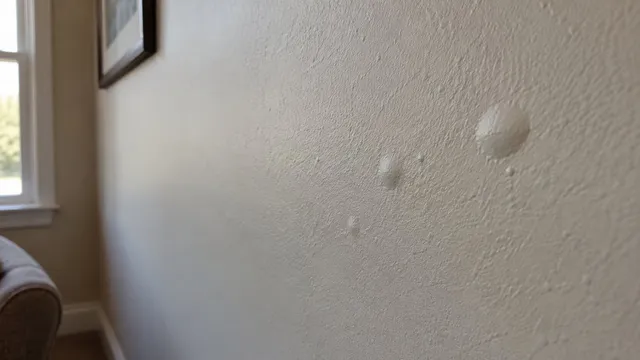
Gather construction records, prior lead reports, renovation records and the proposed painting scope. Identify each room, exterior elevation, door, window and trim piece involved. From an ordinary accessible position, photograph visible peeling, cracking, chalking, water damage and rubbing points. Do not climb to photograph high siding or repeatedly move a sticking door to make a mark appear.
Note who uses the space and what must be protected: children, pregnancy, pets, tenants, shared rooms, childcare, play areas and exterior gardens. Give those details to the certified renovator so the access and protection plan fits your household.
| Visible condition | Who to ask and what to discuss |
|---|---|
| Intact, away from friction or impact | Certified renovator: keeping paint in place |
| Peeling, chalking or chips | Certified risk assessor: hazards and repair needs |
| Rubbing door or window | Certified risk assessor: wear and component condition |
Appearance cannot confirm lead content or measure exposure.
Intact paint can often be managed in place when it will remain undisturbed and away from damaging friction or impact. After the lead assessment, our guide to chalky or faded exterior paint explains the separate coating-preparation decision.
A plumber should investigate a plumbing leak; a building-repair contractor should assess other water entry or damaged wood. Recurring paint bubbles can point to a moisture problem that belongs in the repair scope. For new paint that is already peeling, establish why the coating failed before covering it again.
If the job grows after the first visit—for example, from repainting to trim removal—ask for the lead plan and work scope to be revised before that new work starts. The old determination may not cover the new component.
Which lead evaluation answers your question?
EPA distinguishes inspection and risk assessment. A certified inspection determines where lead-based paint is present. A certified risk assessment evaluates existing hazards in paint, dust and soil and recommends control options. A project-specific paint determination focuses on components the renovation will affect. One service cannot silently stand in for another.
| Your question | Service and written result |
|---|---|
| Does this renovation affect lead paint? | Certified renovator, inspector or risk assessor: affected-component determination |
| Where is lead-based paint? | Certified lead inspector or risk assessor: locations and results |
| Are there existing lead hazards? | Certified risk assessor: hazard findings and control options |
Can your painter test it? EPA’s contractor guidance names three routes: a certified renovator using an EPA-recognized kit; a certified lead inspector or risk assessor using X-ray fluorescence (XRF); or professional paint-chip sampling for laboratory analysis. The chip may be collected by a certified renovator, inspector or risk assessor. Request the written determination, affected components, method and exclusions.
Testing is not universally required before every federally covered renovation. EPA’s contractor guidance allows work under the applicable lead presumption and requirements instead of a compliant negative determination. A retail swab result from one spot is not a whole-house clearance or necessarily the professional documentation needed to exclude a component from covered RRP work. If reports disagree or omit planned surfaces, get clarification from a certified lead inspector or risk assessor before proceeding.
Paint testing before work also differs from dust checks after work. A negative component determination does not report whether dust elsewhere was created during an unrelated project, and a later dust result does not identify every buried paint layer. Keep the report tied to the precise question it answered.
Who must be certified for the work?
The federal Renovation, Repair and Painting (RRP) rule generally covers paid work that disturbs paint in pre-1978 housing and child-occupied facilities. The coverage exceptions below must be checked against the actual work. In an EPA-administered jurisdiction, EPA requires the renovation firm to be certified and a certified renovator assigned to each project. Other workers may work under that renovator’s required training and oversight. A general painter’s license or one employee’s training card does not by itself establish firm certification.
Check the address’s administering program, not a remembered state list. Some states and Tribes run EPA-authorized RRP programs; EPA’s live jurisdiction links point to them. Wisconsin, for example, administers its own lead-safe renovation rule and distinguishes company from individual certification. Its terms do not govern another state. Inspection, risk assessment and abatement have their own professional credentials and sometimes a different program directory.
Under the federal minor-repair definition, the area limit is six square feet per interior room or 20 square feet outside. That exception also requires no window replacement, demolition of painted surfaces, or prohibited/restricted practices. Count the whole surface of any removed painted component; non-emergency jobs in the same room within 30 days count together. These limits determine coverage, not a safe amount of exposure.
Bid red flags include open-flame burning, heat guns at or above 1,100°F, and high-speed paint removal without the required shrouding and HEPA-vacuum dust collection. Federal RRP prohibits or restricts those methods. A small patch does not excuse them; ask the administering program to settle disputed coverage.
Does doing the work yourself change the answer?
EPA says the federal RRP rule generally does not apply to homeowners working on their own home. It identifies rental of all or part of the home, in-home childcare and renovation for resale profit as situations where that general exclusion does not hold. Paid covered work does not become exempt because the customer owns and occupies the house. State, local and program-specific requirements can add obligations.
This regulatory distinction is not a recommendation to scrape or sand suspect paint yourself. The dust risk does not disappear when a rule’s certification provision does not apply. Choose qualified assessment and a safe work plan before disturbance.
Is the goal repainting or lead-hazard abatement?
Renovation and abatement have different purposes and programs. Painting or repair may disturb lead incidentally; abatement is work specifically designed to address lead hazards under a separate regulated process. A lead-positive paint result does not automatically order whole-house stripping.
A certified lead risk assessor can discuss keeping suitable intact paint under maintenance, professional repair, component replacement, enclosure or other evaluated options. Some options leave lead-painted material in place and require future attention. Ordinary paint or primer over a hazard is not proof of permanent control, and no encapsulant works on every condition. If an official hazard order exists, give it to the evaluator and contractor; it may determine the required work and completion standard.
Ask for the specific hazard, the proposed objective and the result expected from the chosen service. A bid for extensive removal without documented conditions, alternatives or a reason to prefer that scope deserves an independent risk assessor’s view. Do not confuse an RRP certificate with an abatement credential.
What must the proposal and completion record say?
Before authorizing work, ask for a written scope that names the affected components, evaluation or presumption basis, repairs, firm and assigned renovator, access restrictions and how changes will be approved. Ask how people, pets, belongings, adjacent rooms, exterior soil and neighboring areas will be protected. The contractor should explain outcomes and responsibility without asking you to design the barriers yourself.
Discuss whether any space must be unavailable during the work and when the professional will release it for use. There is no universal move-out period for every paint project. Ask what pre-renovation information will be supplied and which records you will receive. Wisconsin’s homeowner hiring guidance illustrates the value of verified company and individual credentials and a written agreement; check your own jurisdiction’s process.
Compare bids by evaluation, affected components, access, repairs, containment, cleanup, disposal, repainting and any agreed or required dust testing. There is no reliable national price for this particular project; cost depends on those variables and the governing program. A low bid that omits the basis for “lead-free,” or refuses to identify credentials and completion evidence, needs clarification before work begins. The broader painting-quote guide can help compare the non-lead parts of the scope.
Decide before work how completion will be checked
Under federal RRP, applicable cleaning verification by the certified renovator is distinct from professional laboratory dust sampling. Interior and exterior procedures differ; 40 CFR Part 745 Subpart E governs the details. Abatement clearance is a separate process. Ask which applies here and who will document it.
If dust testing is included or required, identify the qualified sampler, applicable EPA, state or local standard, written result and responsibility for further cleaning or retesting. EPA explains that revised dust-lead reportable and action levels began January 12, 2026 in EPA-administered jurisdictions; authorized state schedules require separate confirmation. These levels are not automatic tests after every repaint or the pass/fail values of an RRP visual card. A clean-looking room or a result below an applicable action level does not mean zero lead or zero risk. Keep the final documents and the record of any lead paint left in place for future work.
Frequently asked questions
My seller disclosed no known lead. Does that mean the house tested negative?
No. EPA’s real-estate disclosure guidance concerns known information and available reports; no knowledge is not a negative professional test. Request existing reports and ask a certified lead inspector or risk assessor about the surfaces your project would disturb.
Is a 1980 addition to a 1950 house automatically outside RRP?
No. EPA says RRP applies to that renovation unless a certified renovator, lead inspector or risk assessor has determined that the affected components are free of lead-based paint. The addition’s date alone does not exempt the work; give the firm the construction records and request its written determination.
Can old varnish or clear finish contain lead?
Possibly. Wisconsin’s lead guidance includes older paint and varnish in its caution. Appearance or transparency cannot establish the content. Have a certified lead inspector or risk assessor evaluate the actual finish before disturbance.
What if a contractor appears to ignore lead-safe requirements?
Stop authorizing the questionable work and ask for the firm’s certification, plan and administering program. EPA provides a complaint route for possible violations based on location. A report is not a finding of violation or a guaranteed cleanup response.
Is financial help available for lead work?
Possibly, depending on location, eligibility and current program funding. Wisconsin’s Lead-Safe Homes Program is one state example, not a national entitlement. Ask your local health or housing agency about current options before assuming assistance will cover a scheduled project.
Correction
October 1, 2026: The addition FAQ previously left RRP coverage undecided. EPA says the renovation is covered unless the affected components have the required professional lead-free determination.
Sources
- EPA — Lead-Safe Renovations for DIYers
- EPA, CPSC and HUD — Protect Your Family From Lead in Your Home, January 2026
- EPA — Questions and Answers on Lead Inspections and Risk Assessments
- EPA — RRP Program: Contractors
- EPA — RRP Program: Firm Certification
- Wisconsin DHS — Lead-Safe Renovation Rule
- EPA — Lead Abatement Versus Lead RRP
- Wisconsin DHS — How to Hire a Lead-Safe Contractor
- 40 CFR Part 745 Subpart E — Residential Property Renovation
- EPA — Real Estate Disclosures About Potential Lead Hazards
- EPA — RRP in a Post-1978 Addition
- EPA — Dust-Lead Rule Effective and Compliance Dates
- EPA — Report Lead-Based Paint Complaints
- Wisconsin DHS — Lead-Safe Homes Program