The lower sash stops just short of the sill. You press harder, and the lock finally turns. Is a new latch enough, or is the frame making the latch miss? That distinction matters before you buy parts or a whole window.
There is no reliable current national price for this repair. A hardware visit, installer correction, wood repair, and window replacement are different jobs; get a diagnosis and itemized local quotes before comparing prices.
Why won’t my window close or lock?
Start with where the movement stops, not with a screwdriver. Sierra Pacific’s owner’s manual asks whether both sashes are fully closed before investigating a hard-to-lock double-hung window. It then checks the frame’s shape and sill. A lock can be sound yet miss its keeper, the fitting it catches, because the sash never reached its intended position.
| What you see | First possibility | Safe next check |
|---|---|---|
| Sash stops before closing | Debris, paint, swelling, or alignment | Look at tracks and the rub point |
| Sash closes; lock misses keeper | Sash seating or frame alignment | Compare gaps on every side |
| Lock worked only with pressure | Binding sash or shifted keeper | Record what happened; do not apply pressure to reproduce it |
| Wood sticks in humid months | Seasonal moisture movement | Compare with dry-season behavior |
| New unit never locked correctly | Installation alignment | Photograph gaps; call installer |
| Several openings stick with cracks | Possible house movement | Record pattern; call an engineer |
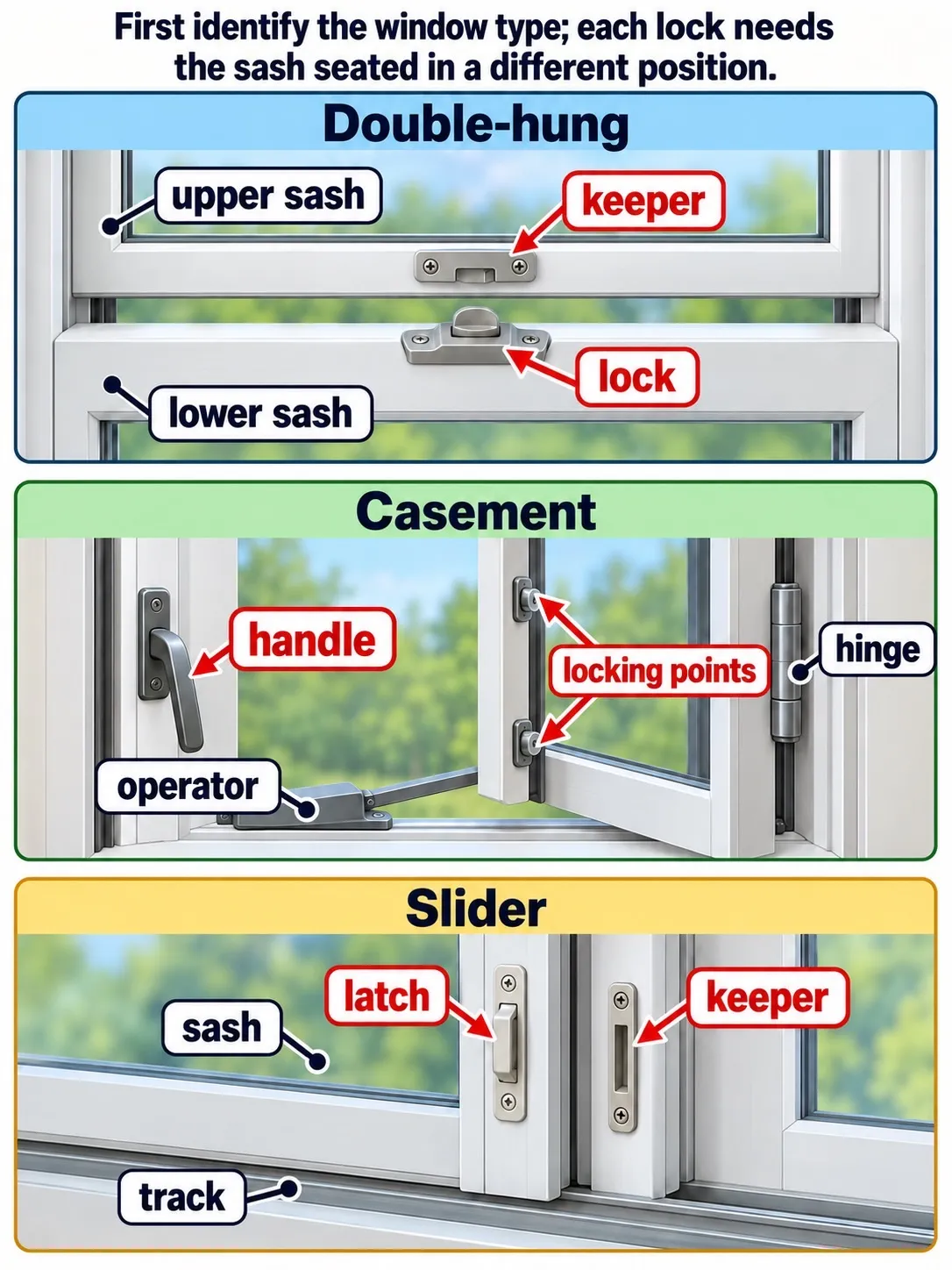
Identify the window type before comparing the position of its sash and locking hardware.
Note the window type and material. On a double-hung unit, both the upper and lower sashes move vertically, and their meeting rails must line up. A casement or awning window swings on hinges, uses an operator crank, and may have several locking points. A horizontal slider’s latch must meet its frame keeper after the sash tracks into position. A diagnosis for one type doesn’t transfer automatically to another. Before any gentle closing or lock test, leave cracked or loose glass and a hanging sash or damaged balance untouched; call a glazier for glass or a window repair technician for the sash.
Write down when the trouble began: after cleaning, painting, a wet season, a storm, or installation. One window on one wall is different from several windows and doors changing together. Photograph the fully closed position from inside without pushing the glass.
Is the frame out of square, or is the lock broken?
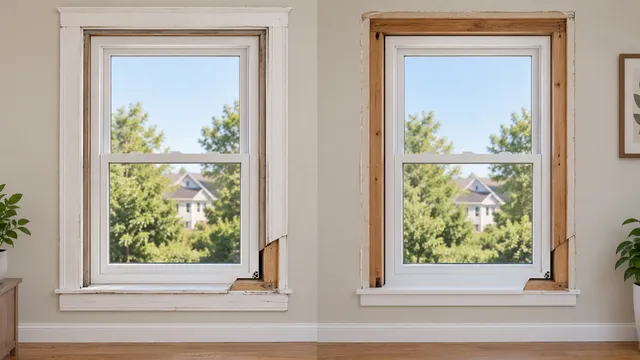
The reveal is the visible gap between sash and frame. Close the window gently and compare that gap at the top, bottom, and sides. An uneven reveal or one corner touching before the other suggests alignment needs checking. On a double-hung window, notice whether one end of the lower sash touches the sill first. Simonton’s installation instructions require a plumb, level, square unit even if the opening is not square; they warn that otherwise the locking system may not engage.
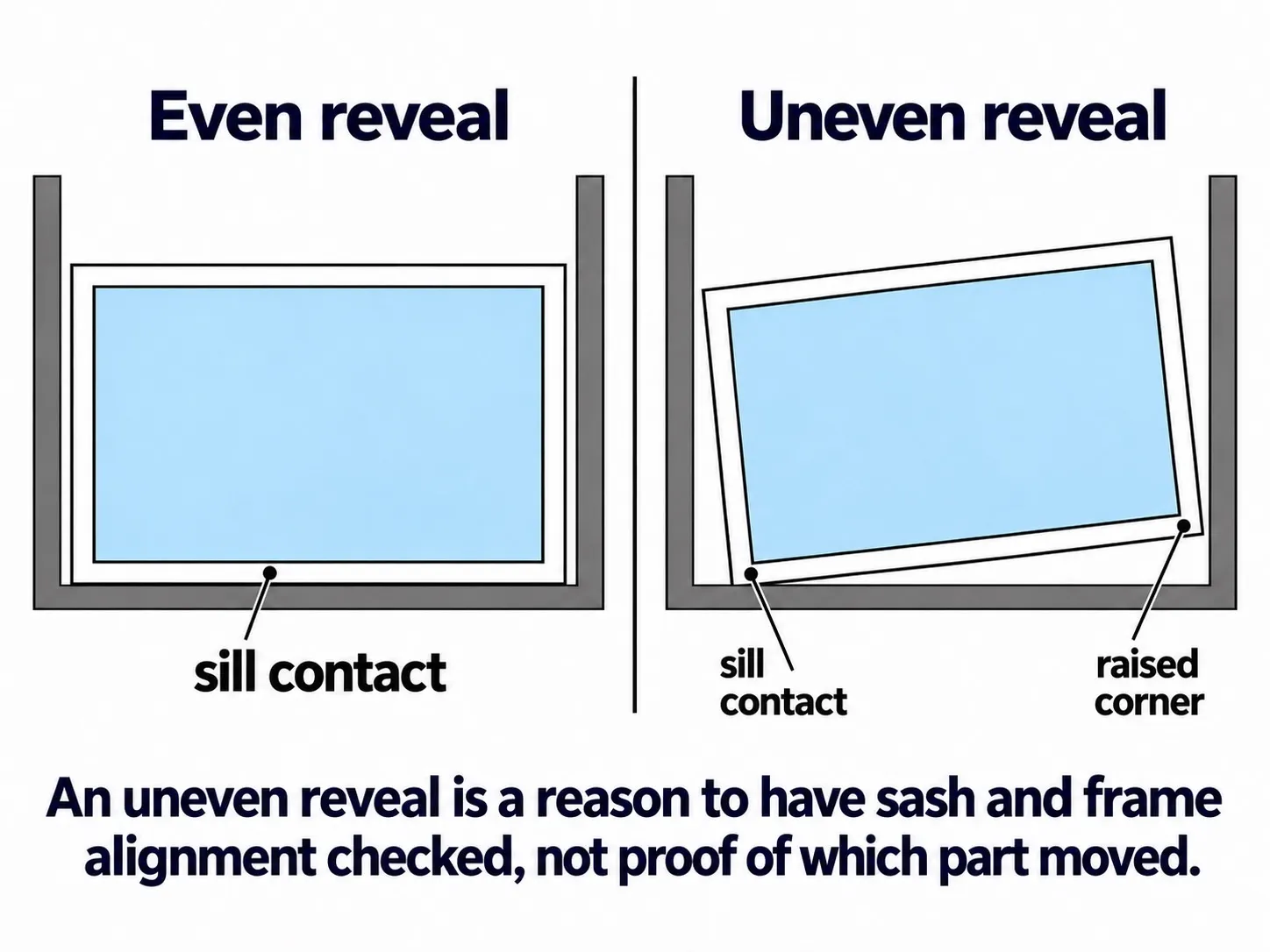
The tilt is exaggerated to show the gaps. Uneven reveals warrant an alignment check; they do not identify which part moved.
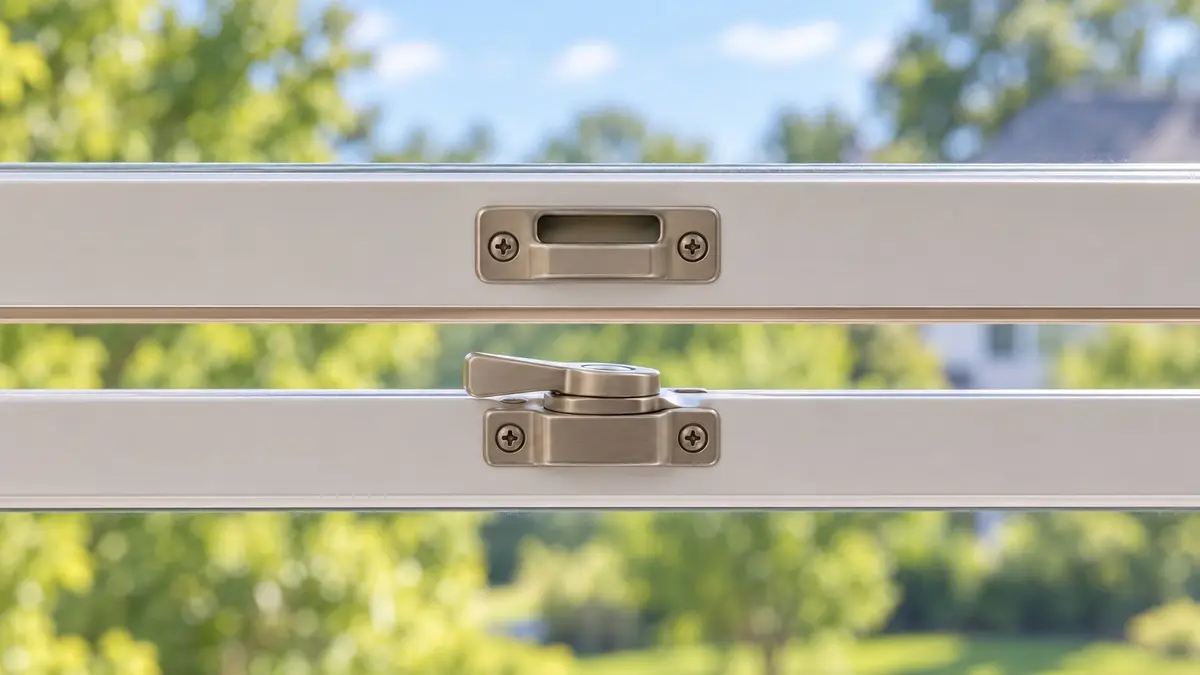
Observe the lock as you gently turn it. Does it pass above the keeper, strike its edge, or fail to move at all? A lever that spins, a visibly bent keeper, or loose hardware on an otherwise even, fully seated sash makes a hardware fault more plausible. A handle that moves normally but misses while the sash sits crooked points elsewhere. Record the direction of the miss for the technician.
A sash that’s tight midway up a jamb yet loose near the ends can suggest a bowed side. Sierra Pacific names over-shimmed jambs and a crowned sill among installation causes of hard operation. Simonton warns that overtightened installation screws can bow a frame. These are reasons for an installer to check shims and fasteners, not for you to loosen hidden screws or remove trim.
A lock also helps press the sash against weatherstripping. The National Park Service’s 1981 wood-window guidance describes meeting-rail locks as helping weatherstripping work. If this window also feels drafty, see when weatherstripping helps a drafty window after the closing problem is diagnosed. New weatherstrip alone cannot make misaligned rails meet.
Can humidity, paint, or dirt make a sash stick?
Yes, especially in wood. The USDA Forest Products Laboratory’s 2021 Wood Handbook chapter explains that seasonal moisture changes matter more for wood movement than daily fluctuations. A protective finish slows dimensional change but does not stop it. A wood sash that rubs at the same spot each humid season and eases when the air dries fits this pattern. An all-vinyl sash does not swell from humidity like wood; look first for seating, debris, hardware, or installation trouble.
Look for a visible rub mark, peeling finish, paint on weatherstrip, and grit in an accessible track or hinge channel. Sierra Pacific lists unfinished wood swelling and paint or stain on weatherstrip as problems. JELD-WEN’s care guide recommends cleaning hardware and debris when operation suffers. On unpainted, intact surfaces, wipe accessible dirt with a soft cloth. In a pre-1978 home, do not disturb painted joints, screws, or loose paint; EPA advises damp cleanup for paint dust, and an RRP-certified renovator should handle paint-disturbing repair. If the sash then travels normally, debris was the likely obstruction; if it still binds, stop pressing and show the rub point to a window technician.
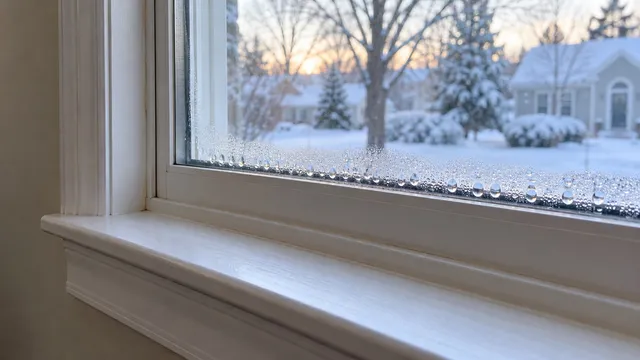
The EPA’s general moisture guidance recommends keeping indoor humidity below 60%, ideally 30%–50%, if possible. That is household moisture guidance, not a window clearance specification. If the sill is wet too, first distinguish indoor condensation from a window leak; fixing only the sticking sash will not resolve the source of water.
What if an older wood window is painted shut?
The National Park Service says accumulated paint can impede historic sash operation, while peeling paint alone does not prove the wood is unsound. The same paint buildup can bind other openings; see why a freshly painted door sticks when painting preceded the problem. Softness at the sill, bottom rail corners, or joints changes the repair scope because moisture drives decay there. A window restoration specialist can separate paint buildup from wood needing repair.
EPA says homes built before 1978 are more likely to have lead-based paint, and window friction can create chips and dust. Do not cut, sand, or scrape the painted joint to free it. EPA advises DIYers to use lead-safe practices, and paid contractors who disturb painted surfaces in this housing must follow the RRP program. Hire an RRP-certified renovator for paint-disturbing work.
When is the hardware itself the problem?
After the sash seats evenly, inspect what you can see: a loose lock screw, a cracked handle, a bent keeper, or a crank that slips. JELD-WEN includes tightening loose hardware screws in ordinary maintenance. On intact, unpainted hardware, if the screw tightens normally and the lock then engages without forcing, the repair may be small. In a pre-1978 home, leave painted screws, joints, and loose paint undisturbed; damp-clean paint dust as EPA advises and hire an RRP-certified renovator for paint-disturbing repair. A stripped screw, moving keeper, or damaged operator needs a window repair technician to match the part to the brand, model, and opening direction.
Do not begin by shifting the keeper to meet a crooked sash. That can disguise a frame fault and leave the weather seal poor. If the sash is square and seated but the lock alone misses, ask the technician whether the maker allows keeper adjustment and whether replacement hardware is available for this model. A discontinued part can affect the repair decision more than the visible size of the defect.
Lubrication also depends on the part. JELD-WEN specifies white lithium grease for operator gears, light oil for hinge pivots, and silicone applied by cloth for certain tracks and liners; it warns silicone can harm some plastics and complicate wood refinishing. Sierra Pacific cautions against petroleum lubricants that collect dirt. Find the guide for your unit before applying anything. In salt-air coastal locations, JELD-WEN calls for more frequent hardware care.
Did tilting a double-hung sash cause the lock to miss?
It can. Sierra Pacific tells owners to confirm that pivot pins have seated in their balance shoes after a tilt sash is returned. The shoes connect the sash to its balance mechanism. A pin left outside one shoe can leave a sash crooked. Also check whether the upper sash is fully raised: a top sash that drifted downward keeps the meeting rails from aligning even when the lower sash is down.
Follow the manufacturer’s ordinary tilt-and-return directions only while the sash is supported and moves normally. If a shoe is damaged, a balance is under tension, or the sash hangs unevenly, stop and call a window repair technician; balance assemblies can store force. A sash that also will not stay open may need a balance repair, rather than a new lock.
Could sticking windows mean a foundation problem?
One sticky window does not establish foundation movement. An engineer-authored guide to expansive soils lists sticking windows and doors alongside wall cracks, sloped floors, and exterior stair-step cracks; it says concern increases as indicators accumulate. Look for a new cluster: several openings on one side, new cracks above doors or at wall corners, trim separating, or a changed floor slope.
The USDA also notes that drying framing in new houses can distort openings. If the home is new, document changes for the builder. If several indicators appear or keep growing, hire a licensed structural engineer or geotechnical engineer to assess the pattern before paying to reset windows. The Colorado Geological Survey says identification of swelling-soil hazards belongs with a qualified soil engineer or engineering geologist. A foundation-repair sales pitch is not an independent diagnosis.
What if a new replacement window never locked?
Photograph the sash closed gently, each reveal, the point where lock meets keeper, and any rubbing mark. Note whether it has behaved this way since installation. Simonton’s instructions tell installers to recheck operation after fastening; they warn that poor squareness can prevent lock engagement. Sierra Pacific’s casement troubleshooting says a bowed or out-of-square installation needs correction.
Call the original installer or dealer and request an alignment inspection, including frame width at top, middle, and bottom, sill shape, shims, and fasteners. Ask whether the product warranty or installation workmanship warranty applies; terms differ. Avoid moving shims or keeper positions yourself before the installer records the condition. In areas with special wind-anchorage rules, the installer should also confirm compliance with the locally adopted requirements.
What can you do today while it won’t lock?
For an intact sash without loose glass, confirm both sashes are seated, clean reachable tracks, photograph the gap, and follow the manufacturer’s maintenance guide. If it will not close ahead of weather, ask a window repair technician for a temporary closure that keeps water out without permanently bonding the sash.
Security has a second constraint in sleeping rooms. A February 2024 tip sheet on the Washington-amended 2021 IRC says the opening must operate from inside without a key, tool, or special knowledge. Local adoption and amendments vary. Do not screw a bedroom window shut or install a stop that defeats escape. Ask the window technician and local building department about a safe temporary device.
For a child’s room, CPSC says screens do not prevent falls. It recommends stops that limit opening to no more than 4 inches and, on the sixth floor and below, guards that adults and older children can release. A loose, unlatching window near a child needs prompt repair; a window technician can select a device compatible with escape needs.
Repair the lock, frame, or entire window?
Ask the technician to name the failed part and the reason it failed. Hardware repair makes sense when the sash and frame are sound and correctly aligned. An installer may be able to correct a new unit’s shimming or fastening. A restoration specialist may repair an older wood sash. If its frame is sound, compare storm windows with replacement windows before choosing tear-out. Rot or a distorted outer frame changes the decision; see how frame condition affects insert versus full-frame replacement.
A quote should separate the diagnostic fee, parts and part numbers, labor per window, any reinstallation, wood repair and refinishing, access equipment, and lead-safe work when applicable. Ask which warranty covers the product and which covers the labor. Get a second diagnosis when a single failed latch prompts a whole-window replacement pitch without a frame check.
Sources
- Sierra Pacific Windows — Clad and Wood Care and Maintenance Guide
- Simonton — Replacement Window Installation Instructions
- JELD-WEN — Care and Maintenance: Wood Windows and Patio Doors
- National Park Service — Preservation Brief 9
- USDA Forest Products Laboratory — Wood Handbook, Chapter 13
- U.S. EPA — Protect Your Family from Sources of Lead
- U.S. EPA — RRP Program: Consumers
- U.S. EPA — A Brief Guide to Mold, Moisture and Your Home
- U.S. CPSC — National Window Safety Week
- MyBuildingPermit — Residential Emergency Egress Openings
- Marshall B. Addison — Living With Expansive Soils
- Colorado Geological Survey — Expansive Soil and Rock