Your ceiling stays dry in ordinary showers, then spots or drips during a hard storm. Runoff, sideways rain, and long wetting can expose a weak detail. The visible drip may be far from the entry point.
There is no reliable national price for this repair. A gutter correction and a roof-wall flashing rebuild involve different work. Start a storm log to focus the inspection.
Why can a roof leak only during heavy rain?
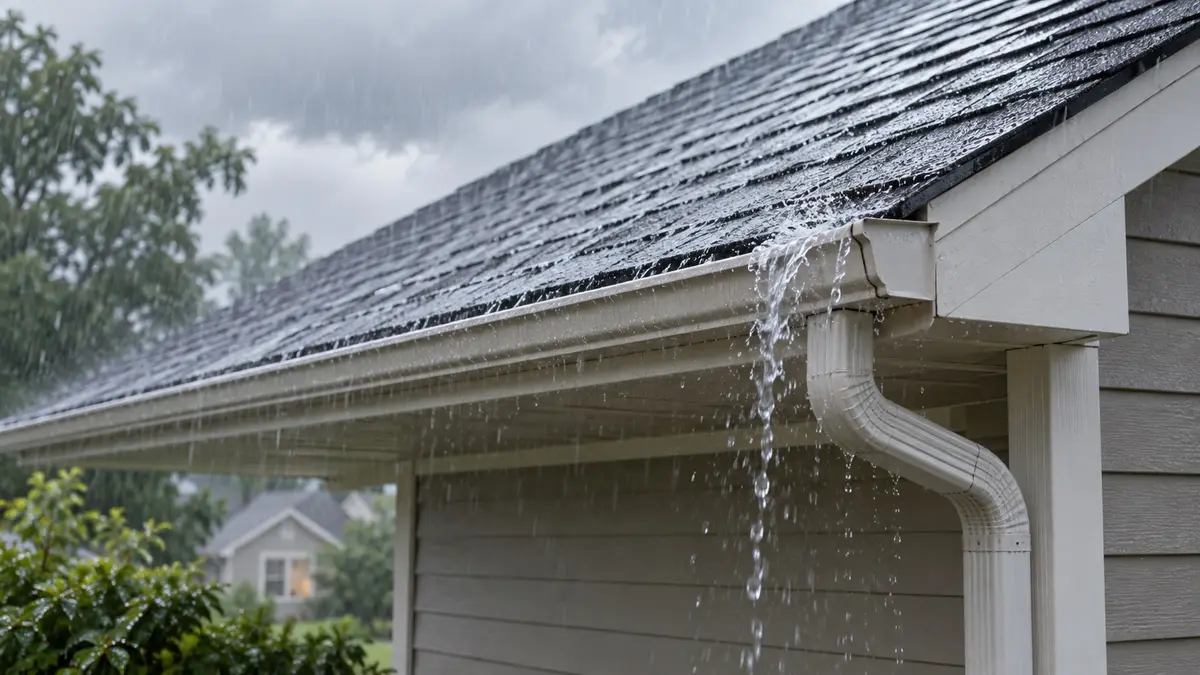
Think of volume, wind, and duration. A cloudburst concentrates runoff in valleys and gutters. Wind can drive rain under an edge or into a vent. A long storm lets materials store water. Building Science Corporation describes wind-driven rain and stored moisture; DOE notes that a few inches of rain can produce several thousand gallons of roof runoff.
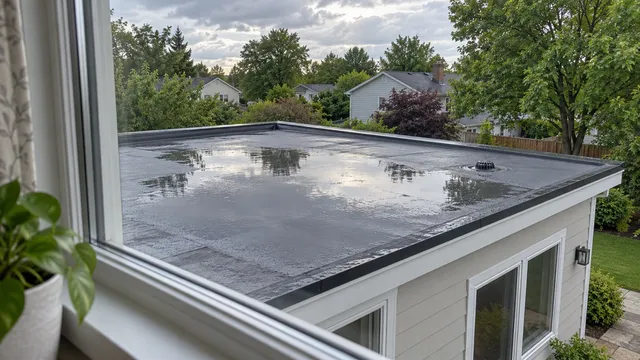
Shingles shed water; underlayment provides another line of protection. Flashing protects changes and openings. A ceiling stain does not identify a failed shingle. Low-slope membrane roofs need their own material-specific investigation, including standing water on a flat roof.
What needs attention before you investigate the roof?
Keep away from a sagging ceiling and from water at a light, fan, outlet, or wiring. A licensed electrician should evaluate water-exposed electrical equipment before anyone touches it. A water-damage restoration contractor should assess an unstable ceiling. Do not cut into the ceiling yourself. Move belongings or set a bucket under a small drip only when the area is safe.
Photograph the stain and date its edge. Record whether it spreads, even if the drip stops with the storm.
What should go in a heavy-rain roof-leak log?
Log every substantial storm, including those without a drip. Dry events help reveal wind or duration patterns. Record when the first drip appears.
| Storm date and rain | Wind direction and duration | Leak start, stop, and first place |
|---|---|---|
| Include dry heavy storms | Note a directional gust or long soak | Record delay and photos |
Add roof material, known repairs, and recent window, siding, chimney, skylight, gutter, solar, or vent work. Photograph the first wet spot and the same location later from a safe position. DOE advises more drainage capacity in hot- and mixed-humid areas and Gulf/Atlantic high-wind areas; cold-climate gutters can freeze, while some dry climates may not need them. EPA’s archived indicator reported a growing share of precipitation in intense single-day events, using data through 2015. NOAA’s location tool gives context for a particular storm, not its leak cause.
What does the storm pattern point toward?
Use the log to choose first inspection targets, not to declare a cause.
| Pattern | First places to inspect | Likely trade |
|---|---|---|
| Cloudburst, little wind | Gutter overflow, valley, eave, downspout | Roofer or gutter contractor |
| One wind direction | Exposed vent, roof-wall junction, wall or window | Roofer plus exterior specialist |
| Long lag or dripping after rain | Slow path through roof or wall materials | Building-envelope contractor |
| Snowmelt or dry cold days | Ice at eaves or underside condensation | Roofer or insulation specialist |
Does a cloudburst-only leak suggest a gutter or valley problem?
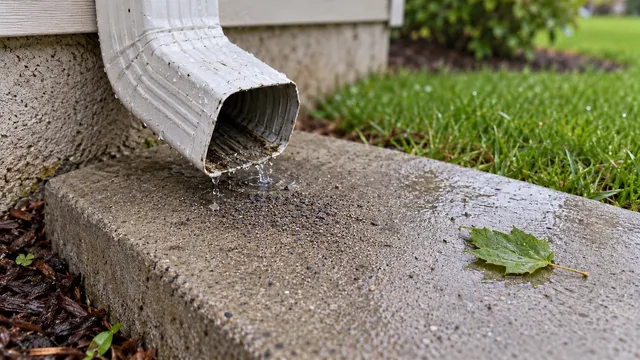
It points toward concentrated runoff. The National Park Service’s roofing brief describes debris backing water under roofing units. DOE’s roof-wall guide says heavy rain can overwhelm gutters and send water down the wall. From a safe ground-level spot, note where overflow occurs. A downspout that stays quiet while its nearby gutter spills is worth reporting, but the observation alone does not establish its capacity or cause.
Guidance differs by purpose. DOE gives 1 square inch of downspout area per 100 square feet of roof, 20–50 foot spacing, and a gutter slope of at least 1/16 inch per foot. HUD’s 2000 rehabilitation guide calls 7 square inches generally the minimum except for small roofs or canopies, and says at least one downspout is usually needed per 40 feet of gutter. These are guidance figures, not rules for your house; ask a contractor to assess its catchment and discharge.
Does one wind direction point to a vent, wall, or window?
Often it does. Wind can push rain upward at exposed joints, and an attic vent without suitable baffling can admit wind-driven moisture, according to DOE’s 2006 roof and ceiling brief. IBHS FORTIFIED’s roof guidance discusses rain through vulnerable attic vents and under inadequately supported soffits. Ask the roofer to inspect the windward roof and the adjoining wall. A stain at a window head or exterior wall-ceiling line strengthens the case for a window or siding specialist. The wind-driven window leak guide covers that branch.
What does a delayed drip mean?
A leak that begins hours into a storm or continues after rain stops points toward storage or a longer path. Water can follow framing or layers before reaching a ceiling; absorbent materials can release it later. Record the time lag in both directions. A drip after the storm does not by itself prove that a chimney, valley, or particular shingle failed.
Snowmelt at an icy eave and moisture on the underside of a roof deck during cold, rain-free weather follow different mechanisms. Building Science Corporation’s ice-dam digest separates ice backup from attic condensation. Tell the roofer which weather was present rather than folding these patterns into a heavy-rain diagnosis.
Which roof details should the contractor inspect?
Valleys concentrate runoff; leaves or compromised lining can matter in a cloudburst. At eaves, overflow can route water toward the wall. A roofer should inspect both. Chimneys have flashing junctions; a wide uphill side may have a water-diverting cricket. Vent boots, exhaust caps, and skylights interrupt the covering. HUD’s 2000 guide calls leaking skylights common and notes brittle flashing as an inspection finding.
At a roof-wall junction, step flashing channels water along successive courses and a kick-out at the lower end diverts it away from siding. DOE warns that a poorly integrated kick-out can do more harm than good. Model-code guidance cited by DOE calls for kick-outs, but local adoption and the requirements triggered by existing-home work vary. The University of Minnesota Extension reports seeing incorrectly lapped step and apron flashing; surface tape over a backward-draining connection only postpones failure.
Low-slope porch or addition roofs deserve their own material check. An Illinois adoption of model building-code text allows asphalt shingles at 2:12 or steeper, with double underlayment below 4:12. HUD’s 2000 inspection guide says no asphalt-shingle roof should be below 3:12. The manufacturer’s current instructions and locally adopted residential rules govern the actual job; those two guides should not be silently combined into one universal minimum.
Could the “roof leak” enter through a wall or window?
Yes. A lower roof can send water behind siding at its wall intersection if the kick-out or the wall barrier connection is missing or defective. A window joint or wall penetration can admit wind-driven rain that later appears as a ceiling stain. Building Science Corporation’s house investigation documents a missing kick-out case and a leak tied to one wind direction. The visible stain identifies an exit, not necessarily the entry.
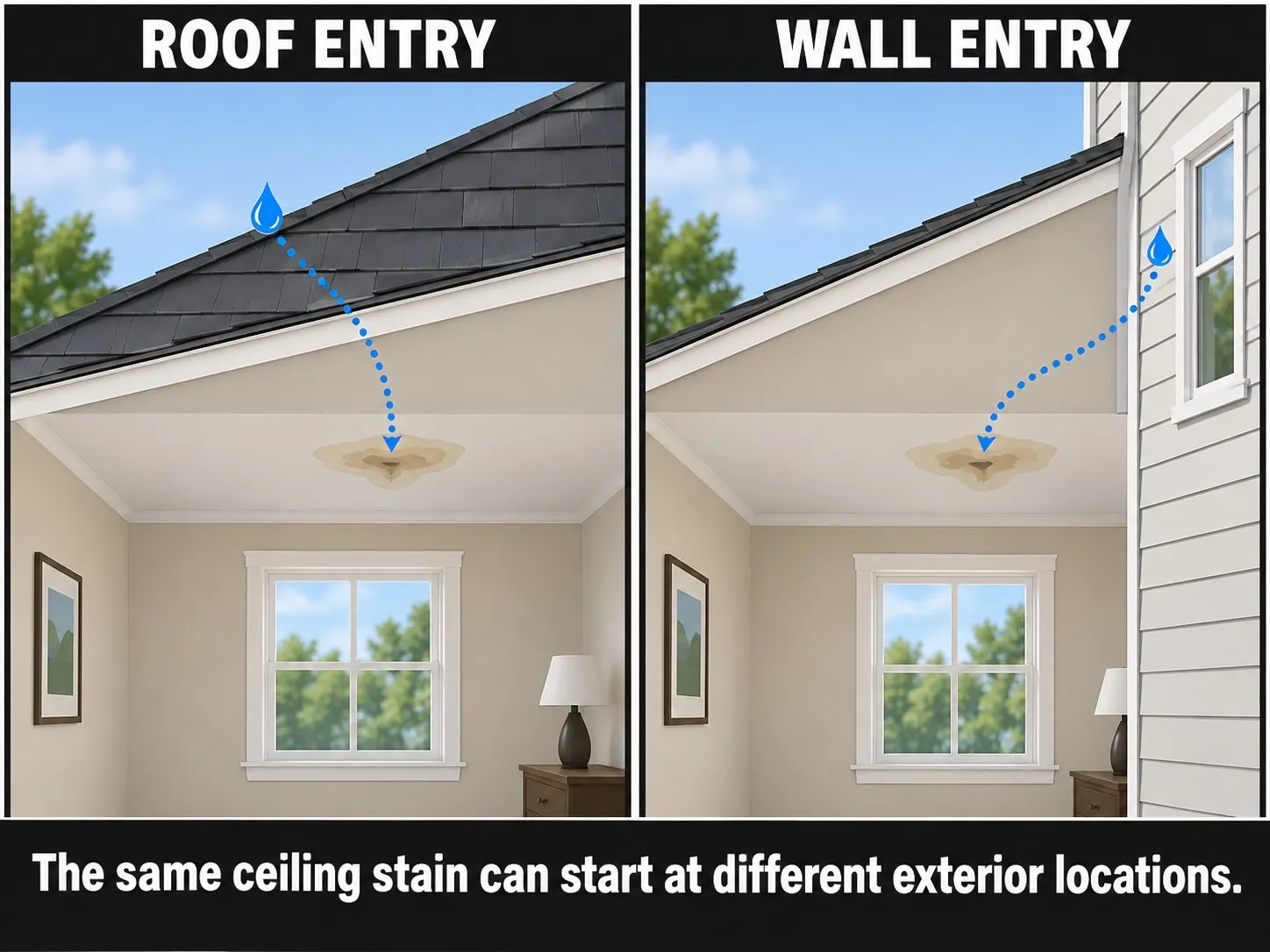
Tell the investigator about stains at upper window corners, exterior wall-ceiling lines, and the story below a roof-wall intersection. Mention any recent siding or window work. A roofer should coordinate with a siding, window, or building-envelope contractor when those clues are present. A chimney professional or mason belongs in the conversation if masonry or counterflashing is suspect. Replacing shingles alone may leave the wall path untouched.
What can you safely observe from inside or the ground?
From a dry room, date and photograph stains, including in closets and at window tops. During rain, watch from a safe window or ground position for gutter overflow, water sheeting behind a gutter, or an upper downspout dumping onto a lower roof. After rain, binoculars may show debris, a lifted shingle, a damaged vent, or a problem near a valley. Missing shingles after a storm raise a separate repair-or-replacement question. Record these as observations, not diagnoses.
Enter an attic only by a safe route on supported walkway or framing. From there, note fresh staining, wet decking, and trails leading upslope. The ENERGY STAR attic guide warns about drywall between framing, protruding roof nails, heat, and knob-and-tube wiring. ENERGY STAR allows disturbance only after approved testing, but EPA says to assume vermiculite contains asbestos and leave it undisturbed; follow EPA’s precaution. Skip attic entry for knob-and-tube or wet wiring, pebble-like loose-fill vermiculite, or an unsafe route. A licensed electrician assesses wiring concerns. Appearance does not identify asbestos, and a trained asbestos professional should assess suspect insulation if necessary.
Never walk on the roof, use a storm-wet ladder, clear high gutters, or hose-test the leak. A roofing or building-envelope contractor handles controlled testing.
What should a dry-day leak investigation include?
Give the contractor the storm log and stain map. Ask which conditions point to the chosen inspection area. Where safely accessible, a roofing contractor can trace the wet path from the attic side and inspect the relevant flashing, valleys, vents, and gutters. If the clues run into siding or a window, a building-envelope or window specialist may need to inspect that assembly.
Some professionals use moisture meters, infrared imaging, or controlled water testing. Building Science Corporation’s investigation illustrates isolating one suspected area at a time. Ask who would test this roof, which area they would isolate, and what follows a negative result. An intermittent leak may need another visit or comparable storm to confirm.
Which repair matches the confirmed cause?
A drainage problem may need gutter or downspout changes. Flashing at a wall, chimney, or valley can require lifting roofing and sometimes siding; the National Park Service calls flashing replacement on an existing roof a major operation. A kick-out retrofit involves roofing and wall-barrier coordination. A low-slope section may need a covering suited to its pitch.
Avoid a proposal to smear caulk or roof cement over several likely spots without tracing the entry. Building Science Corporation says sealant-only joints have a very high chance of failure; Minnesota Extension warns that tape over reverse flashing merely postpones failure. A localized detail may support repair; widespread covering failure can broaden the conversation. Ask for the evidence before accepting full replacement.
After the repair, use the same storm log to check the next comparable rain. Only after the source is controlled should stained finishes be restored; the water-stain painting guide covers that later step. Repeated wetting can remain hidden behind cladding for years, according to DOE’s roof-wall guide, so an occasional leak deserves a documented follow-up.
How can a heavy-rain leak affect an insurance claim?
Storm timing alone does not settle coverage. The Washington insurance regulator says sudden leaks are usually covered, gradual leaks may not be, and after storm roof damage insurance won’t cover water damage if you delay repairs. Texas’s insurance regulator says you usually must report hidden water damage within days after first seeing it. It also says to photograph damage and avoid permanent repairs before the insurer sees it; arrange prompt professional temporary protection. Other states and policies differ.
A 1999 sample HO-3 policy form conditions certain interior rain damage to personal property under its windstorm peril on wind or hail first creating an opening. That sample is not your policy. Photograph damage, preserve the log and invoices, ask your insurer how your actual form applies, and arrange reasonable temporary protection through a professional. The water-leak insurance guide explains the cause-and-timeline question. NAIC cautions that you do not need to sign an Assignment of Benefits to get repairs done; understand any document before signing. State rules vary.
What drives the cost of a storm-only roof leak repair?
Request a local quote that separates inspection and testing, return visits, access, the named repair, other trades, hidden-damage allowances, interior drying, disposal, locally required permits, and warranty terms.
Ask why each scope follows from the log and inspection. A quote saying only “repair leak” cannot show whether it addresses the path. Approve a traced repair with a plan for damage found after opening.
Frequently asked questions
Is a roof that leaks a little only in extreme rain still okay?
No. A rare storm may expose a weak detail that ordinary rain misses. Document the event and ask a roofing contractor to trace the source.
Could water enter in every rain but show up only in heavy ones?
Possibly. Small amounts can stay in absorbent materials or follow a slow path before a stain appears. The storm log and a professional inspection are needed to distinguish that from entry caused only by the severe conditions.
What if the roofer says the roof looks fine on a dry day?
Ask which attic, wall, flashing, gutter, and vent areas were checked against your storm log. If the source remains unknown, request a plan for targeted professional testing or a return during comparable rain, and involve a siding or window specialist when the stain follows an exterior wall.
Why not hose-test the roof myself?
Roof and ladder access are hazardous, and broad wetting can create a new leak or obscure which joint admitted water. A trained investigator can choose a limited test, watch the interior response, and stop when the evidence is sufficient.
What if a new or recently repaired roof leaks in hard rain?
Tell the original installer the storm pattern and ask for an inspection of the changed details and written warranty terms. A newer covering does not rule out a vent, wall, window, or drainage path. Keep the investigation tied to the observed water route.
Will insurance call a few heavy-storm leaks damage or wear?
Your policy, cause, and timeline decide; the storm count alone does not. Document each event and report damage promptly under your insurer’s procedures. Ask for the specific policy provision used in any coverage decision.
Sources
- Building Science Corporation — BSD-013: Rain Control in Buildings
- Building Science Corporation — PA-1904: How to Look at a House Like a Building Scientist
- Building Science Corporation — BSD-135: Ice Dams
- DOE / PNNL — Gutters and Downspouts
- DOE / PNNL — Step and Kick-Out Flashing at Roof-Wall Intersections
- DOE — Repairing Roofs and Ceilings
- HUD — Residential Rehabilitation Inspection Guide
- National Park Service — Preservation Brief 4: Roofing for Historic Buildings
- IBHS FORTIFIED — FORTIFIED Roof
- University of Minnesota Extension — Sealing Roofs, Walls, Windows and Doors
- UpCodes — Asphalt Shingles, Illinois Building Code 2021
- NOAA — Precipitation Frequency Data Server
- EPA — Archived Climate Change Indicator: Heavy Precipitation
- ENERGY STAR — A Do-It-Yourself Guide to Sealing and Insulating
- EPA — Asbestos-Contaminated Vermiculite Insulation
- Electrical Safety Foundation — Water-Damaged Electrical Equipment
- Washington State Insurance Commissioner — Leaks, Water Damage and Mold
- Texas Department of Insurance — Water Damage and Mold Coverage
- Insurance Information Institute — Homeowners 3 Special Form Sample
- NAIC — Assignment of Benefits: Consumer Beware