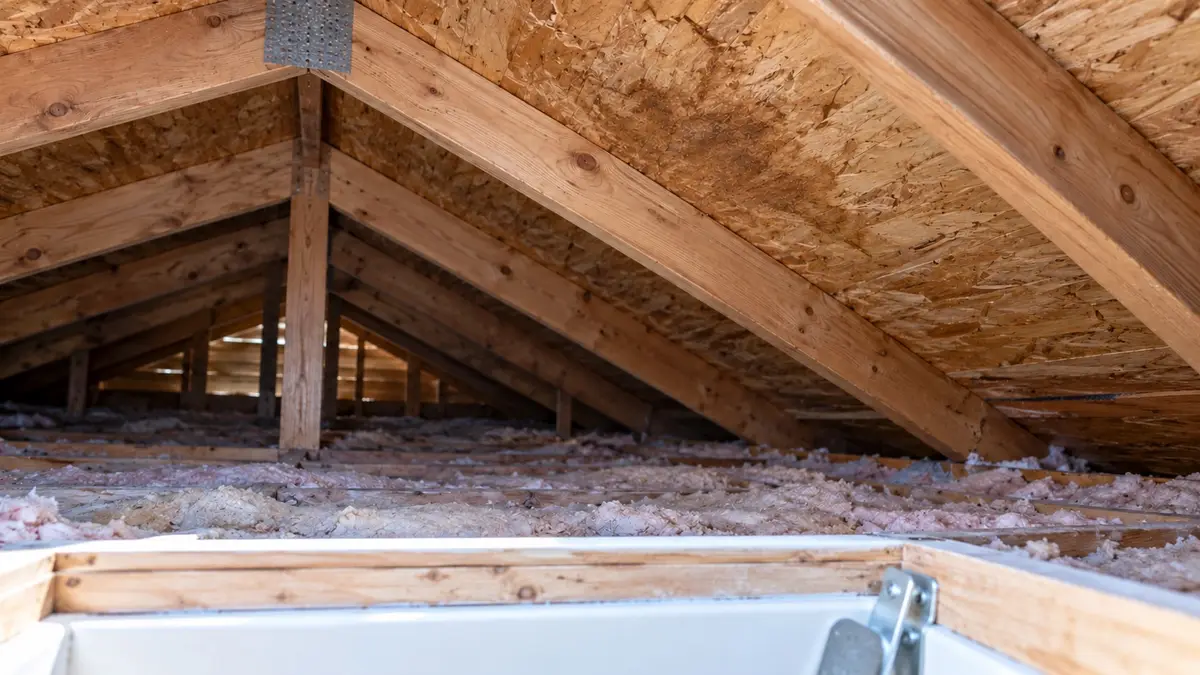
A ceiling stain appears after several dry days. From the attic hatch, you see damp sheathing or frost on nail tips. That can look like proof the roof failed, even though the water may have formed on its underside.
The roof deck is the wood surface beneath the roofing. Rain can reach it from above, while humid air can meet its cold underside and leave water there. The useful question is when and where the wetness appeared, followed by whether the wood is still sound.
There is no reliable national price for diagnosing or fixing this symptom. A flashing repair, attic air sealing, HVAC drain repair and deck replacement have different scopes; an itemized diagnosis must come before a useful estimate.
Is water reaching anything that cannot wait?
Water running through a light, ceiling fan, smoke alarm or electrical box takes priority over tracing its source. If the panel is dry and undamaged and you can reach it by a safe, dry route, turn off the affected circuit. Leave the fixture unused until an electrician evaluates it. The Electrical Safety Foundation’s water-damaged equipment guidance addresses flood-exposed equipment; its shock and fire warning supports professional evaluation here.
Keep people away from a bulging or sagging ceiling. Call a water-damage restoration contractor promptly for a water-loaded ceiling; structural sag needs a structural engineer. Catch an active drip if safe and move belongings. Photograph it before cleanup. If storm damage caused entry, Washington’s insurance regulator warns against delaying repair.
Old, dry staining, a damp patch that dries between events, or occasional light frost without dripping allows a deliberate check. Recurring wetness needs source diagnosis. Take that time over days or weeks across different weather, rather than ignoring recurrent wetting for a season.
Why can a roof deck get wet when the roof is not leaking?
The deck sits beyond the ceiling insulation, so it gets cold. EPA’s moisture guide explains how moist indoor air condenses on a cold roof deck like moisture on a cold glass. Frost can build during a cold stretch, melt on a warm day and drip through the ceiling. EPA warns that if it rains when the dripping is discovered, condensation may be mistaken for rainwater entry.
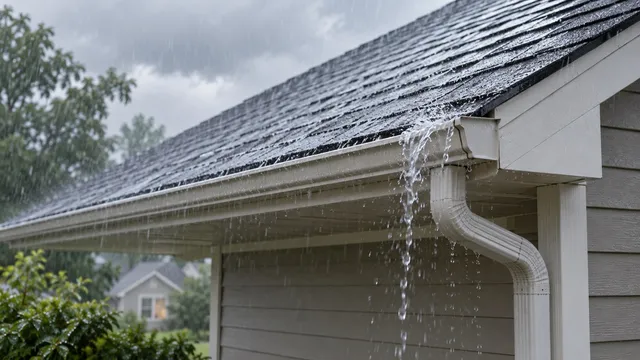
There are six practical paths to check. Rain may cross damaged shingles, flashing, a pipe boot or valley. Indoor air may leak through ceiling lights, wall tops and the attic hatch. A bath or dryer exhaust duct may dump moist air into the attic. Wind can blow rain or snow through a vent. An ice dam can back meltwater beneath roofing at the eaves. In summer, an attic air handler, condensate pan or sweating duct may wet the area below it; humid air meeting a roof deck cooled overnight can also contribute. More than one path can operate together.
Building Science Corporation describes ceiling air leakage as a cause of both condensation and ice dams. An eave leak in winter can thus be outside liquid water with an indoor heat-loss cause. The repair must match the path, not merely the wet stain.
What does the weather say about a roof leak or attic condensation?
Write down what happened in the preceding two or three days, not only when you noticed water. Record rain, wind, snow, ice, cold clear nights, showers, humidifier use and air conditioning. These clues point toward a source; they do not settle it alone.
| When you see it | Where and what to look for | Points toward |
|---|---|---|
| During rain, then dry between storms | One track below flashing, valley or penetration | Roof-covering leak |
| Only in wind-driven rain or snow | Wet area directly inside a vent | Weather entering the vent |
| Cold, dry stretch | Beads or frost across a deck area and many nail tips | Indoor air condensation |
| Sunny thaw after a cold spell | Dripping despite no rain | Accumulated frost melting |
| Snow on roof, ice at eave | Wetness near the eave | Ice dam, sometimes with condensation |
| After showers or dryer use | Wet fan housing or loose exhaust duct | Exhaust or duct fault |
| Summer while AC runs | Wet area below attic duct or air handler | HVAC condensate or sweating |
| Humid climate, foam at ridge | Moisture concentrated near roof peak | Unvented-assembly moisture |
A rain-timed track deserves a roofer’s tracing; patterns in heavy or wind-driven rain can further narrow the entry. Repeated eave wetting with snow and ice calls for the ice-dam causes and fixes. A wet duct or pan belongs with HVAC. If bath exhaust is part of the pattern, bathroom ventilation performance is a separate question.
A hygrometer indoors makes the log more useful. EPA’s homeowner guidance recommends keeping indoor humidity below 60 percent, ideally 30 to 50 percent; some cold-climate agencies recommend lower winter levels to limit condensation. University of Minnesota Extension gives 25% for winter in its climate; that is not a national target. A single indoor number is not a diagnosis. Record the date, weather, indoor humidity, wet location and photo number for several events. A dry September visit cannot explain a February frost pattern. Copy this line for each observation:
Date/time: ___ · Previous weather: ___ · Indoor RH: ___ · Location and appearance: ___ · Photo: ___
Where is the water sitting and which way did it move?
A liquid leak tends to begin at one place and run downhill along the deck or a rafter. Trace the visible mark upslope from a drip point; the ceiling stain can be away from the entry. HUD’s 2000 inspection guide advises tracing the path rather than assuming the leak is directly above an interior stain.
Condensation forms more like dew: a broad patch of beads, frost across sheathing, or many nail tips wet at once, without one upstream starting point. Rusted nail tips show repeated wetting, but not its source. Wet insulation or a dark stain alone is similarly inconclusive. ENERGY STAR’s attic guide identifies darkened insulation at air-leak paths and frost in cold weather; it also identifies wet insulation as a roof-leak clue. Pair location with the weather log.
A dirty patch of insulation beneath widespread frost supports an air-leak possibility. A small wet area just inside a windward vent suggests another route. Mold’s appearance and cleanup require a separate investigation; the water-source pattern comes first.
What can you check safely from the house, hatch and ground?
From the living space, note humidity and whether bath and kitchen fans run. From the ground, use binoculars for missing shingles, damaged flashing, ice at eaves and patchy snowmelt. Do not climb the roof or hose-test it.
From the hatch, use a flashlight and take wide and close photos of deck, rafters, nail tips, insulation and visible ducts. Look again after rain, during a cold spell and after thaw if access remains safe. If you enter, stay on a safe floored walkway with sound footing; never step on insulation or drywall between joists. Watch for nails overhead and avoid a hot summer attic.
If insulation looks pebbly, gray-brown or gold and flaky, stop. EPA says to assume vermiculite insulation contains asbestos and leave it undisturbed. Do not disturb old knob-and-tube wiring or cut spray foam to see behind it. A professional can choose a safe inspection method.
Is stained or wet roof decking still sound?
A dark surface is not a strength test. The Forest Products Laboratory’s Wood Handbook says staining and surface mold ordinarily affect wood strength only slightly. It also warns that early decay can be inconspicuous in discolored wood. Serious decay requires moisture above fiber saturation—about 30% wood moisture content on average. That moisture can come from rain or condensation.
Ask a roofer or building-science professional to measure moisture at several spots and assess firmness. The handbook uses 20% as a margin of safety. Building Science Corporation’s field guidance describes under 20% as safe with no mold risk, 25–30% as a mold range often seasonally survivable without damage in its monitoring, and 28% or more as a decay range. DOE’s 2006 roof-repair guidance says to dry sheathing below 20% before covering it. These are reference points, not one replacement rule; the professional must interpret meter readings and wood condition.
A deck dry at one visit may wet again in winter. Swollen, peeling or crumbling panels need direct evaluation; DOE says both plywood and especially OSB may peel or fall apart as they dry after wetting. If rafters sag or the deck is soft, keep weight off it and have a structural engineer assess the framing. If replacement is needed, a tear-off exposes deck condition in a way an overlay does not.
Who should test the source before a repair is sold?
For rain-timed entry, ask a roofing contractor to trace the route from attic to covering, including flashing, vents and penetrations. Ask for photos of the proposed entry and affected deck. For frost during dry weather, ask a home-performance or weatherization contractor for ceiling air-leak testing. University of Minnesota Extension says the evaluation should use a blower door and may use infrared scanning. Have an HVAC contractor trace a wet air handler, drain pan or duct. An unclear case, or a spray-foamed deck with moisture near its ridge, warrants a building-science consultant or home inspector equipped to measure moisture. Building Science Corporation documents ridge moisture in unvented assemblies; it is not proof that foam caused damage.
Foam prevents a direct view of the sheathing. BSC’s 2007 closed-cell foam discussion describes rain damage confined near an entry hole because the foam limits migration. Have a building-science professional investigate; do not cut or probe foam yourself.
The 2000 inspection guide from HUD and the National Park Service emphasizes attic ventilation. Building Science Corporation’s air-leak work puts ceiling sealing first and warns that adding vents can worsen gross air leakage. Vented assemblies still need ventilation under locally adopted code; adoption and amendments vary. UMN recommends against mechanical attic ventilation in its cold-climate guidance. Find and seal ceiling air leaks, control indoor moisture, then address insulation and ventilation needs.
ENERGY STAR warns that sealing can cause fuel-burning appliances to backdraft gases into the home. Ask for combustion-safety testing before and after sealing, and test for radon afterward. Have an electrician handle wet equipment and old wiring. Ask for diagnosis, source repair, drying, any deck replacement, insulation work and warranty terms as separate estimate lines. Correct the source, dry the area, assess and repair the deck, then repair interior finishes. A reroof quote alone cannot explain cold-weather frost.
What moves the price and what should you record?
Access, wet insulation, damaged sheathing and interior repairs change the scope. Keep the date-stamped weather log, humidity readings, photos and written findings. Insurance treatment depends on cause and timeline; water-leak coverage questions need a policy-specific discussion. Identify the source before authorizing a fix that hides the wet area.
Frequently asked questions
Is a little frost on attic nails normal?
Occasional light frost in extreme cold differs from frost that persists, recurs each cold spell or drips during thaw. Recurring frost needs an air-leak and moisture assessment; there is no universal safe thickness. Rust shows repeated wetting, not its source.
Should I put a fan or dehumidifier in the attic?
Do not use a powered attic fan as a first fix for winter condensation. UMN recommends against mechanical attic ventilation. A conditioned, spray-foamed attic is different: BSC describes supplemental dehumidification in hot-humid and mixed-humid climates. Ask a building-science professional which assembly you have and what moisture control it needs.
Can one dry visit distinguish a leak from condensation?
A visit may find a failed detail or disconnected duct, but dry sheathing does not rule out seasonal wetting. Share dated photos and weather records; ask whether repeat moisture readings during the problem weather are needed. Do not wait through active water entry or a safety hazard to build a log.
Can condensation happen where it rarely freezes?
Yes. BSC describes humid air condensing on cold ducts and air handlers, and roof sheathing cooled below air temperature overnight. Freezing is not required. Summer water below equipment belongs with an HVAC contractor; unclear deck wetting needs building-science investigation.
Can a new roof still have attic condensation?
Yes. New shingles do not seal the ceiling below them. If wetting tracks cold, dry weather after a reroof, examine air leakage, exhausts and vent changes before blaming the covering.
Sources
- EPA — Moisture Control Guidance
- EPA — A Brief Guide to Mold, Moisture and Your Home
- EPA — Vermiculite Insulation
- Building Science Corporation — BSD-135: Ice Dams
- Building Science Corporation — BSI-077: Cool Hand Luke Meets Attics
- Building Science Corporation — PA-1904: Water
- ENERGY STAR — DIY Guide to Sealing and Insulating
- USDA Forest Products Laboratory — Wood Handbook, Chapter 14
- DOE — Repairing Roofs & Ceilings
- HUD — Residential Rehabilitation Inspection Guide
- National Park Service — Preservation Brief 4
- Washington Office of the Insurance Commissioner — Leaks, Water Damage and Mold
- Electrical Safety Foundation — Water-Damaged Electrical Equipment
- ENERGY STAR — Attic Air Sealing Project
- University of Minnesota Extension — Controlling Moisture Problems
- University of Minnesota Extension — Dealing with and Preventing Ice Dams
- Building Science Corporation — BSD-149: Unvented Roof Assemblies
- UpCodes — R806.2 Minimum Vent Area, Colorado DFPC 2021