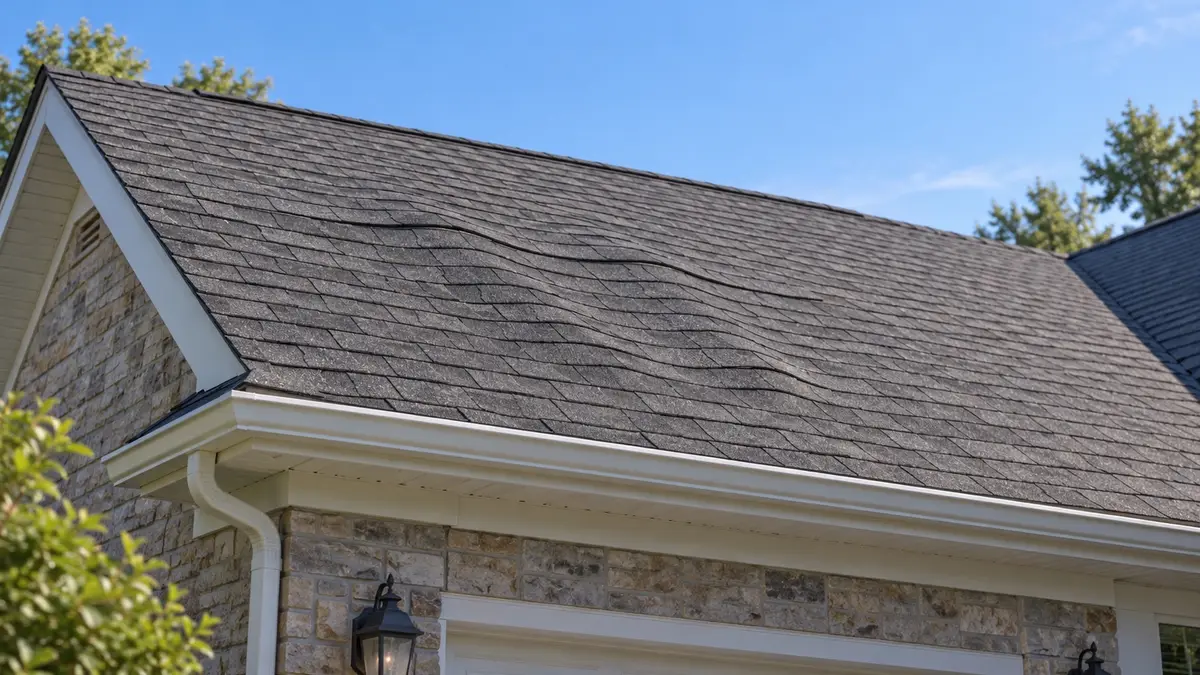
The shingles are fresh, but the roof looks rippled from the driveway. New asphalt shingles closely follow the surface beneath them. A wrinkle in underlayment, a raised deck-panel edge, an old shingle layer or a dip in the framing can all show through as a wave.
The pattern matters more than the roof’s age in days. A few apparent stripes shift with low-angle sunlight; a raised grid stays in place. Photograph the roof from the same ground-level spot in different light, then ask which physical layer produces the shape. There is no reliable national price for correcting a wavy roof. The scope depends on whether work stops at shingles or reaches decking and framing.
Why does a new shingle roof copy the surface below it?
An asphalt roof is a stack: shingles over underlayment (the water-shedding sheet beneath them), over wood decking, over rafters or trusses. A fresh shingle cannot hide a raised seam in that stack. ARMA’s underlayment guidance and APA’s roof-system guidance describe how the layers must work together.
This is why “it will flatten” is an incomplete answer. Weather may change how a shingle seals, but it cannot straighten a sagging rafter. NRCA’s consumer guidance treats wrinkled underlayment as a condition to assess, rather than a timer to wait out. ARMA says unevenness from a cold-weather overlay can become locked in. There is no reliable universal number of days or temperature at which all waves disappear.
Which wavy-roof pattern can you see from the ground?
Use binoculars if needed. Stay on the ground and note whether the marks cross multiple shingle courses, repeat at panel edges, or change with the sun. The table helps you describe the symptom to the installer; it is not a remote diagnosis.
| Ground-level pattern | Layer to investigate | Who checks it |
|---|---|---|
| Grid roughly the size of deck sheets | Deck-panel edges, thickness or swelling | Roofer, then engineer if framing is involved |
| Random short wrinkles crossing courses | Underlayment beneath shingles | Roofer |
| Repeated shallow ripples between framing lines | Deck span or panel movement | Roofer and structural engineer if sagging |
| Broad dip in the whole roofline | Rafters, trusses or support below | Structural engineer |
| Lumps following older shingle courses | New shingles laid over an old layer | Roofer |
| Isolated raised tabs or crooked courses | Fastening, layout or seal | Roofer |
| Contrast that moves with morning and evening light | Shingle color or shadow | Recheck from same ground position |
ARMA notes color-appearance variations on new shingles. Move around the yard and photograph the same slope twice. If the line itself stays raised, shadow alone is a poor explanation. Include wide roofline shots and close ground-level views; the installer needs both scale and location.
Are deck-panel edges swelling or simply different thicknesses?
Two similar-looking grids have different mechanisms. Adjacent sheets can have slightly different thicknesses, making “picture framing” along their edges. Separately, wood panels can expand with moisture; close-set edges can press together and rise. APA’s panel-buckling guidance explains the moisture-driven case. Its guidance says the buckling itself does not reduce a panel’s structural properties, but the moisture source and covering condition still deserve evaluation.
APA recommends a 1/8-inch gap at panel edges during installation. Owens Corning’s instructions for one shingle line specify a 1/8- to 1/4-inch gap for that product. Those are different documents, not a single nationwide code rule. A roofer can check panel seams and installation records; have a structural engineer evaluate a deck that also sags between supports.
H-clips are small metal edge supports between roof panels. Their absence alone does not diagnose a wavy roof. The adopted roof-sheathing span table requires edge support for certain panel-and-span combinations. It allows clips, lumber blocking, tongue-and-groove edges or other approved support; local adoption and amendments vary. InterNACHI’s H-clip explanation says clips support edges but do not prevent buckling. Ask what panel rating, span and local code apply before anyone attributes the waves to missing clips.
Could wrinkled underlayment or an overlay be showing through?
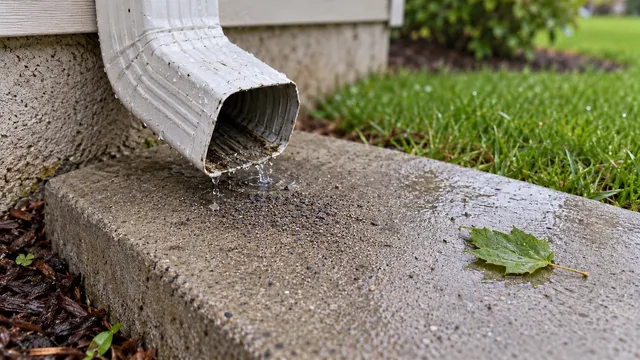
Underlayment can wrinkle before shingles are placed over it. Random waves that do not match panel joints point there. NRCA says wrinkled underlayment probably can remain if the wrinkles are not severe enough to affect shingle installation. Condition matters more than elapsed time. Have the roofer identify the underlayment and whether it got wet before shingling; a visible wrinkle alone does not establish a leak. If granules are also collecting at downspouts, read the granule-shedding clues separately.
If the crew installed new shingles over old ones, the previous layer’s unevenness can telegraph through. ARMA’s recover-versus-replacement guidance discusses the condition that a recover needs. Cold weather can leave shingles less able to settle over irregularities, and ARMA’s cold-weather guidance says such unevenness may be locked in. Compare the contract’s overlay scope with the finished surface. An overlay-versus-tear-off decision also affects how much of the deck can be inspected and repaired.
A roofer should identify whether the shape is at the underlayment, old roofing or deck before suggesting another surface layer. Covering a raised panel edge without addressing its cause preserves the raised edge underneath.
When is a broad wave really a framing problem?
Step back far enough to see the roofline against a straight background. A broad dip across many shingle courses, especially one that existed before the reroof or has grown, may be in rafters, trusses or their support. Shingles and underlayment cannot make a whole framing bay sink.
HUD’s 2000 residential inspection guide lists several causes of roof sag, including altered framing, excess covering layers, and failure of some fire-retardant plywood in townhouses, row houses and multiple dwellings. In some affected buildings, HUD describes sag beside a townhouse party wall and interior plywood darkening that resembles charring. Those signs warrant a licensed structural engineer; they do not establish that all treated plywood fails. HUD also notes that attic alterations may have removed collar ties or knee walls that supported the roof. The purpose is to recognize a case needing a licensed structural engineer, who can examine the roof’s supports without guessing an acceptable sag from a driveway photo. Keep people off a suspect roof.
If the dip is new, photograph the full roofline and contact the builder or installer promptly. For a newly built house, send the same evidence to the builder under the home’s warranty process. Ask the engineer what must be stabilized before any cosmetic roof work.
Could fastening, heat or attic moisture explain later waves?
Raised tabs and uneven shingle courses differ from waves that run continuously under several courses. ARMA’s nailing guidance says improperly located or driven nails can cause sealing failures, blow-offs, raised tabs and buckling. Have a roofer check fastening and the specific product instructions. Do not lift tabs yourself to investigate; that can damage the seal.
Cold-weather installation is possible with precautions. NRCA says there is no single industry temperature cutoff; Owens Corning’s instructions add precautions below 40°F for its product. Ask for the installed product name, its instructions and the crew’s cold-weather procedure. ARMA says sealing time varies with roof slope, orientation and sun/heat exposure. Sealing a tab is different from flattening the layers beneath it.
If waves appear months later, ask whether deck movement followed moisture. ARMA discusses ventilation’s role, especially when deck moisture changes, but ventilation is not a universal fix. NRCA says the strongest case is in cold climates where snow stays on roofs for extended periods. Some roofs are intentionally unvented. Photograph any wet sheathing from a safe attic walkway or hatch. The roof-leak-versus-condensation guide helps sort the moisture path before ventilation work is proposed. Winter eave ice may instead call for the ice-dam cause checklist. Leave an attic containing possible vermiculite untouched; EPA says to assume it may contain asbestos and not disturb it.
Is the waviness cosmetic, a performance problem or structural?
A color or shadow variation may be visual only. A deck-panel seam may be a surface issue while still signaling moisture or workmanship that warrants a check. A raised shingle tab can affect sealing or wind resistance. A broad framing dip is a structural question. The same word “wavy” therefore covers different urgency levels.
A photograph cannot establish which warranty applies. NRCA’s consumer FAQ distinguishes manufacturer coverage for manufacturing defects from workmanship coverage, which typically covers installation and related issues. Many contractors offer one or two years, NRCA says, but there is no industry-standard period. Read your actual contract before agreeing to a waiting period.
NRCA’s warranty bulletin cautions that warranties are not all-inclusive insurance. Manufacturer exclusions may turn on installation instructions. Document the issue now even if monitoring is agreed.
How should you raise the issue with your roofer or builder?
Send dated wide and close photos, the slope involved, when you first saw it and whether the pattern changed. Ask in writing: “Which layer is making these waves? What observation or inspection supports that? Does it affect fastening, sealing, drainage or the warranty? What will you correct, and when?” Ask whether the deck or underlayment got wet before shingling, how long it was exposed, and what was done before covering it. Keep the reply with the contract, product information and installation photos.
Have the roofer identify the deck, underlayment, overlay and fastener details in an inspection report. If that explanation is disputed, choose an independent roofing inspector or consultant with roof-specific experience and no connection to the installer. For broad sag, get a structural engineer’s assessment before accepting a roofer’s cosmetic explanation. Ask for the repair scope, materials, access method, warranty and any local permit or inspection requirement in writing. Compare payment and dispute steps with your contract and local consumer-protection office; do not assume a universal right to withhold payment.
The fix may be as limited as correcting a localized shingle or underlayment section, or as involved as opening the roof to repair panels or framing. The number of layers, location, extent, access and damaged deck determine scope. An estimate that simply says “smooth roof” cannot tell you what problem it will solve. If opening the roof is proposed, use the roof replacement quote comparison to check what each scope includes.
Frequently asked questions
Will a new asphalt roof flatten out after a few warm days?
There is no reliable universal settling timeline. Shingle sealing conditions vary, while panel buckling, an old layer or framing sag requires a different response. Ask the installer to name the layer before agreeing to wait.
Does a wavy roof mean it will leak?
No. Some waviness reflects appearance or panel movement without a proven leak. Raised tabs or fastening faults can affect sealing and wind resistance; have a roofer check those promptly.
Are H-clips required if the roof looks wavy?
Their need depends on the panel, span and locally adopted code, with other edge-support methods possible. Clips do not prevent moisture-driven buckling. Have the roofer identify the actual assembly before deciding what is missing.
Who should inspect a wavy roof on a new house?
Contact the builder through the warranty process with dated photos and a description of the pattern. Ask who will inspect the affected layer. A broad dip or visible framing change calls for a licensed structural engineer.
Sources
- ARMA — Cold-Weather Shingle Installation
- ARMA — Replacement vs. Recover
- ARMA — Nail Application
- ARMA — Steep-Slope Underlayment
- ARMA — Why Ventilation Is Important
- ARMA — Variations in Color Appearance
- APA — Roof Systems
- APA — Minimizing Buckling of Wood Structural Panels
- Owens Corning — Duration Series Installation Instructions
- InterNACHI — H-Clips for Inspectors
- HUD — Residential Rehabilitation Inspection Guide
- NRCA — Roofing Guidelines Resources
- NRCA — Roof System Warranties
- EPA — Vermiculite Insulation
- UpCodes — Adopted Roof-Sheathing Span and Edge-Support Table