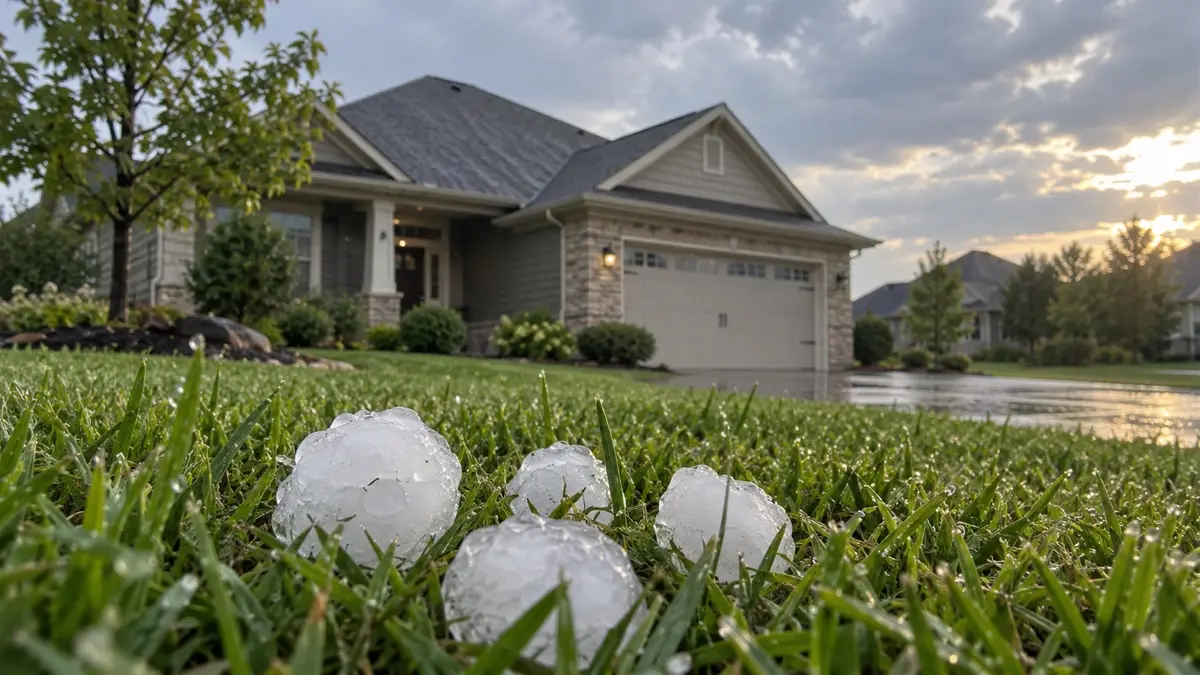
Hail is scattered across the yard, and the ceiling remains dry. That is welcome, but it only tells you water is not entering the rooms now. It cannot show whether a shingle was bruised, cracked or torn, or whether a metal roof was merely dented.
Before paying for repairs or opening a claim, separate two questions: did damaging hail reach your house, and did it harm the roof? You can collect evidence for the first from the ground. A qualified roofer must answer the second on the roof. There is no reliable national inspection or repair price; ask for written scope and any inspection fee before a visit.
Why can a hail-hit roof stay dry despite damage?
A roof sheds water through several layers. A hail impact may knock off granules, dent the shingle, crack its surface or tear it. Those findings do not carry the same water risk. In IBHS leakage testing, small dents produced negligible leakage. Large dents and even relatively low-severity tears allowed large amounts of leakage. There is no supported countdown from a dry ceiling to a future leak.
NRCA says most hail-related damage is cosmetic and will not affect shingle life. It immediately distinguishes severe wood splitting, significant granule loss, shingle penetration and fracture, where replacement may be required.
IBHS’s small-hail research addresses cumulative exposure: repeated hail under 1 inch strips protective granules, exposes asphalt to weathering and accelerates aging. In its laboratory testing, weathering plus two simulated small-hail events made shingles up to ten times more susceptible to later large-hail damage than new shingles. That is a test comparison, not a multiplier for your roof.
RICOWI’s 2012 field report identified long-term hail effects as needing further study. These sources address different events and outcomes; minor marks alone do not settle future performance. Later wind matters too: IBHS’s durability work identifies sealant strength as critical to resisting wind damage, particularly after hail impact.
Did damaging hail actually hit your house?
Write down the storm date, time and direction. If safe, photograph hailstones beside a ruler before they melt. From the ground, look for fresh dents in gutters, downspouts, air-conditioner fins, metal vent covers, window screens and outdoor furniture. Photograph each in context and close up. IBHS calls these dents collateral evidence: they confirm hail occurred, not that the roof was damaged. A dented garage door belongs in that record too.
Check NOAA’s Storm Prediction Center FAQ for where to look up reported local events in the Storm Events Database. A reported storm nearby confirms the weather context, not a particular impact at your address. RICOWI’s field investigation considered onsite evidence more accurate than a radar-based hail map when the two differed. Keep the ground photos even if a map reports little hail.
Do not press a shingle or climb up to see a mark. After hail, loose shingle granules in gutters can add a clue, but granules also shed for other reasons. A roofer should decide whether fresh impact marks match the storm and roof material.
How much should hail size, roof age and material change your concern?
A RICOWI investigation of the 2011 Dallas–Fort Worth storm found almost no damage from hail under 1 inch except on badly deteriorated or unsupported material. At about 1.25 inches and above, standard shingles generally sustained moderate or severe damage in that field study. Those are observations from one event, not a safe-size rule for every roof. Hailstones vary within a storm, and condition matters.
The same study found more damage on shingles older than about nine years where embrittlement was present. IBHS’s Rock Hill event analysis found roofs under five years old performed like new at low hail severity. Neither result supplies a universal age cutoff. A weathered roof with modest hail may need closer attention than a sound, newer one.
Material changes what an inspector looks for. RICOWI found metal dents often did not compromise water-shedding, but a cosmetic-damage exclusion may affect insurance payment. Tile can fracture; wood can split; skylights can break. “Class 4” impact-resistant shingles have passed a test level, yet IBHS ratings show product performance varies. Its short-term aging research found natural weathering measurably reduces hail-impact performance, and repeated hail exposure can accelerate the decline. Class 4 is not a promise that hail cannot damage your roof. IBHS recommends a licensed, insured photovoltaic contractor to inspect solar panels. Do not touch a damaged array.
| What you can document | Inspection priority | Why |
|---|---|---|
| Missing shingles, hole, damaged vent/flashing, leak | Prompt roofer visit | Opening may already exist |
| Broken skylight | Roofer and glazier/skylight installer promptly | Keep clear of broken glass |
| Damaged solar equipment or exposed wiring | PV contractor; licensed electrician for wiring | Stay clear; utility for downed lines |
| Large hail, multiple fresh fixture dents, older/weathered covering | Schedule roofer soon | Functional damage is plausible despite dry rooms |
| Small hail, sound roof, no damage signs or hazards above | Routine roofer visit can be reasonable | Retain photos and watch indoors |
The table is a scheduling guide, not a claim decision. No fixed hail size or visible-sign checklist replaces an on-roof inspection when evidence points to damage.
What can you safely check from the ground and inside?
Walk the property after the storm has passed and hazards are clear. Photograph the same roof slopes from a safe ground position, using binoculars for missing tabs or shifted ridge caps. Check ceilings, skylight wells and an accessible attic from its hatch or a floored walkway. If the sheathing is damp, the roof-leak-versus-condensation guide helps avoid blaming every wet patch on hail. Keep looking after later rain, especially wind-driven rain; heavy-rain leak patterns may help trace a new symptom.
Do not use a ladder or try to feel for shingle bruises. A professional on-roof visit is the place for that assessment. Keep people out from under broken skylight glass; call a roofer and glazier or skylight installer. Stay clear of damaged solar equipment and contact a licensed, insured photovoltaic contractor. Exposed wiring goes to a licensed electrician; downed lines go to the serving utility.
What should a useful hail inspection report contain?
Choose a roofing contractor with a local business presence and proof of insurance; check license or registration with your state or county where it applies. Ask in advance whether the inspection has a fee and whether you receive the photos even if you do not hire that roofer. NAIC says the insurer sends an adjuster at no cost to you when you report a claim. They serve different roles.
A useful report names the storm date and estimated hail size, with the ground evidence behind that estimate. It photographs each roof slope and marked test area. It distinguishes displaced granules, bruises, cracks and tears from blisters, foot traffic, weathering and installation marks. It includes ridge caps, valleys, flashing, pipe boots, skylights and soft-metal fixtures. For metal, it addresses seams and coating; for tile, fractures. For solar, it refers equipment to a licensed, insured PV contractor.
Ask: “Which marks are functional, which are cosmetic, and why? Which slopes and how many impacts are affected? Is there an opening now? Will I get a written report?” A statement that “the whole roof is totaled” without slope-level photos or quantities is not enough to price work. If the roofer and insurer disagree, NRCA describes reinspections as common. Ask for a reinspection with both sets of photos. A later leak also raises a cause-and-timeline coverage question that should be documented as soon as it appears. An independent roof consultant or forensic engineer can help with complex disputed damage.
What should you read before reporting a hail claim?
Oklahoma’s insurance department says most standard homeowners policies cover hail, but cosmetic exceptions and separate wind/hail deductibles can apply. Read your declarations and roof endorsements for replacement-cost versus actual-cash-value terms, roof age limitations and the deductible. The policy, insurer and state control the result.
Replacement-cost coverage pays for repair or replacement with like-kind materials under the policy’s terms. Actual cash value subtracts depreciation for age and wear, leaving more of an older roof’s cost to you. TDI explains that some insurers switch aging roofs to actual cash value. It describes replacement-cost payment in two checks: an initial partial payment and the rest after repairs have started. Ask your insurer what documentation and timing your policy requires.
A percentage deductible is calculated against the insured home value, not just the repair bill. Texas’s insurance department gives an example: a $150,000 insured home and $6,500 hail roof repair would yield $6,000 with a $500 deductible, but nothing under a 5% ($7,500) deductible. This is an illustration, not an estimate for your property. Ask your insurer how your deductible and coverage apply before assuming a claim will pay.
Report timing is also policy-specific. A sample ISO homeowners form says to give prompt notice. TWIA has a one-year reporting period for its policies. Minnesota’s two-year standard-fire-policy suit limit concerns bringing a lawsuit, not notifying an insurer. There is no single national “one year to file” rule. Contact your insurer promptly with the storm date and ask for your terms in writing.
Premium effects vary by state and insurer. Texas law, as described by its insurance department, bars a surcharge for weather claims, unpaid claims and questions about coverage; that protection is Texas-specific. Elsewhere, ask your state insurance department about local rules. The NAIC warning about assignments of benefits explains why a contractor need not receive control of your claim for repairs to proceed.
How do you handle a free inspection or conflicting verdict?
Read every document before signing, including a supposed “inspection waiver.” It may be a repair contract, insurance authorization or assignment of benefits. Do not sign blanks. Texas’s insurance regulator flags pressure after storms; FTC guidance recommends written estimates and checking credentials. Some states prohibit deductible waivers or inspection incentives: Texas bars deductible waivers, and Minnesota’s statute restricts residential contractors from paying for an inspection or claim opportunity. Rules elsewhere vary.
If a report says only cosmetic damage, ask how that finding matches the photos, material and policy. If it says functional damage, ask for the repair area and why. The insurer’s adjuster works for the insurer; you may submit your own contractor’s report and request reinspection. A public adjuster works independently of the insurer and is paid by you. Oklahoma’s insurance department describes a fee taken from the settlement; licensing and permitted work vary by state. Read the written fee agreement before hiring one. For broad damage, compare repair-versus-replacement scope and line-item roof quotes. Do not coat or conceal impacts before the insurer or a second inspector sees them.
What will inspection and repair cost?
There is no reliable national price for a roof inspection or hail repair. An estimate should separate the inspection fee, slope and material affected, tear-off, underlayment, deck repair if exposed, flashing, skylights, permits where locally required and solar removal/reset by a qualified PV contractor. Ask for materials, labor, payment schedule and workmanship terms in writing. A line-item scope lets you compare the contractor’s proposal with the adjuster’s quantities and decide the next step.
Frequently asked questions
Do I have one year to file a hail claim?
There is no national one-year rule. TWIA uses one year for its own policies, while other policies may require prompt notice on different terms. Read yours and contact the insurer promptly.
Can a weather claim raise my premium?
It depends on state law and insurer practice. Texas bars a weather-claim surcharge under its stated rule, but that does not establish the rule elsewhere. Ask your state insurance department about your location.
Should my roofer inspect before the adjuster?
Contact the agent promptly rather than waiting for a roofer’s visit. IBHS recommends calling the agent first; NRCA recommends contacting the insurer as soon as possible and also obtaining a roofing contractor’s assessment. The roofer’s photos and scope help you compare findings with the adjuster’s.
The adjuster said to call when it leaks. What now?
Ask for the written reason and the photos behind the current finding. If your roofer documents functional damage, submit that report and request a reinspection. Functional damage can exist before an interior leak.
How long until hail damage leaks?
There is no reliable general timeline. IBHS found negligible leakage from small dents, but large dents and relatively low-severity tears allowed large amounts of leakage. Have the actual damage type documented instead of using a countdown.
Sources
- IBHS — Is It Hail Damage?
- IBHS — Water Leakage Vulnerabilities for Shingles with Hail Damage
- IBHS — Hail Impact-Resistant Shingle Ratings
- IBHS — Rock Hill Hail Event Executive Summary
- RICOWI — Dallas–Fort Worth Hail Investigation
- NRCA — Roof Repair After a Hailstorm
- NOAA SPC — Frequently Asked Questions
- Oklahoma Insurance Department — Wind and Hail
- Texas Department of Insurance — Deductibles
- Texas Department of Insurance — Will My Premium Go Up?
- Texas Department of Insurance — Contracting Scam Signs
- TWIA — Claims Process
- Insurance Information Institute — Sample HO-3 Form
- NAIC — Assignment of Benefits: Consumer Beware
- Minnesota Legislature — Residential Contractor Insurance Practices
- Minnesota Legislature — Standard Fire Insurance Policy
- FTC — How to Avoid a Home Improvement Scam
- IBHS — Small-Hail Impact Testing
- IBHS — Asphalt Shingle Durability
- IBHS — Short-Term Roof Aging Farm
- IBHS — Routine Roof Maintenance
- Texas Department of Insurance — Insurance and Your Roof
- Oklahoma Insurance Department — After the Disaster