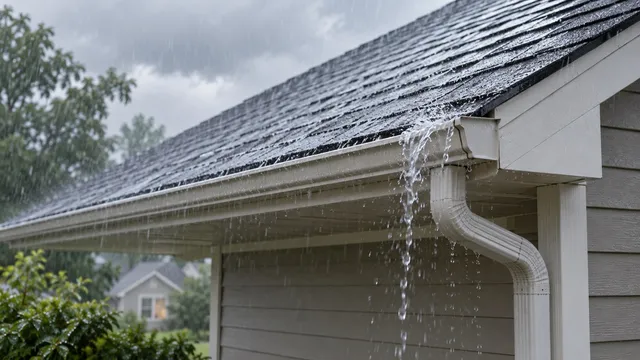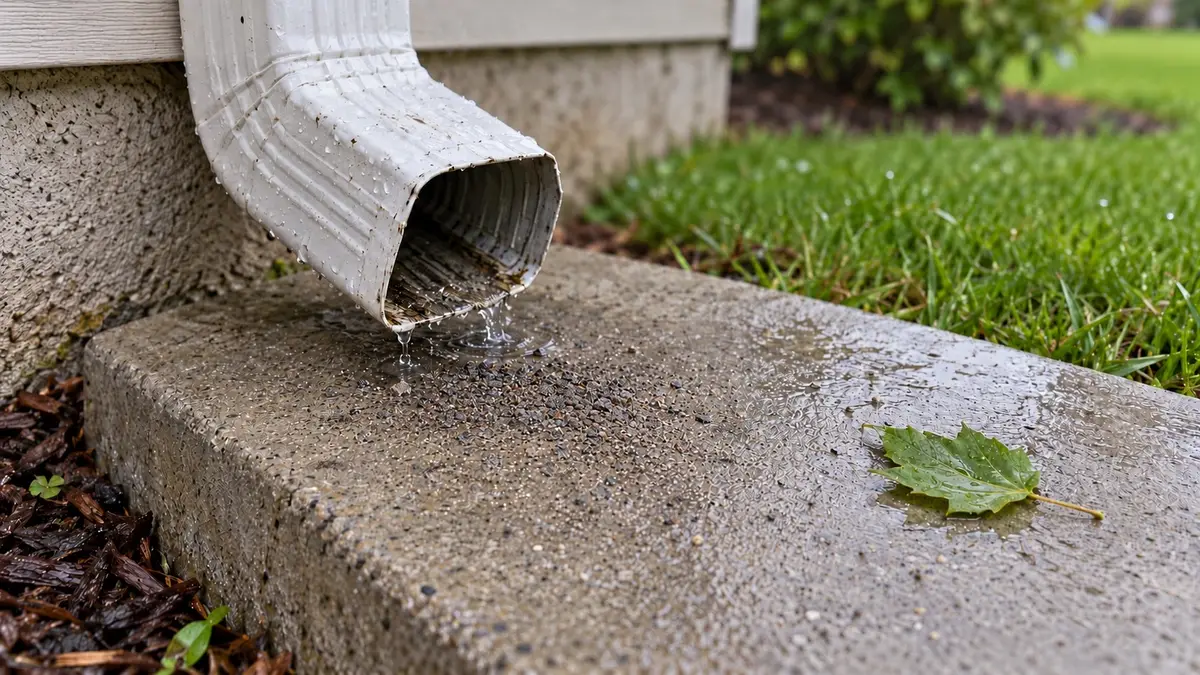
Colored grit gathers at the downspout after a hard rain. You may have a new roof, an older roof nearing a decision, or a roof that just took hail. The same material can be normal shedding or a warning of roof trouble.
Granules are the crushed mineral particles embedded in asphalt shingles. They color the surface and shield the asphalt from ultraviolet light, according to the Asphalt Roofing Manufacturers Association. A few at a gutter outlet do not tell you how much protection remains on the roof. For a repair or replacement, no reliable national price fits an uninspected roof; access, scope and materials require local itemized quotes.
Are shingle granules in gutters normal or a sign of trouble?
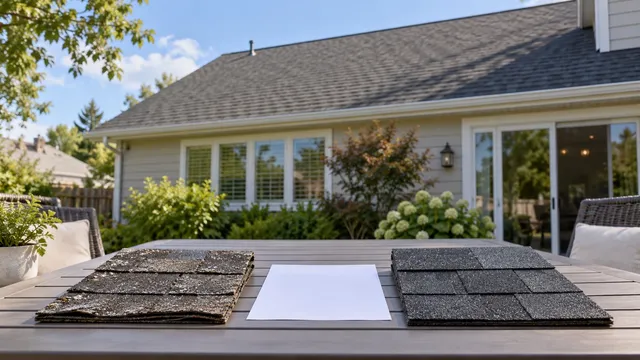
Surface granules usually resemble coarse colored sand or tiny hard stones, often in the roof’s gray, black, brown or blended colors. Collect a small sample from a downspout splash block on white paper, then photograph it beside a coin for scale. This gives the roofer something more useful than a memory of a dirty gutter. Do not climb up to scoop from a gutter; the outlet provides the same clue from the ground.
Not every mark below a roof is lost protective surface. ARMA’s new-roof color guidance describes fine mineral back-surfacing that keeps bundled shingles from sticking; rainfall washes it away. Some of that finer material may reach a new roof’s gutters. Brown runoff staining on fascia, sometimes called tobacco juicing, is not a mound of granules; ARMA says environmental deposits are often responsible. Dark roof streaks often reflect algae rather than missing granules. A color difference on new shingles alone is not a bare patch.
Why does a new asphalt roof shed granules?
IBHS’s roof weathering research says asphalt shingles typically leave manufacturing with extra granules, which it calls “hitchhikers.” Shedding those extras is expected. The same research observed that some products shed increasingly over the years until asphalt is exposed. Both statements matter: early grit can be routine, while continuing growth deserves attention.
The manufacturer CertainTeed describes an early curing phase with some granule loss. It gives no universal week or month at which shedding must stop. A hard rain can also dislodge granules, IBHS notes. Compare cleanouts over time rather than counting days from installation.
On a recently installed roof, save the installation paperwork and photograph downspout deposits after similar rains. If the amount tapers and roof surfaces look even from the ground, keep a record. If it stays heavy, increases, or comes with clearly bare areas, ask the installing contractor for a documented look. A wavy new roof is a separate issue; see why a new asphalt roof looks wavy before treating every appearance change as granule loss.
How much granule loss is too much?
Published manufacturer, roofing-association and IBHS guidance provides no definition of a cup, handful, gutter depth or percentage that separates normal from failed. Internet thresholds are not roof standards. Even a measured cup tells little without the roof’s area, history and the slope feeding that outlet. Ask three questions instead: Is the roof new or weathered? Is this more than its previous cleanouts? Did hail, roof work or washing come first?
| Pattern from the ground | What it may mean | Next step |
|---|---|---|
| New roof; deposits taper | Spare granules washing off | Record the trend |
| New roof; persistent loss or visible bare spots | Installation or product concern | Installer and roofer inspection |
| Older roof; growing loss plus curling or dark patches | Aging surface | Roofer assessment and replacement planning |
| Sudden loss after hail or work | Event-related damage | Document event; roofing-contractor assessment |
NRCA’s consumer guidance lists excessive granules in gutters among visible roof-problem signs but does not define a volume. A 2000 HUD rehabilitation guide says granule loss with curling is a replacement sign. Those findings make the visible shingle surface more important than the pile beneath it. A roof with exposed asphalt deserves a roofer’s attention even if the next gutter cleanout yields little.
What can you check without getting on the roof?
Map the downspouts: the front-left outlet may drain one slope while the garage outlet drains another. Photograph each outlet after comparable weather. More grit at one outlet suggests which slope to have examined, though gutter layout and water flow also affect deposits. Note whether recent hail, washing, solar installation, chimney work or tree contact happened above it. Keep a date and a sample.
Use binoculars from a safe ground position. Look for dark asphalt patches, visible fiberglass mat (the reinforcing layer beneath the asphalt), curling, cracks, missing tabs, blisters and scuffed paths. Sun-facing slopes can weather differently; IBHS measured higher roof temperatures on south-facing slopes, but a darker area alone is not a diagnosis. If hail occurred, look for fresh dents or spatter at eye level on downspouts, outdoor equipment or patio furniture. A roofer must examine shingle bruising; you should not go up to press on shingles. The hail inspection guide covers the wider storm assessment.
From a safely accessed attic hatch, note stains, damp insulation or daylight without stepping off a floored path or disturbing unknown insulation. The source of dampness may instead be a roof leak or attic condensation, so tell the roofer what you saw rather than assigning a cause. For active water entry or a visible roof opening, call a roofing contractor promptly for temporary protection; keep clear of wet electrical fixtures and call a licensed electrician. For missing shingles seen from the ground, use the storm repair-versus-replacement decision. If a drip appears only during downpours, track the heavy-rain leak pattern separately from the grit.
Does hail-related granule loss count as roof damage?
It can, but granules alone do not establish a claim or the roof’s remaining life. NRCA’s hail bulletin says most hail-related damage is cosmetic and will not affect shingle life, while significant granule loss, penetration or fracture may require replacement. Its warning also includes severe splitting of wood shingles. IBHS laboratory research found that small hail knocks off protective granules and speeds aging. In specimens exposed to natural weathering and two simulated small-hail events, later susceptibility to large-hail damage rose by up to tenfold compared with new shingles. That is a laboratory comparison, not a field failure rate for your house.
These sources answer different questions: NRCA describes typical repair judgments; IBHS measured a longer-term effect under controlled conditions. Ask an inspector to document whether impacts also bruised, cracked, tore or punctured shingles, and whether loss is random like hail or follows scuff paths or natural shingle edges. IBHS’s hail guide treats those patterns differently.
Whether an insurer pays depends on the policy, the cause, the deductible and state rules. The Oklahoma Insurance Department warns that some policies have cosmetic-damage exceptions or separate hail deductibles. Photograph the event and speak with your insurance agent before signing a storm contractor’s agreement. A visible deposit after rain without hail is not evidence of a hail claim.
Could cleaning, foot traffic or attic heat be the cause?
Ask what happened immediately before the deposits appeared. The ARMA cleaning bulletin says never pressure-wash asphalt shingles because it causes granule loss and very likely premature roof-system failure. Scrubbing can do the same. IBHS records foot-traffic scuffs and tool marks among non-hail patterns. Solar, satellite or other roof work may leave a path of scuffing, which a roofer can document. If a branch rests on the roof, have a tree-care professional handle it; line-adjacent branches require utility-qualified help.
Do not accept a spray-on coating or “rejuvenator” as an easy way to restore lost mineral. ARMA strongly advises against field-applied coatings and rejuvenators, citing limited evidence for claimed benefits. Reported problems include coating shrinkage, curling, cupping and loosening of granules; a coating may also trap moisture beneath the shingles. Ask the shingle maker in writing before any treatment. There is no established, validated re-granulation repair in that guidance.
Ventilation is less settled. ARMA says overheated, moist attics can contribute to deterioration; NRCA says research has not verified a significant effect of ventilation on average roof-surface temperature. NRCA also says some manufacturer warranties condition coverage on ventilation. This is reason to check attic and warranty terms, not to blame every granule deposit on a vent count.
Should you repair, watch or plan a replacement?
Watching is reasonable when modest new-roof shedding declines and no roof-surface damage is visible. Schedule inspection when loss jumps, persists unexpectedly, concentrates beneath one damaged slope, or follows a known event. A qualified roofer can photograph whether loss stays at edges, exposes asphalt or mat, or accompanies blisters and scuffs. A localized injury may be repairable; ARMA’s repair bulletin describes shingle replacement by a qualified professional.
Widespread surface loss, curling, brittle repair conditions and repeat problems move the discussion toward replacement. Age supports the judgment but cannot decide it alone. NRCA says most new roofs are designed for about 20 years of useful service, while actual life varies with climate, design, materials, installation and maintenance. The older HUD guide gives about 20 years for a first layer and about 15 for a second. Neither figure predicts a particular roof. A “lifetime” warranty is not a service-life promise. If replacement is proposed, compare overlay with tear-off and what each roofing quote includes.
No authoritative national inspection, repair or replacement price applies to this symptom. Ask for local written bids that identify roof area, product and color, repair versus tear-off, flashing (the metal or other waterproofing at roof joints), ventilation, deck allowance, disposal, permits where required, payment terms, and separate workmanship and material warranties. Ask for photos behind the recommendation. If a young roof is condemned solely from granules in a gutter, seek another roofing opinion.
Who should receive a warranty or insurance question?
Use the timing and inspection findings to choose the first conversation:
| Suspected cause | Who to contact | Evidence to bring |
|---|---|---|
| New-roof product or installation problem | Installer and manufacturer warranty department | Install date, product, photos, warranty |
| Hail or wind | Insurer or agent; roofing contractor | Storm date, surface photos, inspection findings |
| Cleaning or trade damage | Contractor who did the work; roofing contractor | Work invoice, before/after photos |
| Ordinary aging | Roofing contractor for planning | Deposit trend, roof age, condition report |
Ask the roofer to distinguish damage from normal wear in writing. A warranty question needs the actual defect definition and terms; a young roof alone does not prove a manufacturing defect.
The 1999 ISO sample homeowners policy excludes wear and deterioration, but your coverage may differ. Read the actual roof endorsement, deductible and cosmetic-damage language. If roof water has entered the house, interior leak coverage turns on cause and timeline. Granules at a downspout should begin a documented question, not a promise of payment.
If you collect rainwater, the Texas Water Development Board’s harvesting manual says runoff from asphalt or composite shingles is unsuitable for potable use but can be used for irrigation. Keep the collection system and filters maintained when deposits increase; do not use the granules as a drinking-water safety test.
Frequently asked questions
Is there a measurement for too many shingle granules?
There is no published cup, depth or percentage standard for diagnosing a roof from its gutter deposits. Compare this roof with its previous cleanouts, age and any recent event. Visible bare or curled shingles are a clearer reason for inspection than a sediment measurement.
How long can a new roof keep shedding granules?
There is no universal number of months for new-roof shedding. CertainTeed describes an early curing phase but does not set a calendar cutoff. A persistent or growing deposit, especially with bare spots, merits a call to the installer.
Does a 15- to 20-year-old roof with granule loss need replacement?
Not from age and gutter grit alone. Ask a roofer to assess the surface, seal, curling, leaks and repairability. A deposit at a downspout cannot establish how many years remain.
Can lost granules be put back?
There is no established, validated re-granulation repair in ARMA’s guidance. It strongly advises against coatings and rejuvenators sold for aging shingles. A roofer can assess a localized repair or replacement of damaged shingles.
Will granules clog downspouts or gutter guards?
Deposits can join other debris, so maintain drainage and note where water overflows. There is no established granule amount that predicts blockage. A ground-level downspout check is enough for this diagnosis; leave high gutter work to a qualified cleaner.
Do granules after a storm mean I should file a claim?
No. Document the date and roof condition, then compare the roofer’s findings with your policy and deductible. An insurer distinguishes a covered event from ordinary wear under its own terms.
Sources
- IBHS — Natural Weathering and Hazard Exposure
- IBHS — Is It Hail Damage?
- IBHS — Impact Testing of High Concentrations of Small Hail
- NRCA — Resources
- NRCA — Roof Repair After a Hailstorm
- ARMA — Guide to an Asphalt Shingle Roofing System
- ARMA — Variations in Color Appearance
- ARMA — Water Soluble Residue on Asphalt Roofing
- ARMA — Algae and Moss Cleaning
- ARMA — Coatings and Rejuvenators
- ARMA — Attic Ventilation
- ARMA — Asphalt Shingle Roofs are Repairable
- CertainTeed — When to Replace My Roof
- HUD — Residential Rehabilitation Inspection Guide
- Oklahoma Insurance Department — Wind and Hail
- Insurance Information Institute — Sample Homeowners Form
- Texas Water Development Board — Rainwater Harvesting Manual