One kitchen remodeling quote is far below the others. The contractor may have a simpler method, or may be pricing different drawings, cabinets, finishes, or trade work. The price alone cannot tell you which.
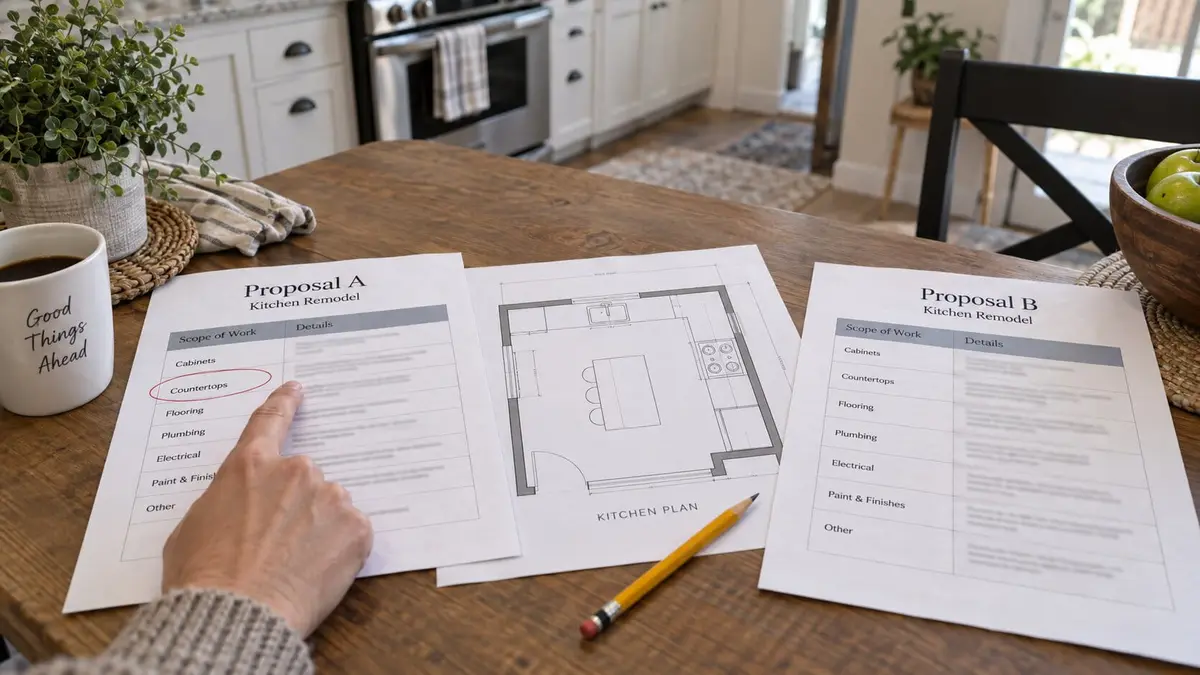
Start by putting all proposals against one dated plan and a common list of decisions. The goal is a written explanation for the difference, with the work you still must buy or arrange clearly shown.
No national average price, markup, or contingency percentage can tell you which quote is fair for your kitchen. That answer sits in your own plan and selections, current local proposals, and the written terms.
Why do kitchen remodeling quotes differ so much?
Start with six things that can differ before the price does: the kind of price, the plan each bidder priced, the products, what each allowance buys, what is excluded, and who coordinates the work. Even on the same scope, firms price supervision, scheduling, and service differently, so the gap is a question to ask, not a verdict.
First check what kind of number each contractor gave you. Put proposal date, drawing revision, site-visit status, and pricing basis at the top of a comparison page. A preliminary design budget, a proposal for defined work, and an accepted construction contract answer different questions. The documents and terms matter more than their labels.
If layout and selections remain open, compare the promised design or preconstruction work first: site measurements, drawings, specialist visits, selection help, and a later construction proposal. Ask when all bidders can price the same resolved scope. A firm-looking number may hide assumptions.
A fixed price and a cost-plus estimate need different questions
AIA’s owner-contractor document catalog recognizes different pricing structures. For a fixed-price proposal, ask exactly which plans and specifications define that price and what events can change it. For cost-plus work, ask which costs are reimbursable, how the fee is calculated, what records you receive, and whether a real maximum is written into the agreement.
For hourly or time-and-materials work, ask for rates, estimated hours or quantities, reporting, and any agreed spending limit. Do not rank an uncapped projection against a fixed-scope offer as if both were guaranteed final bills. Agreement terms and local law determine whether a quoted number binds anyone.
Give every bidder the same kitchen to price
An apples-to-apples comparison starts with one packet:
- Plan: current layout and revision date, including the house’s build year
- Demolition: what goes and what stays
- Selections: cabinet, counter, floor, fixture and appliance specifications and model numbers
- Finishes: the surfaces each contractor must leave complete
- Access: work-hour limits and site restrictions
State what is chosen and what remains undecided. “White cabinets” does not define a cabinet line, box construction, door, finish, hardware, or installation scope. “Quartz counters” does not define product, thickness, edge, splash, cutouts, or fabrication.
Include known leaks, visible damage, past repairs, and available reports without guessing at hidden conditions. Give the same written answers to every bidder and ask each to acknowledge the plan revision and list assumptions that need a specialist visit before its price is reliable. If the sink moves after one bid is written, that bid is not pricing the same kitchen anymore. For a proposed wall opening, treat the wall’s structural role as unknown until a structural engineer has assessed it; see what needs to be evaluated before a kitchen wall comes out. Ask both bidders to price the same assessed scope.
A quote does not have to be itemized line by line to be comparable: you need enough detail to know what the contractor promises, not automatically every internal labor rate or profit calculation. The FTC recommends written estimates that describe work, materials, completion date, and price. Ask for category or trade subtotals when helpful, and prioritize a scope specific enough to compare and enforce.
Trace each quote from demolition to the finished kitchen
Use the same rows for every proposal. Give each row one status: included at a stated price, allowance, excluded, owner-supplied or owner-arranged, or unclear. A blank means unclear, not included and not free. Add the document page or line and the question each bidder must answer.
| Scope row | The quote says | Record as |
|---|---|---|
| Countertops | “Material allowance” only | Allowance; fabrication and installation unclear |
| Countertops | Named product, fabrication, installation | Included at a stated price |
| Appliances | “Installation included” | Unclear: which steps? |
| Electrical | “By others” | Excluded; no one named |
| Floor under old cabinets | Nothing | Unclear, not free |
The two countertop rows are distinct promises even if the allowance amounts happen to match. New York City’s model home-improvement contract shows the detail worth asking for: the quantity, quality, and brand of the materials the contractor supplies, a separate list of what you supply, and a payment schedule. Your bidders will use their own forms; the level of detail is what to match.
Compare components and the work around them
For demolition, identify exactly what goes, what is salvaged, what adjacent rooms and floors are protected, where debris goes, and who does final cleaning. For cabinets, compare sizes, fillers, finished end panels, trim, delivery, and installation with the same base selection. If the choice between refacing and replacing cabinets is still open, price those as different scopes.
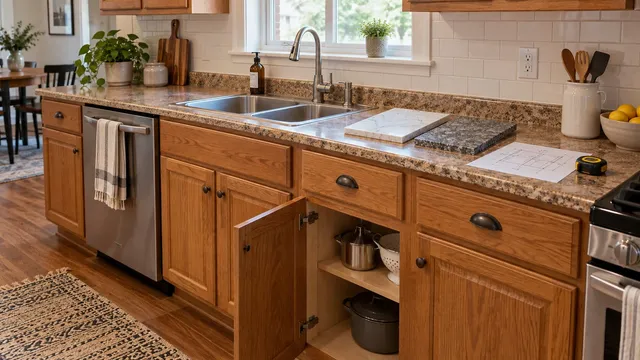
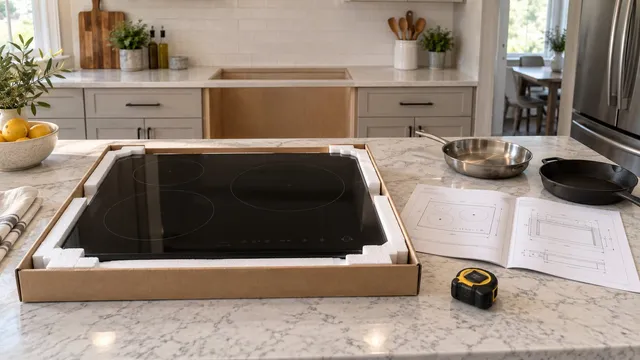
For countertops, name templating, fabrication, cutouts, backsplash, delivery, installation, and plumbing reconnection. For plumbing, electrical, and ventilation, distinguish reconnecting existing fixtures from relocating them. A planned gas-to-induction switch or range-hood change can affect specialist work and cabinets; settle those assumptions before ranking prices.
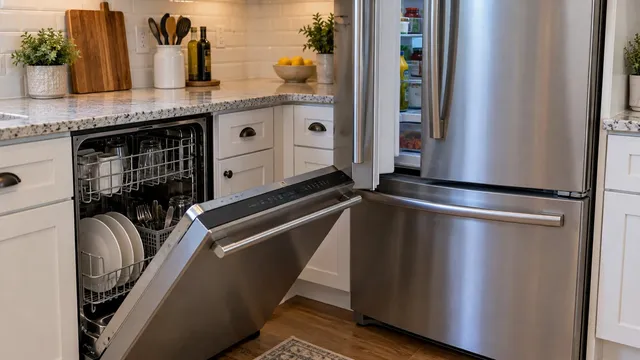
For floors, walls, and paint, ask who removes old materials, prepares or repairs the substrate, makes transitions, and finishes areas exposed when old cabinets or a wall come out. For appliances, separate purchase, delivery, storage, installation, accessories, old-unit removal, and fit checks. “Installation included” may cover only one of those steps.
Compare who coordinates and what counts as complete
Identify who takes final measurements, orders products, checks deliveries for shortages, schedules trades, arranges inspections, and communicates substitutions. Define touch-ups, punch-list work, cleanup, walkthrough, manuals, and written labor or product warranty terms. Words like “turnkey” do not assign those jobs by themselves.
Ask which party is responsible if a selected appliance no longer fits a revised opening. The cabinet, flooring, and appliance sequence can make that handoff visible before a counter is measured. A bid that excludes connection leaves someone else responsible for it.
Open every allowance before comparing its amount
An allowance is a placeholder for a known item whose final selection or price remains open. A contingency is a reserve for a condition that may or may not arise. AIA explains those distinctions within its A201 contract framework; your own agreement determines what each amount covers and how it changes.
For each allowance, ask for the assumed item, quantity, quality or specification, supplier, and selection deadline. Then identify where tax, freight, fabrication, installation, handling, and contractor fee appear. Under AIA’s A201 terms, for example, an allowance covers only the materials or equipment delivered to the site, with taxes. The contractor’s unloading, handling, labor, installation, overhead, and profit are priced elsewhere in the contract sum. Your kitchen contract may divide those costs differently, so ask. Request current supplier information for the product you intend to choose.
Ask how overages and credits are documented and approved. An unusually small allowance is a question to resolve, not proof of dishonesty. Write down where each bidder prices the installation.
Separate a selection change from an installation change
Suppose the chosen sink has a different size or mounting arrangement than the allowance assumed. The purchase adjustment and any additional cabinet, counter, or plumbing work are separate questions. Ask the contractor to show both in writing so a material credit does not conceal a labor change. Apply the same selected product or the same explicit allowance basis across revised bids.
Turn exclusions into assigned responsibilities and open decisions
Sort each omitted item into three groups: known work required for your desired result, an existing condition still hidden, or an optional alternate. A known exclusion remains in your project budget. A reserve does not price a known missing countertop or electrical scope.
For a “by others” line, write who prices it, who performs it, and who coordinates with the remodeler. For owner-purchased appliances, clarify ordering, fit verification, delivery, storage, missing parts, returns, installation, and product versus workmanship warranty responsibility. Without a named handoff, “owner supplies” can leave the appliance sitting in a garage when its cabinet is being built.
Check permits and existing-condition assumptions before demolition
Ask which permits and inspections apply at this address, who obtains them, who pays fees, and what closeout record you will receive. Permit lists are local. San Diego, for example, issues separate building, electrical, mechanical, and plumbing/gas permits, so ask which ones a bid’s “permits included” line covers. The FTC lists a contractor asking you to get required permits as a scam warning sign. If bidders disagree about what the work requires, ask your local building department, and have the licensed electrician, plumber, or mechanical contractor who would do that work confirm the scope.
Ask what is known about structural work, utility capacity, subfloor condition, and older finishes. If the house was built before 1978, EPA’s Renovation, Repair and Painting rule generally requires anyone paid to disturb paint to be a certified firm using lead-safe work practices. Age alone does not prove lead paint, and testing is not required; but unless documentation shows the paint is not lead-based, the rule applies. EPA lists exceptions, such as components a certified inspector has declared lead-free, and some states run the program themselves. Ask each bidder for its firm certification and where lead-safe work sits in its price. The pre-1978 paint preparation guide explains that separate decision. EPA says you cannot tell by looking whether a material such as old floor tile, ceiling tile, or pipe wrap contains asbestos. If the remodel would disturb a suspect material, it recommends having the material sampled by a trained and accredited asbestos inspector and analyzed by a qualified laboratory. Do not scrape, sample, or open finishes, take the cover off an electrical panel, or pull out heavy appliances yourself to make the bids match. Photographs of accessible surfaces and appliance labels give bidders enough to start from.
For newly discovered damage, ask how the contractor will document the condition, explain the necessary work, price it under the agreed method, obtain authorization, and revise the schedule. California’s contractor board, for example, requires any change in price or scope to be a written change order signed by both sides before the change is made. Other states set their own rules, so agree on the written approval step before work starts.
Compare a revised known-scope total, then show uncertainty
Ask each bidder for a revised written proposal against the common packet. In your comparison worksheet:
- Start with the submitted total.
- Take out each allowance that a confirmed selection replaces, once.
- Add the confirmed selection price.
- Add or subtract confirmed scope changes.
- Check that tax, freight, markup and installation are not counted twice. Owner-purchased items appear in an owner-cost column, not twice in the contractor subtotal.
Keep three results visible: the known-scope comparison subtotal, owner-direct costs and selected options, and required but unpriced work or unresolved conditions. A subtotal with an unpriced required item is incomplete. The contract should say who controls any contingency and how it is used or closed out. Do not turn this worksheet into a prediction of the final bill.
For cost-plus offers, compare fee basis, reimbursable costs, records, limits, and uncertainty separately. If too much work remains unknown for a useful comparison, pay a kitchen designer, an architect, or the relevant licensed trade for the missing design or assessment first and ask for revised construction proposals afterward.
Should you choose the lowest quote? Resolve the differences first
Send one clarification list to each shortlisted bidder. Ask why the remaining prices differ after the scope is aligned; differences in products, access, supervision, scheduling, or service commitments can be legitimate. Price alone proves neither quality nor misconduct.
Verify the business identity, locally relevant license status, insurance, and references for similar work. Match the proposal to the entity that will sign. Compare supervision, selection deadlines, payment milestones, communication, change-order process, completion criteria, and warranty terms. FTC consumer guidance says to get multiple written estimates, not to choose the lowest bidder automatically, to ask for an explanation when estimates are far apart, and not to pay the full amount up front. It lists pressure for an immediate decision among the signs of a scam. It names no deposit percentage: some states limit down payments, so ask your state or local consumer agency what applies where you live.
A second opinion earns its fee when bids disagree about what the work requires, not merely because a price is uncomfortable: a structural engineer for a wall, a licensed electrician or plumber for wiring, plumbing, or gas. For unclear contract rights or substantial financial exposure, ask a local attorney or consumer-protection office. Choose after the promised work and remaining risk are visible in writing.
Frequently asked questions
Should I expect to pay for a detailed estimate before choosing a remodeler?
Sometimes. Early discussions may be free while measured drawings, design options, engineering, or detailed preconstruction work may be a paid service. Ask what deliverables and reuse rights the fee buys and whether construction pricing follows. Fee policies differ from firm to firm, so ask each one for its policy in writing.
If I pay a design-build firm for plans, can I use them to get other bids?
Not automatically. It depends on what your design agreement says. Ask who owns or licenses the drawings, whether they can be released to other contractors, and what level of detail is included. Resolve the term before paying, and ask a local attorney to read the clause if its language is unclear.
If I remove work after signing, will I get the full amount originally assigned to it?
Not automatically. The contract’s change provisions and the work already ordered or performed matter. Under AIA’s A201-2017 general conditions, for example, the credit for deleted work is its actual net cost, and AIA’s commentary says the contractor keeps the overhead and profit priced on that work. Your contract may say something different. Request a written change showing both the deletion and any retained costs.
What if a kitchen quote expires before I finish making selections?
Ask the bidder to reconfirm it in writing against the current plan and choices. Price validity and how a new selection changes the scope depend on the proposal terms; supplier availability can change too. Do not rely on an expired figure when approving the work.
Sources
- FTC — How To Avoid a Home Improvement Scam
- AIA Contract Documents — Construction Allowances
- AIA Contract Documents — A-Series Owner/Contractor Agreements
- California CSLB — What Is a Contract?
- NYC DCWP — Home Improvement Model Contract
- U.S. EPA — Renovation, Repair and Painting Program
- U.S. EPA — Asbestos and Home Remodeling
- City of San Diego — Permits and Approvals
- AIA Contract Documents — Overhead and Profit on Deductive Changes