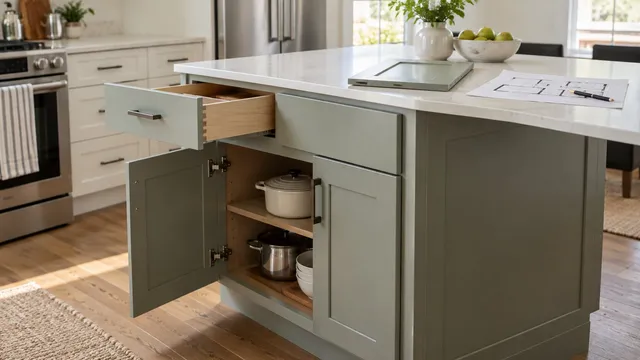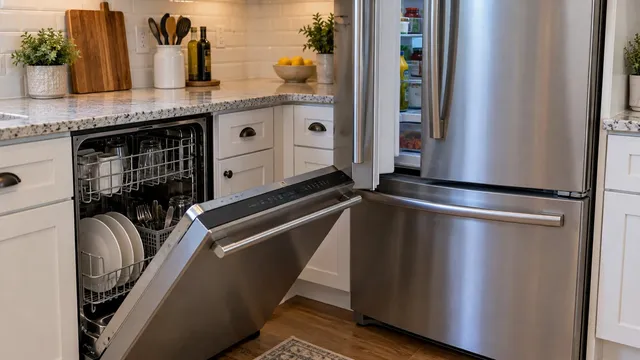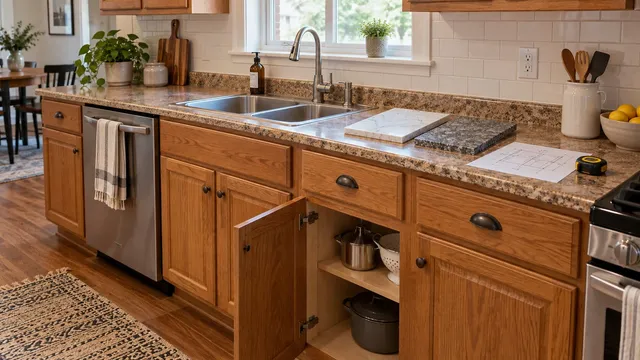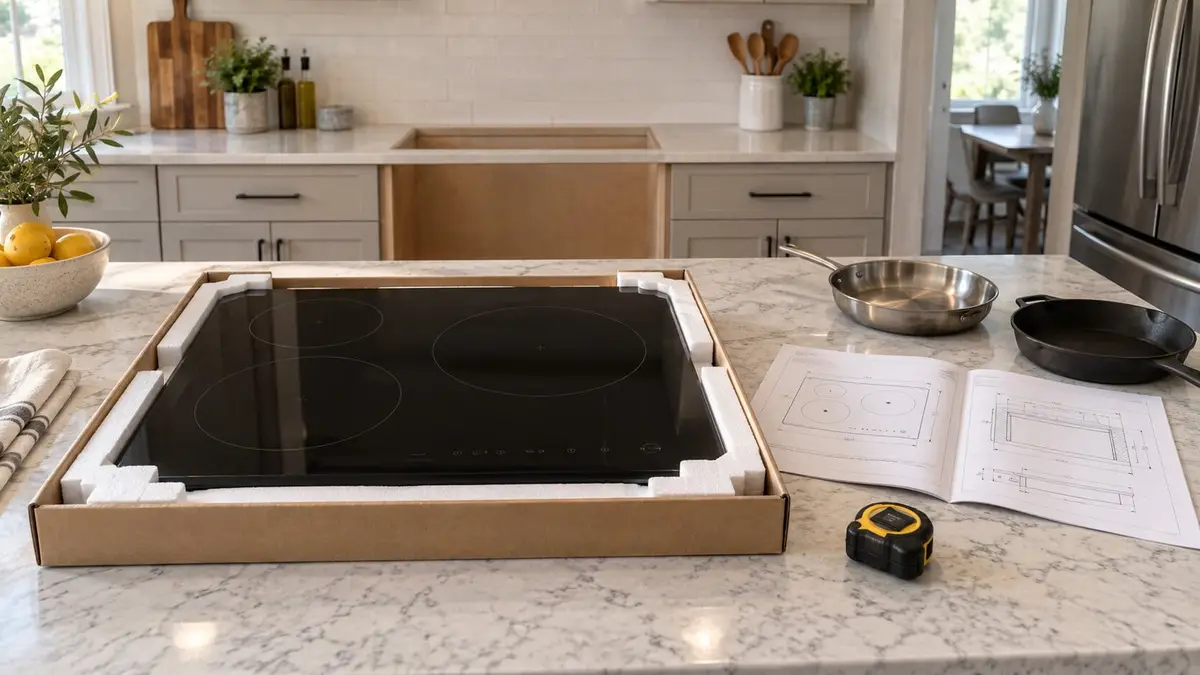
Switching from a gas stove to induction changes more than the cooking surface. The electrician cannot size a circuit without a model number, and you may not want to commit to a model before you know what the house can supply. A shortlist of two or three models breaks that loop.
The right sequence starts with a short model list and ends with written trade signoffs.
There is no reliable national price for this conversion. The cost depends on whether a suitable circuit exists, the route for a new one through finished surfaces, any opening changes, and the gas and hood work. Get an itemized quote for your house.
What should you check before switching from gas to induction?
Decide whether you are replacing an entire gas range or a built-in gas cooktop. Then collect current installation documents for two or three actual induction models. Give those documents to the electrician, cabinet designer, installer, and ventilation contractor. The Department of Energy explains induction basics; the chosen model’s manual controls installation.
Record the model number, appliance type, overall dimensions, required opening, electrical connection, and any specified space behind or beneath it. A “30-inch” label is a product class, not a shared opening.
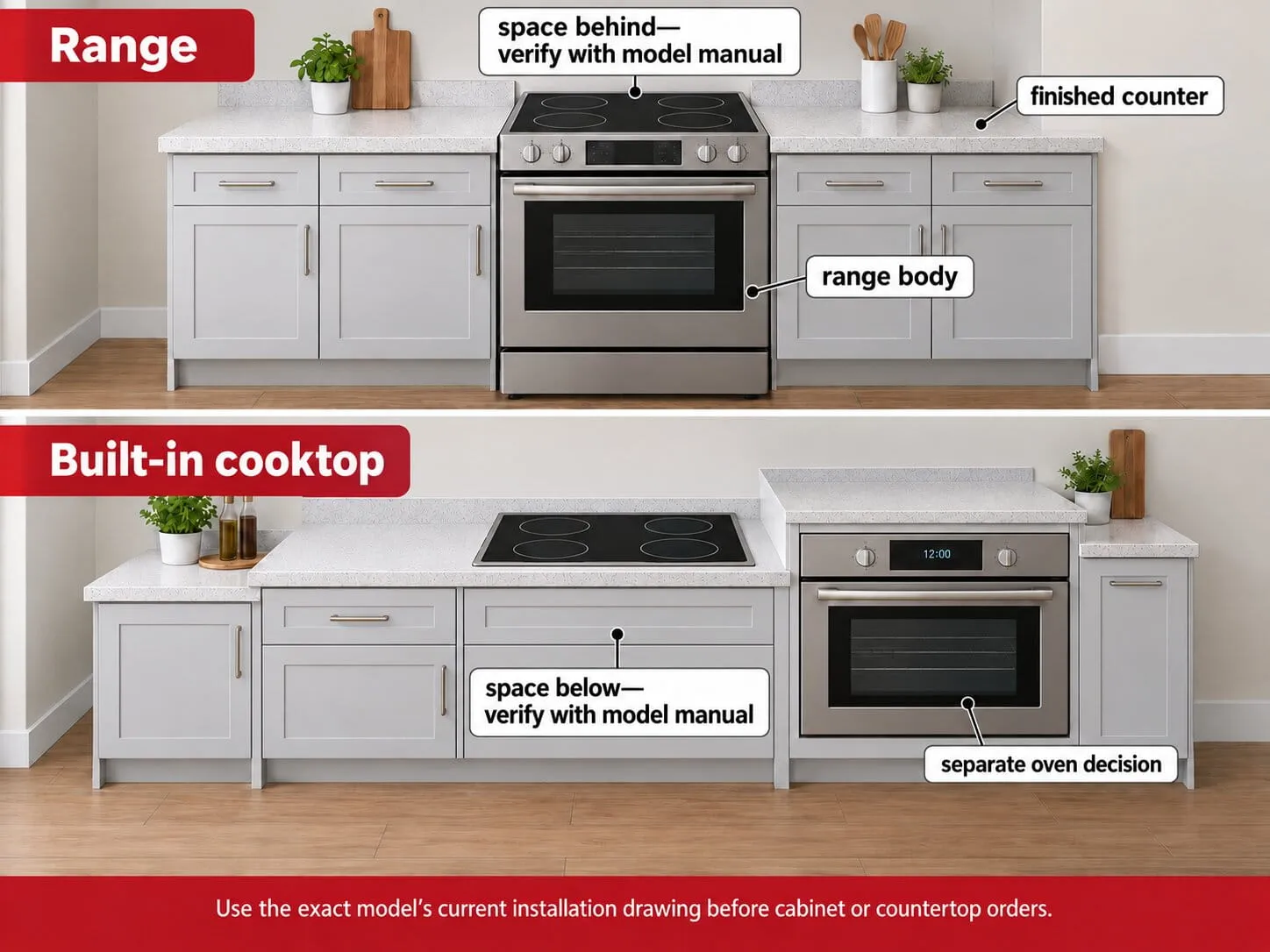
A range replacement and a cooktop replacement create different jobs
A range replaces both the cooking surface and oven. A built-in cooktop sits in a countertop; a separate oven or drawer below it may stay, move, or become incompatible with the new cooktop’s installation requirements.
Ask the cabinet designer to show both an elevation (the straight-on view) and a plan (the view from above). The views expose the opening, support and below-counter conflicts. A GE cooktop installation document separates the appliance body, cutout, position of the junction box (the wiring box a hard-wired cooktop connects to), and below-counter requirements for its listed models. For those GE 30-inch models, overall width is 29-3/4 or 29-7/8 inches, but the cutout is 28-1/2 by 19-5/8 inches. They also need at least 3 inches of airspace below the cooktop above a combustible surface such as a drawer. Those figures belong to those GE models; another brand’s will differ.
Have an electrician answer two different power questions
First: what circuit and connection does the exact appliance require, and does the existing circuit meet those instructions and applicable local rules? Second: can the home’s panel (the breaker box) and electrical service (the supply the utility brings to the house) accommodate the resulting loads, including other planned changes? A suitable circuit and adequate service capacity are separate findings.
Ask the electrician for a written assessment naming the model, the work proposed, and future loads such as an EV charger or heat pump. An empty slot or a main-breaker label alone does not prove capacity. If the model changes, repeat every sign-off. If an upgrade is recommended, ask which measured or documented constraint requires it and whether a compliant alternative is available. An unexplained upgrade merits a second qualified electrician’s opinion. DOE/NREL research on panel constraints discusses lower-power equipment and load management (equipment that limits how much large appliances draw at once). The electrician can then quote one of three paths: reuse a verified circuit, run a new circuit, or resolve a documented panel or service constraint first.
An existing outlet is a clue, not permission to connect
An unused connection may not meet the new model’s instructions. Do not open a panel, test voltage, move a connected range, or plug in equipment to check it. Give the electrician the manual and any circuit history.
How an induction appliance connects depends on the model. GE’s instructions for its 30- and 36-inch PHP-series induction cooktops, for example, require each cooktop to be hard-wired into a junction box: a plug and receptacle are not permitted. They require a 208/240-volt supply on an individual, properly grounded circuit that serves only the cooktop. Another brand or size can call for something different, so the electrician works from the selected model’s instructions. A 110/120-volt outlet left behind a gas range cannot supply a standard 240-volt induction stove.
Check the exact requirements of any alternative-power model
If conventional electrical work is difficult, ask about a lower-power, battery-equipped product as an option to evaluate. Impulse’s installation guide, for example, covers two ways to power its battery-equipped cooktop: a 120-volt cord that plugs into an outlet, or a 240-volt junction-box connection that a qualified installer must make. Either way the guide sets its own cutout, cabinet-ventilation and countertop requirements and makes the installer responsible for local codes. Have the electrician check the connection and the installer check the fit. Compare cooking capacity, service support and price with your first choice yourself.
Check the space the appliance occupies, including behind and below it
Put the exact model drawing on the kitchen plan. Show the finished countertop, backsplash, cabinet sides, range hood, and any adjacent drawer or oven. The installer should compare the opening and clearances with the current manual.
For a cooktop, examine the cabinet as well as the countertop
The cabinet under the GE cooktop needs space for the unit and its internal cooling air. Its cooling path is separate from the hood that captures cooking particles. Have the designer show any drawer or oven below and confirm the combination is approved.
If the countertop needs a new cutout, coordinate the appliance manual with the fabricator. Our guide to replacing a countertop while retaining cabinets covers the condition and support checks for that broader choice.
For a range, verify the finished position and safe installation
Have the installer check finished cabinet, floor, hood and rear-connection positions. A capped gas stub or valve can keep the new range from sliding fully back and engaging its anti-tip bracket. Have the qualified gas professional and installer coordinate it before cabinets close the space. The installation crew must follow the selected range’s clearance instructions and install its anti-tip bracket, which holds the range’s rear leg so it cannot tip forward.
Put gas disconnection and remaining piping into the scope
Have a qualified gas fitter or plumber, licensed where your jurisdiction requires it, disconnect the old appliance and cap or remove the gas line that served it. Document the remaining pipe, shutoff and completion. A closed valve alone is not a plan for taking that line out of use. Do not disconnect the appliance, or cap, test, alter, or reopen a gas line yourself.
If a gas water heater, furnace, fireplace or dryer remains, gas service stays relevant. PG&E’s residential project guidance illustrates that utility service work has its own process in its territory; your serving utility determines its procedure.
If you smell gas or suspect a leak, alert everyone and leave immediately, moving upwind if you can. Do not use anything that could ignite the gas until you are a safe distance away: no flames, light switches, phones, flashlights, or vehicles. From there, call 911 and then your gas utility, as PG&E’s gas-safety guidance tells its own customers. Do not go back in to check whether the smell is still there.
Keep ventilation in the remodel plan
Induction removes gas combustion at the cooking surface, but searing, frying, and other cooking still release particles. The EPA recommends a range hood that exhausts outdoors where possible. Our ducted-versus-ductless hood guide helps settle the cabinet and route decisions.
Ask the ventilation contractor to check the hood’s position, its duct route to the outdoors, and how it interacts with other exhaust fans and with any gas appliance that stays. EPA cautions that in some cases a hood with a high airflow rate can cause backdrafting: it exhausts more air than the house brings in, and carbon monoxide and other combustion products from a natural-draft gas water heater or furnace can be drawn into the living space. If a gas appliance remains, have the ventilation contractor assess that risk and plan makeup air (outdoor air brought in to replace what the hood removes) before the hood is ordered. An existing hood is not automatically adequate just because it served the gas range.
Check the pans you actually use before budgeting for replacements
Gather the cookware you reach for every week. DOE says a flat-bottomed pan with a base a magnet sticks to will work, but read the selected appliance’s cookware guidance too. GE’s owner manual describes magnetic material, reasonably flat contact, and a minimum base size for its model. GE also gives a minimum flat magnetic bottom diameter for each element, from 4-1/2 to 7 inches on those models; measure the base, not the rim.
Sort pans into compatible, needs checking and likely replacement. Do the check with cold cookware away from the appliance; there is no need to start cooking to find out. The glass can remain hot after a pan is removed; follow burn precautions.
If anyone in your household has a pacemaker or a similar implanted medical device, have them ask their doctor or the device’s manufacturer about their own device before you choose induction. GE’s owner’s manual for its PHP-series induction cooktops cautions that the electromagnetic field may affect such a device when a person is using or standing near the cooktop while it is on. Do not rely on a generic safe distance from a sales page.
Release the order when the scope and handoffs are clear
Use one model and instruction revision on the final plan.
| Settle before ordering | Who confirms it | Have in writing |
|---|---|---|
| Exact model and instruction revision | You and the seller | Model number on the plan |
| Circuit and connection for that model | Electrician | Assessment naming the model |
| Panel and service capacity | Electrician | Finding and any constraint |
| Opening, cutout, and clearances | Installer and fabricator | Sign-off against the model drawing |
| Cooktop over an oven or drawer | Cabinet designer and manufacturer | Approved combination |
| Gas disconnection and capped location | Gas fitter or plumber | Scope, permit, completion record |
| Hood and backdraft check | Ventilation contractor | Hood decision |
| Permits and inspections | Local building department | Which apply and who pulls them |
| Delivery and hookup | Seller | Hookup scope and exclusions |
Ask the local authority and responsible trades which permits or inspections apply. Portland’s residential permit guidance shows how the work can split: for one- and two-family homes, Portland requires a mechanical permit to alter gas piping between the meter and an appliance, and an electrical permit to run new wiring or add an outlet. Your jurisdiction sets its own rules.
GE’s terms for appliances bought directly from it show how narrow delivery-day installation can be: its agents set a range in place, level it and connect it to a proper power source that already exists, but they are not authorized to do carpentry, plumbing or electrical work, cannot direct-wire an electric range, and offer no installation for cooktops or vent hoods. Other sellers write their own terms, so get your seller’s hookup scope and exclusions in writing.
Compare itemized estimates for the same appliance and finished installation: electrical, gas, cabinets, counters, hood, permits, delivery, haul-away and finish repairs. DOE says induction is more efficient than gas and can lower energy costs, but what happens to your bills depends on your rates, how much you cook, and whether you still pay for gas service for other appliances. Confirm current rebate rules, qualifying models and any preapproval before ordering. See the whole-kitchen quote comparison.
The short list of reasons to pause the order
Pause when:
- Someone quotes an electrical size without the model instructions.
- Someone calls for a panel upgrade without identifying the constraint.
- The cooktop is assumed to fit a nominal opening.
- A gas shutoff is treated as a completed plan for that gas line.
- “Installation included” leaves the trade work undefined.
Close each item in writing. Coordinate the cabinet, flooring, and appliance installation order before setting delivery.
Frequently asked questions
Why do some induction pans hum or buzz, and what should I ask during a demonstration?
The sound comes from the cookware, and on GE’s PHP-series cooktops the owner’s manual calls slight hums and buzzes normal. Heavier pans such as enameled cast iron are quieter than lightweight multi-ply stainless, a low hum is most noticeable on high settings, a buzz with cold contents fades as the pan heats or the power is turned down, and a pan smaller than the element’s minimum size can be louder. At a demonstration, ask to hear the exact model with a pan like yours at the settings you use most.
Can I keep using a round-bottom wok or a griddle that spans two cooking zones?
On GE’s PHP-series cooktops, no for a round-bottom wok and yes for a griddle that spans the two left elements. GE’s owner’s manual says to use a flat-bottomed wok, not one with a support ring, and says cookware should fully contact the glass. Its Sync Burners control links the two left elements for a griddle or large oval pot. Other models differ, so check the selected manual on both points.
What does a portable induction-burner trial tell me—and what can differ on a full-size appliance?
DOE suggests a single-burner unit as a trial. A portable burner can show whether your usual pans heat on that unit and whether you like the cooking response. The planned appliance may differ in zones, controls, power sharing and installation. The electrician still checks the planned appliance.
What cooking capability remains during a power outage, particularly with a battery-equipped model?
On an ordinary induction range or cooktop, none: it cannot heat without grid power. A battery-equipped model may offer reserve cooking, but duration depends on charge and load. Confirm capability in the selected product’s operating manual before relying on it.
Can all cooking zones operate at their highest settings at the same time?
Not on every model. GE’s owner’s manual for its PHP-series cooktops, for example, groups the elements into zones, two on the 30-inch and three on the 36-inch. When two elements in the same zone are on and at least one is set to Hi, Hi runs at reduced power, and the display does not show the change. Read the selected model’s power-sharing section and ask the seller to demonstrate the pans you expect to run together.
Sources
- U.S. Department of Energy — Making the Switch to Induction Stoves or Cooktops
- GE Appliances — PHP9030 Series Cooktop Installation Instructions
- DOE/NREL — Low Power Electrification Solutions Enable Affordable Residential Electrification by Minimizing Panel Upsizing
- Impulse — Installation Instruction Manual
- GE Appliances — Appliance Delivery and Installation
- PG&E — Residential Project Resources
- PG&E — Gas Safety
- EPA — Sources of Indoor Particulate Matter
- GE Appliances — Induction Cooktop Owner Manual
- City of Portland — Residential Permits