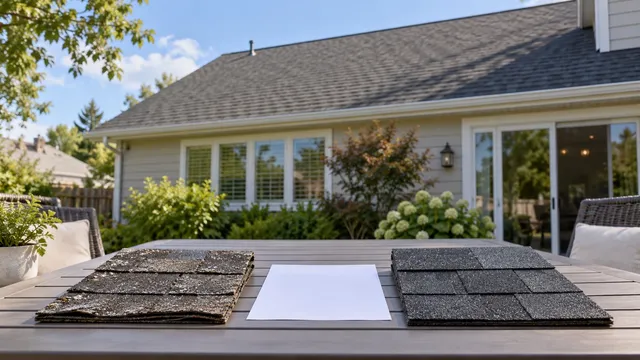
You have three roof replacement quotes on the kitchen table. One lists a shingle brand and a total. Another includes a deck allowance, new flashing and an ice barrier. The third includes a different roof area. Those totals cannot yet tell you which contractor offers the best value.
You need a comparison of the work each bidder intends to do, plus the price of anything discovered after tear-off. If an active leak needs immediate protection, ask a roofing contractor to price that temporary work separately. A replacement contract should survive a careful reading.
Why are roof replacement quotes so different?
The National Roofing Contractors Association (NRCA) says prices vary with materials, contractor, home size, location, labor rates and season. It calls clear, detailed proposals a sign of a thorough estimate and says price is only one factor. There is no dependable national installed price or “normal percentage gap” that settles the bids already in your hand.
Sort each difference into three buckets:
- Scope: roof area, old layers, deck work, underlayment, flashing, ventilation, removal and cleanup.
- Product and warranty: the exact shingle line, accessory products, wind or impact rating, and written warranty tier.
- Business terms: supervision, insurance, schedule, payment, workmanship coverage and change orders.
A fourth possibility is a mistake: a missed porch, an incorrect layer count or a number that assumes every concealed deck board is sound. Rebuild the comparison before deciding which price is high or low.
Do the quotes measure the same roof, layers and roof type?
A roofing square is 100 square feet of roof area, as defined in IKO’s warranty. Ask each bidder for measured squares, the waste allowance and the sections included. A steep, cut-up roof with hips and valleys uses more material than a simple gable of the same floor area. If two square counts differ, have the bidders identify what each measured: garage, porch, dormer or addition. Do not climb up to check measurements yourself.
Ask how many old applications are present and whether all are being removed. ARMA’s reroofing guidance notes that most codes limit the number of roof coverings. A bid to lay new shingles over an old layer is a different job from a full replacement. First decide whether an overlay suits your roof, then obtain comparable scopes.
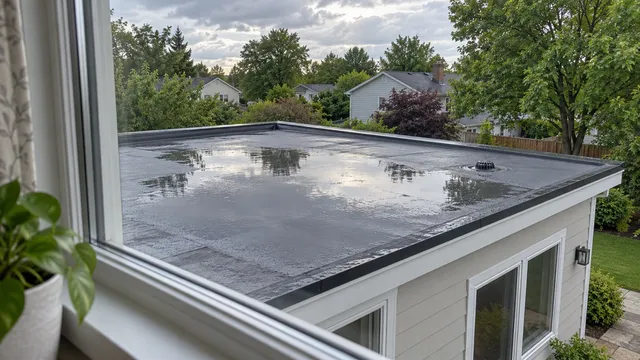
Low-slope sections deserve their own line. The model residential code adopted in Colorado permits asphalt shingles down to 2:12 slope—two inches of rise per 12 horizontal inches—with double underlayment from 2:12 up to 4:12, while NRCA does not recommend shingles below 18 degrees. Ask why each bidder selected its proposed system for the porch or addition. Our flat-roof ponding guide explains why drainage can change that decision. On an older roof with suspect materials, ask the contractor how testing is handled; EPA notes roofing shingles can contain asbestos. Do not sample them yourself.
Which scope lines explain the biggest price gaps?
Copy the rows below into a sheet with one column per bidder. Record “included,” “excluded,” or the specific allowance; a blank is a question. Ask bidders to revise the quote in writing when a line differs.
| Line to compare | What the written bid should resolve |
|---|---|
| Roof quantity | Squares, waste, and every included section |
| Tear-off | Number of layers, disposal and old membrane treatment |
| Deck | Excluded, allowance or full re-sheathing; unit price and approval |
| Water layers | Underlayment product and ice-barrier locations |
| Edges and openings | New or reused drip edge, starter, flashing, boots and vents |
| Ventilation | Existing intake and exhaust; proposed changes |
| Shingles | Exact line, color, nailing and wind rating |
| Warranty | Material tier, qualifying accessories, workmanship terms |
| Job terms | Property protection, cleanup, permit, schedule and payment |
How is hidden roof-deck damage priced?
Most of the deck stays hidden until the old roof comes off. An estimate may exclude all deck replacement, include a number of sheets, state a per-sheet or per-board unit price, or quote full re-sheathing. Those methods place the same uncertainty in different places. ARMA says rotten, warped or otherwise damaged boards must be replaced before new shingles go on. Gaps over ¼ inch between deck boards are a separate reason to consider new code-compliant sheathing over the plank deck.
Ask what sheathing type and thickness the unit price buys, how many units are included, whether the contractor will photograph damage before covering it, and who approves extra work. Ask for a cap or a written change order before exceeding the allowance. A lower fixed total with all decking excluded can finish higher than a bid with an allowance. If bidders disagree about sag or major deck work, get an independent roof inspector’s view; structural sag goes to a licensed structural engineer. An attic stain also needs a cause: leak and attic condensation require different responses.
Where will underlayment and ice barrier go?
Underlayment is the layer between deck and shingles; ask for its exact product. Compare the named felt or synthetic product against the shingle instructions and local requirements. An ice barrier is a waterproof membrane applied at the eaves where local code designates a history of ice dams. The model code extends it at least 24 inches inside the exterior wall line; on slopes of 8:12 or steeper it also extends at least 36 inches along the roof slope. Detached accessory structures without conditioned floor area are excepted; local adoption controls. A bidder may also specify membrane in valleys as an upgrade or to qualify for a product warranty. Have each mark those locations on the roof plan. Recurring ice dams call for looking at attic conditions too, not just adding a membrane.
Are roof edges, flashing and ventilation named?
Drip edge is metal at the eaves and rakes that directs water away from the deck edge. Starter shingles secure the first course. The model code calls for drip edge at both edges and replacement of flashing or edging that is rusted, damaged or deteriorated. Reuse of sound flashing is a condition judgment; “reuse existing” without an inspection says too little. Ask separately about step flashing at sidewalls, chimney flashing and counterflashing, pipe boots, skylights and valleys. For a chimney more than 30 inches wide, ask whether the uphill cricket, a small diverter roof, is included under the locally adopted rule.
Ventilation is another scope difference that should start with an attic inspection. NRCA notes differing opinions about how much is needed and says the strongest case is in cold, snowy climates. Ask each roofer for the present intake and exhaust areas, the proposed changes, and how they meet the selected manufacturer’s warranty terms. More vents by itself is not an answer. If a new roof later shows waves or unevenness, deck and underlayment choices become part of that diagnosis, so record them now.
What about nails, cleanup and the permit?
Ask for the shingle’s specified nailing pattern and wind classification. TAMKO’s Heritage instructions specify six fasteners per shingle for its high-wind pattern versus four for standard application, plus TAMKO starter with sealant at both eaves and rakes. That High Wind Warranty is available only for new construction or complete tear-off, not a recover. Different application details can make identical shingles unequal bids.
The quote should say how many layers leave the site; who protects gutters, siding, landscaping and attic contents; who performs a nail sweep; and who repairs any damage during the work. NRCA specifically lists responsibility for damaged exterior landscaping or interior finishes as a proposal item. Ask the building department whether this job needs a permit and inspection locally, then require the bid to name who obtains it and pays the fee. Permit rules vary by location.
Can the same shingle brand carry different warranty prices?
Yes. A manufacturer sells distinct shingle lines and may condition an extended system warranty on its matching starter, ridge caps and other accessories, a qualifying installer, full tear-off, ventilation and registration. The IKO ROOFPRO extended terms are one documented example. IKO also describes fees, purchase commitments and rebates in its contractor program; its credential does not itself guarantee workmanship. The extended document also excludes improper installation. Other brands and tiers differ, including whether installation errors receive manufacturer coverage.
Separate the manufacturer’s material warranty from the contractor’s workmanship warranty. NRCA says the latter typically addresses installation issues, varies by contractor and has no industry-standard period. “Lifetime” language does not mean every cost is covered for that long. Read the specific non-prorated period, exclusions, transfer terms and registration deadline. NRCA’s warranty advisory says warranty length should not be the main selection criterion. Ask whether installation errors are covered, by whom, for how long, and for the exact quoted tier.
When is a higher quote doing more for local conditions?
In a cold area, a bidder may include locally required eave ice barrier. In a wind-prone area, another may quote a sealed deck, ring-shank nails in an enhanced deck-attachment pattern, and stronger edges under the FORTIFIED Roof program. Those additions are different work. For site-built single-family homes, Florida’s replacement rule requires secondary water barriers and strengthened or corrected deck attachments. Those are Florida requirements, not national rules. Ask each bidder to identify the adopted code and section behind a claimed requirement, and to price chosen upgrades separately from code work.
Insurance discounts for resistant roofing depend on your policy and insurer. Ask the agent before paying for a shingle upgrade based on a promised premium reduction. A higher bid is justified by documented work you want or need; a label such as “premium package” alone explains nothing.
What business terms belong in the comparison?
Ask who supervises the crew, the expected schedule, how open-roof areas are protected if weather interrupts work, and for the written workmanship warranty. Check licensing or registration with your state or local authority, because the rules vary. Request current liability and workers’ compensation certificates as applicable. A low bid alone does not prove unsafe work or missing insurance. NRCA’s contractor selection guidance and the FTC’s home-improvement advice give useful verification questions.
If the job follows a storm, put the insurer’s estimate beside the contractor’s scope line by line. Coverage and payment timing depend on the policy. Texas’s insurance department explains that an adjuster’s figure can guide cost discussions, but it is not a substitute for a contractor’s scope. Separate wind or hail deductibles and cosmetic limits may apply. A hail inspection or the decision to repair missing shingles rather than replace comes first if that remains unsettled.
Several states, including Texas and Minnesota, prohibit contractors from absorbing a homeowner’s deductible in certain insurance work. The Texas Department of Insurance warns against that offer. Minnesota law also requires a detailed, itemized good-faith estimate for insurance-paid repairs. Contractors there cannot interpret policy provisions or adjust the claim without a public-adjuster license. Be wary of a contract for “the insurance proceeds” instead of a defined scope and price. An assignment of benefits is not required to repair a home, according to the NAIC.
How do you make every bidder answer the same questions?
Send the table above to every roofer and request written answers for each row. Ask each to price the same two options if you are considering an upgrade, such as a code-compliant base scope and a separately priced wind-resistant package. Record answers in the corresponding table cells.
If one bidder omits a line, ask them to price it or explain in writing why it is unnecessary. A vague “flashing as needed” should become locations, condition criteria and a change-order price. A full re-sheathing recommendation deserves photos or a deck finding. An unexplained gap remains a reason for another inspection, not a reason to pick the middle bid.
What must the contract say before you sign?
Carry the chosen quote and written answers into the contract: contractor identity, exact products and colors, complete scope, deck unit price, start and completion expectations, payment schedule, permit responsibility, cleanup and property protection, and both warranties. Require written approval of changes. The FTC advises getting a detailed contract and avoiding full payment up front; the California licensing board sets California’s down-payment cap at the lesser of 10% or $1,000, with an exception for contractors carrying the specified blanket performance and payment bond. In Texas, TDI says out-of-area contractors cannot request payment before starting after a declared disaster. Check your state’s rules; no national deposit limit applies.
Many sales signed at home have a three-business-day cancellation right under the federal Cooling-Off Rule, with exceptions; state law may add rights. Read the actual cancellation notice before signing. At completion, obtain permit sign-off where required, photos of any deck repairs, and confirmation that the promised manufacturer tier was registered.
Frequently asked questions
Can I show one roofer another quote?
Yes. Ask them to match the scope or explain each difference before discussing a price match. Send the same written questions to all bidders so each has the same chance to clarify a missing line.
Is a per-sheet deck price normal, and how do I prevent an open-ended bill?
A per-sheet price is one way to handle concealed deck damage; it does not establish the final quantity. Put the included quantity, unit price, photo requirement and written approval or cap in the contract before work begins.
How much deposit is reasonable?
There is no national percentage that applies to every roofing job. California caps it at the lesser of 10% or $1,000, except for qualifying bonded contractors. Texas restricts out-of-area contractor prepayments after declared disasters. Check your state rule, compare payment schedules, and avoid paying the full amount before work is complete.
Is a manufacturer-credentialed roofer’s warranty worth more?
It depends on the exact tier, eligible installation and what failures are covered. Ask for the warranty document, accessory list, registration terms, workmanship coverage and transfer rules if you may sell. The credential alone does not establish that one bid installs a better roof.
One roofer wants new attic vents and another does not. Who is right?
Ask both for the existing intake and exhaust assessment, photos and the new shingle manufacturer’s ventilation requirement. A third, independent roof inspector can resolve a major disagreement. A new vent count without a measured reason does not settle it.
The adjuster’s estimate is below every contractor quote. What now?
Compare the insurer’s itemized scope with each contractor’s, then send the documented differences to the insurer or agent. A lower estimate does not by itself establish coverage or which bid to choose. Keep the replacement contract’s scope and price explicit while the claim question is resolved.