The water bill is suddenly two or three times its usual amount, yet there is no puddle under a sink. You may be deciding whether to dispute the charge, wait another month, or pay a plumber to find a leak behind walls.
The meter can show whether water is moving now; the main shutoff helps narrow which side is involved.
Is the higher water bill really higher usage?
Put this bill beside the prior bill and the same month last year. Compare water volume, number of billing days, actual or estimated read, and water rate. A catch-up actual reading can raise the bill without a new fault. If gallons barely changed, inspect rates, fixed charges, and sewer charges.
East Bay Municipal Utility District says one cubic foot equals 7.48 gallons; convert units before comparing meter and bill. EPA WaterSense flags over 12,000 gallons in a colder month for a family of four as a leak clue, not a verdict.
Guests, new watering, a pool fill, or a controller reset can raise use. If none explains the volume jump, test the meter.
How do you test the water meter for a hidden leak?
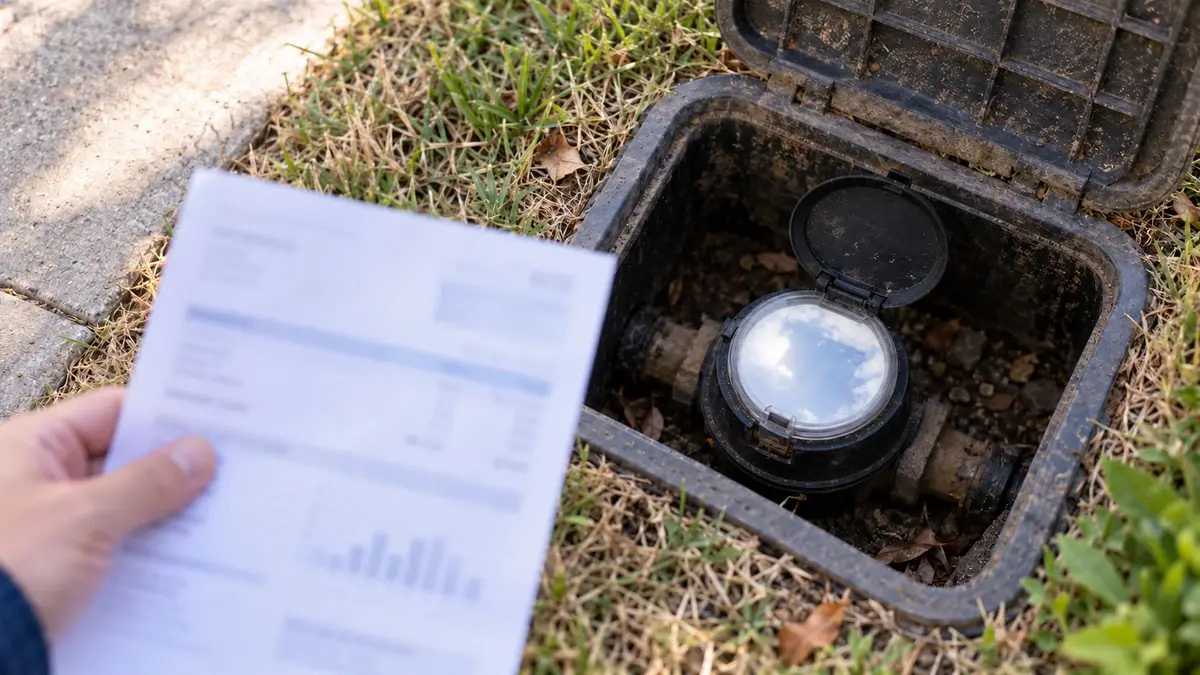
First stop this test if you find a stained or bulging ceiling, standing water of unknown origin, water near electrical equipment, or flow a fixture valve cannot stop. Close the main only from safe, dry access and call a licensed plumber. Otherwise, stop all intentional water use, indoors and outdoors. Include the ice maker, irrigation controller, and any water treatment device that cycles automatically. Find the meter without forcing a locked or utility-sealed cover. Record every digit and watch for the small leak indicator. Denver Water describes that indicator as a small triangle or gear shape; meter faces vary.
Wait while no one uses water, then read again. EPA suggests two hours. Denver Water and EBMUD suggest at least 30 minutes. The longer test is more sensitive to a slow loss. Moving digits or a moving indicator mean water is flowing downstream of the meter. A still meter cannot rule out intermittent flow.
| What you see | What it suggests | Next move |
|---|---|---|
| Steady movement with all uses off | Continuous use or leak | Close the house main for the isolation test |
| Movement only while a zone runs | Expected use; compare zones for unusual draw or a visible fault | Stop a leaking zone and call an irrigation professional |
| Movement on some days, not others | Cycling device or intermittent leak | Repeat at different times and dye-test toilets |
| No movement over a long quiet window | No continuous flow observed | Revisit billing and seasonal usage |
What can your utility’s hourly readings show?
If your utility has a customer portal, compare hourly use overnight, when your home is normally quiet. A persistent floor can point to continuous flow. Alerts are no substitute for a meter check. The Alliance for Water Efficiency’s 2023 analysis found that utility alerts depend on both a minimum flow and a minimum duration. Programs in the study used thresholds such as about 7.5 gallons per hour for 72 hours or 5 gallons per hour for five days. Smaller or intermittent losses can escape alerts.
Across four utilities in the AWE study, detected single-family leaks had median flows of 7.5–10.5 gallons per hour, ran a median 4–10 days, and totaled a median 830–1,748 gallons. During those leak events, 21.4–48.7% of metered use was leakage. These are detected events in four systems, not a national leak rate. Ask about alert enrollment.
What does closing the main shutoff tell you?
Only perform this test if the meter location and main valve are dry and safe to reach; water near electrical equipment, a bulging ceiling, or standing water ends the test and calls for a licensed plumber. With movement confirmed, find the valve where supply enters the house. EBMUD warns that irrigation can branch off before this valve. Turn off irrigation at its normal accessible valve too, if your layout has one. Never force a stiff shutoff.
Now close the house main by hand and recheck the meter after a quiet interval. If movement stops, the use is downstream of the closed valves, commonly inside the house. If it continues after all accessible branches are isolated, the service line is a concern, but the test has not proved its exact location. Denver Water interprets continued movement as a meter-to-house leak for its illustrated layout. Call your utility and a licensed plumber to establish your actual layout and responsibility before anyone digs.
The test does not locate the leak or assign responsibility.
What if the meter is still but the bill’s usage rose?
Repeat the test at another quiet time, ideally over a longer period. A toilet may leak after some flushes and seal after others. An irrigation line may show loss only while its zone runs. A softener in regeneration or another cycling device can use water while you are asleep. Note the schedule before isolating a device at its own accessible shutoff. If the meter stops when one device is isolated, ask a licensed plumber or that device’s service technician to assess it; continued movement means the search must continue. Do not force valves or touch wet electrical equipment.
During ordinary operation, compare zones. Unusual draw with a broken head, stuck valve, or soggy ground points to a fault; stop that zone and call an irrigation professional. Do not recreate a leak. If no recurring flow appears, return to the bill’s dates, reads, rates, and household changes; ask the utility for a re-read if a number still looks wrong.
Renters and condo owners can request readings from management. Private well owners can call a licensed well contractor for unexpected pump operation or higher electricity use.
Which indoor fixtures should you check first?
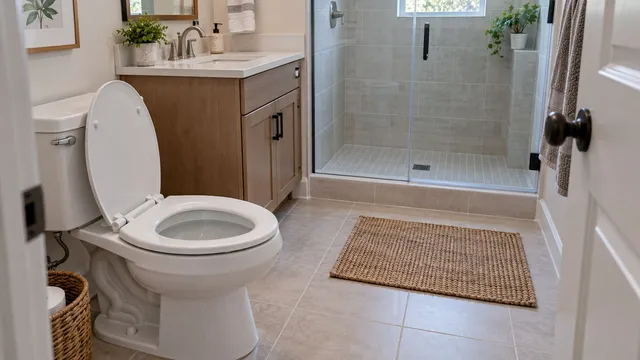
Start with toilets. EBMUD calls them the number one cause of high bills, and the Alliance for Water Efficiency’s homeowner guidance says toilet leaks often stay silent and out of sight. Put food coloring or a dye tablet in the tank, do not flush, and look for color in the bowl. EPA uses a 10-minute wait; longer waits used by other water organizations can reveal slower seepage. Flush after the dye check, only if the bowl is draining normally, so color does not stain the tank. Test every toilet, including rarely used ones. For a toilet that refills between flushes, see how to separate a leaking flapper from a fill-valve problem.
Look at the tank water level as well. If water is spilling into the overflow tube, the float or fill valve needs attention; if dye appears in the bowl while the level stays below the overflow, the seal at the bottom is suspect. Denver Water describes both pathways. Recheck the meter after repair so you know whether another loss remains.
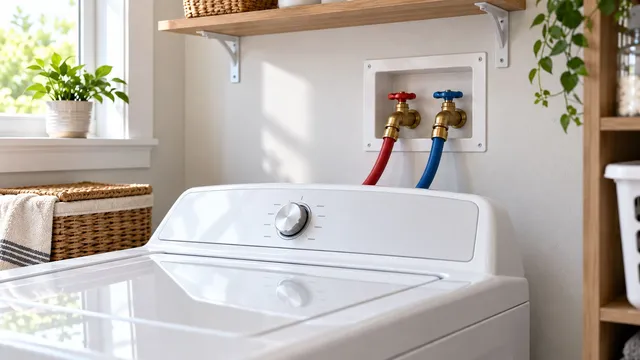
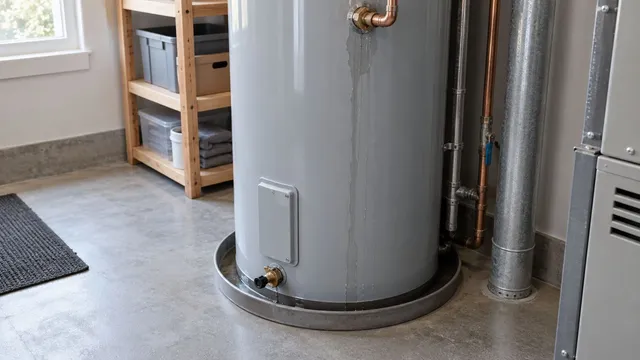
Next, look under sinks, at washer and dishwasher supplies, around the toilet base, and at accessible appliance connections. EPA estimates one drip per second wastes more than 3,000 gallons yearly; that may not explain a huge monthly jump. Look for a wet water-heater relief discharge only from a safe position. Never cap or plug that discharge. A licensed plumber needs to assess why it is releasing water. Water at the tank itself follows a different path; the leak’s location helps determine whether water-heater repair or replacement makes sense.
If fixtures stay dry but flow continues, book a licensed plumber. Damp drywall, a warm or wet floor, or a wet ceiling are reasons to call, not precise tests that locate a hidden line.
Could the leak be outdoors?
Outdoor use matters especially in dry regions. EPA WaterSense says it averages more than 30 percent of household use nationally and can reach 60 percent in arid areas. Even a small irrigation opening can add up: EPA’s Fix a Leak Week page estimates about 6,300 gallons in a month from a 1/32-inch leak.
Watch each irrigation zone for broken heads, water spraying off target, or persistent soggy areas. Then compare its meter draw with other zones. A dry patch while sprinklers run has its own coverage and pressure checks. Suspect zone flow warrants an irrigation specialist. A pool autofill can hide a leak. From a dry deck, note unexpected water loss and ask a pool professional to run a controlled bucket test: with autofill off per the system instructions, match and mark the water levels inside and outside the bucket, then compare them after 24–48 hours. Do not enter or reach into the pool to test it, and do not use a fixed inches-per-week cutoff.
Do not dig or open walls. Call the utility before service-line work and a licensed plumber for concealed indoor leaks. Water near electricity or a sagging ceiling ends your check.
Who pays for a service-line leak or a high bill?
Ask your utility where its maintenance obligation ends. Denver Water assigns the service line from the main to the owner. EBMUD says it maintains the street side of its meter while customers maintain their side. Neither is a nationwide rule. Request the boundary in writing before authorizing excavation, and ask who must mark buried utilities.
Leak adjustments are local and often partial. Anne Arundel County calls it a courtesy, approves it no more than once every five years, and says it reduces rather than erases excess charges. The AWE report describes Fort Worth’s eligible adjustment as 50% of the above-average increment for up to two billing periods. Neither is your utility’s rule. Keep the repair invoice, date, photos, and meter readings; ask about eligibility and deadline.
For unexplained use, request a re-read and meter test. Riverside Public Utilities’ Water Rule 6 provides a free first re-read and meter test, requires a deposit for another test within a year, and calls for replacement and credit if a meter over-registers by more than 2% under normal conditions. For Colorado utilities covered by 4 CCR 723-5-5402, a fast meter beyond tolerance triggers a refund of half the weighted average error, back to the prior test but no more than two years. These are local procedures, not national entitlements. Check usage before assuming the meter is fast. If the bill rose alongside weak flow, use the one-faucet versus whole-house pressure pattern to narrow that separate symptom.
Check the sewer line on the bill too. San Antonio Water System uses three winter billing periods to set monthly sewer charges for the year and warns that an unrepaired leak can raise that average. A winter leak can raise the next year’s sewer bills. Ask whether your utility uses winter averaging and whether it can recalculate after a documented repair.
What should a leak-repair estimate include?
Ask for separate diagnosis, repair, access, permits where required, and restoration lines. Clarify whether drywall, flooring, landscaping, or driveway work is included. Compare quotes only after the leak location and scope are clear.
EPA’s mold guidance advises drying water-damaged materials within 24–48 hours and recognizes hidden moisture around pipes inside walls. Shut off the source, document visible damage, and arrange drying before rebuilding finishes. For active water, stop the flow at an accessible shutoff and call a licensed plumber.
Coverage depends on your policy and the circumstances. The Texas Department of Insurance says policies cover sudden accidental water damage but usually do not cover gradual leakage or seepage; it also warns an insurer may deny a claim if you do not protect the property. That describes typical Texas-policy language, while your policy, state, and facts control the answer. Contact your insurer or agent promptly and record observations without guessing when a concealed leak began. For the policy distinctions, see how a water leak’s cause and timeline affect insurance.
Frequently asked questions
Can a motionless meter still mean a hidden leak?
Yes. The test shows whether water flowed during that quiet window. Repeat it for longer and at different times, then dye-test toilets and check scheduled equipment or irrigation zones.
Who pays if the leak is between the meter and house?
It depends on your utility’s boundary and local rules. Call the utility for a written determination before excavation; a licensed plumber can then scope the repair on the owner side.
Will the utility remove the extra charges after a repair?
Possibly, under its leak-adjustment policy. Eligibility, deadlines, documents, and the amount vary. Save the repair invoice and ask the utility about water and sewer charges separately.
Does a private well owner use the same meter test?
Usually no; many private wells have no bill meter. If the pump runs unexpectedly or electricity use rises, contact a licensed well contractor for diagnosis.
What can a renter check without meter access?
Compare the bill or submeter statement with prior periods and report visible leaks to the property manager. Ask for the actual readings and billing method, and have management arrange access and repair.
Sources
- U.S. Environmental Protection Agency WaterSense — Fix a Leak Week
- U.S. Environmental Protection Agency WaterSense — Statistics and Facts
- U.S. Environmental Protection Agency — A Brief Guide to Mold, Moisture and Your Home
- Alliance for Water Efficiency — Evaluation of AMI-enabled Proactive Leak Notification Programs
- Alliance for Water Efficiency — Water Leaks: Checks and Repairs
- East Bay Municipal Utility District — DIY Guide for Leaks and High Bills
- Denver Water — Leaks
- Denver Water — Stop Your Running Toilet
- Anne Arundel County — Leak Adjustment Policy
- Riverside Public Utilities — Water Rule 6
- Colorado Public Utilities Commission — 4 CCR 723-5-5402
- San Antonio Water System — Winter Averaging
- Texas Department of Insurance — Unexpected indoor waterfall?