A bang at the instant a washer stops filling is a supply-system event until testing shows otherwise. The valve closes, moving water stops abruptly, and a pressure wave travels back through the pipe. If that pipe can move against framing, the impact makes the surge much louder.
That means “water hammer or loose plumbing” is often the wrong choice. The surge can loosen supports over time, and loose supports can make the surge audible. The useful first step is to place the sound within a cycle already observed. The price depends on whether the fix is at an exposed laundry connection or behind finished walls.
Is the bang urgent or only loud?
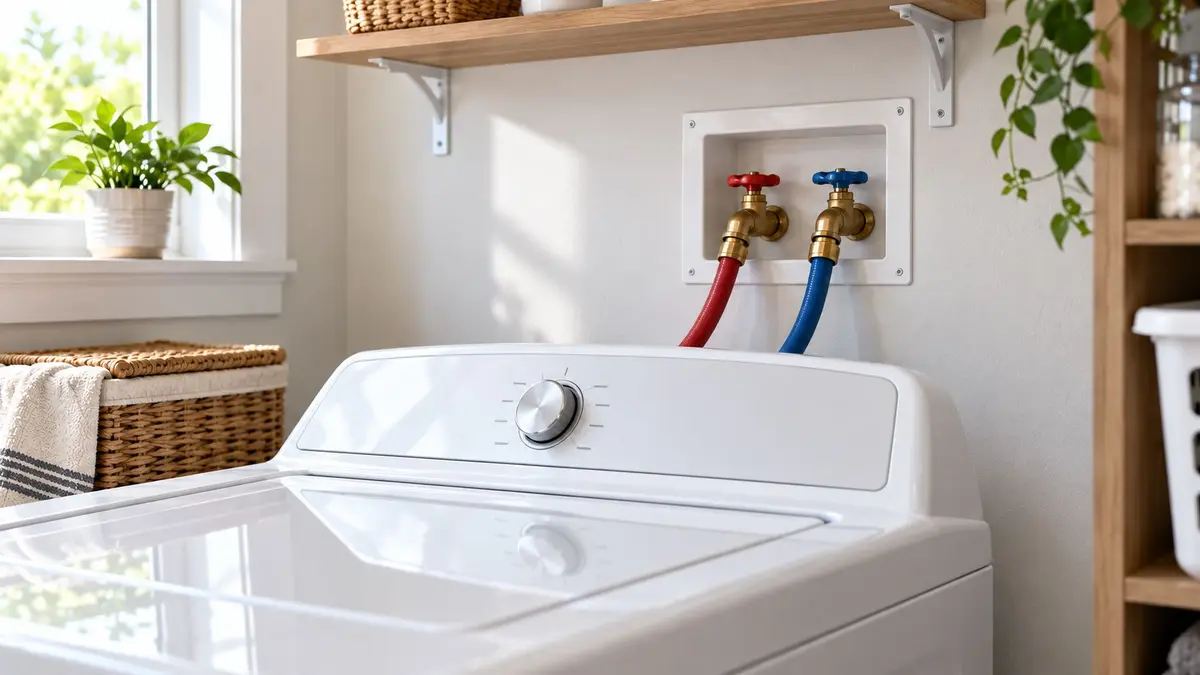
Look at accessible washer hoses, valves, and the wall behind the machine. A drip, bulging or weeping hose, wet wall or ceiling, relief-valve discharge, or suddenly louder or displaced bang ends testing. Close the free-moving laundry supplies from safe dry access and call a licensed plumber now; document visible damage. Do not move the washer or reach behind it while it runs.
If hoses and connections are sound and dry and the bang has not changed sharply, arrange a measured diagnosis. The Plumbing and Drainage Institute’s 2017 water-hammer standard lists possible effects of repeated shock on piping and connections, valves and check valves, meters, regulators and gauges, recording devices, supports, tanks, heaters and other connected equipment. It does not mean your pipe will burst tonight. Silence after an improvised fix is also insufficient proof: the standard notes shock can occur without an audible bang.
What does the noise timing tell you?
Use a cycle already observed: did the sound occur during filling, exactly when fill stopped, while it drained, or during spin? Do not run the washer or other appliances to reproduce a sudden severe bang, and never reach behind a moving machine.
| What you hear | When it happens | First place to look |
|---|---|---|
| Sharp bang, then brief shudder | Fill valve shuts | Water hammer and moving supply pipe |
| Rattle or drumming | During filling | Hose against cabinet or unsupported pipe |
| Thump or gurgle | During drain | Drain hose and drain path |
| Shaking or walking | During spin | Machine load, leveling, or appliance parts |
| Tick after hot-water use | As hot line changes temperature | Pipe contact with framing |
Whirlpool’s appliance guidance includes hoses banging the rear cabinet and imbalance during spin. If the sound follows the machine’s motion rather than the fill cutoff, an appliance technician is the right next contact. A spin-only shake deserves an appliance assessment rather than an arrester.
Observe whether the bang happens on hot fill, cold fill, or both. Report any similar sound previously noticed at a dishwasher, ice maker, or other fast-closing valve; do not operate them just to reproduce it. This identifies the supply side to investigate without opening a wall. A gradually rising water bill alongside years of pipe noise warrants the hidden-leak meter test.
Why does washer shutoff cause water hammer?
The washer’s electrically operated inlet valve closes quickly compared with a hand-turned tap. The moving water’s momentum becomes a pressure wave, which travels through the supply and can shake a pipe. The pipe hitting framing or another pipe creates the bang you hear. PDI identifies quick-closing valves as a common cause and explicitly includes loose pipe hangers and supports among the effects of hammer.
A new washer can reveal a supply-system problem; installation timing alone does not prove the appliance is defective. A different machine may interact with the existing supply differently. Pressure-regulator drift, utility supply changes, a remodel, or a line newly touching framing can also change what you hear. Record the event instead of assuming the appliance is defective.
When a pipe rattles throughout filling, support or hose contact may dominate even without a sharp cutoff shock. Exposed lines can be assessed for movement, but hidden supports and piping should be inspected by a licensed plumber; cutting open a wall on the strength of a sound alone can miss the location.
What can you check safely before calling a plumber?
Only if hoses and connections are dry and sound, inspect visible hoses for kinks, cabinet contact, or wear. The Insurance Institute for Business & Home Safety advises regular inspection, replacement every three to five years, and upgrading to braided stainless-steel supply hoses. A drumming hose can be secured away from the cabinet without altering the water piping. Keep the washer’s clearance and hose bend requirements in its manual.
With dry, safe access and a free-moving outdoor cold tap, close the tap before attaching a matching pressure gauge; open it for a static reading with other fixtures off, then close it before removal. Do not attach it at a wet electrical area or force a seized fitting. Record time and pressure. This is a measurement for the licensed plumber, not an invitation to adjust the pressure-reducing valve (PRV) yourself. San Jose Water lists clanging when a washer or dishwasher shuts off among high-pressure symptoms. A reading by itself still cannot prove hammer or show whether supports are loose.
If you previously noticed the noise quiet when a laundry valve was partly closed, tell the plumber; reduced flow can reduce surge. Do not repeat the test when hoses, connections, or noise have warning signs. A partly closed valve is a stopgap subject to the washer manual’s fill requirements, not a repair. Close free-moving laundry valves between loads or during long absences while awaiting service.
A hose-thread arrester at the laundry valves is an option to discuss with a licensed plumber. Any hose disconnection requires the washer off, both supplies closed, manufacturer-directed depressurization, matching hose threads and seals, and a leak check after reopening; if a valve sticks or a joint leaks, stop and use the plumber. Internal pipe work, regulator adjustment, wall opening, and expansion-tank work remain professional tasks.
Should you drain the pipes to recharge air chambers?
No, not as a durable repair. An old-style air chamber is a capped pipe stub meant to hold compressible air. PDI explains that air can dissolve into the water, so the chamber becomes waterlogged and loses shock control. Its standard says the common method of closing a branch valve and opening a fixture cannot replenish the air in that configuration because water trapped in the supply piping prevents enough drainage.
A whole-house drain-down can temporarily quiet a system. That is why the advice persists, but temporary quiet does not correct the pressure, valve event, or support problem. Many homes do not have air chambers to recharge. A purpose-built arrester instead contains a permanently sealed gas cushion. Ask a licensed plumber to identify existing devices before paying for an invented “recharge” service.
What order should a plumber use to fix the bang?
Measure first. The plumber should measure static and flowing pressure, check whether a PRV is present and regulating, and inspect accessible supply hoses and supports. A New Jersey adoption shown in the excessive-pressure code text limits fixtures to 80 psi under no-flow conditions. That local code ceiling is not a target. PDI’s 2017 sizing guidance says branch flow pressure ideally should not exceed 55 psig and calls for the next larger arrester above 65 psig. These different readings explain why the plumber measures before sizing. Keep those different readings and purposes separate. If your pressure is low as well, the low-pressure pattern check helps describe it.
Control the shock. Both major model plumbing codes call for hammer control at quick-closing valves, but the edition and local amendments in force depend on your jurisdiction. The code sections collected here reference ASSE 1010, an arrester performance standard, and manufacturer instructions. Existing homes are not automatically required to retrofit because a newer code exists. Ask the plumber which code applies to the proposed work.
An arrester has to fit the flow and be placed close to the valve with a clear path for the pressure wave. A Sioux Chief technical catalog recommends treatment on both hot and cold laundry supplies and gives a within-six-feet placement instruction for its devices. Precision Plumbing Products warns that an obstructed shock path can leave shake and rattle. If a screw-on arrester only partly helps, ask about the other supply, distance, clear shock path, and pressure before adding another at random. Use the selected device’s published placement limit rather than a generic distance rule.
Restrain movement. If surge is controlled but an exposed line still strikes framing, the plumber can support and isolate it. Required support intervals vary with pipe material, diameter, and local code. Behind a finished wall, access and restoration become separate scope items.
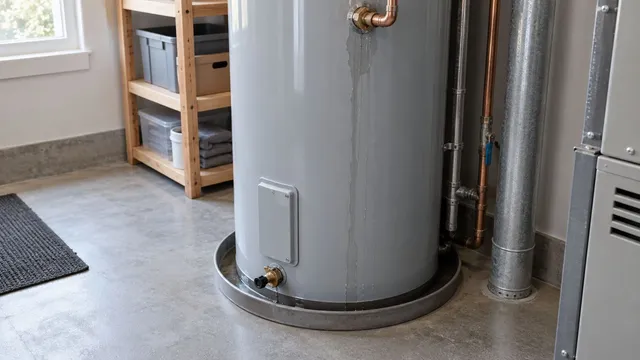
Check thermal expansion where relevant. A PRV, backflow preventer, or check valve can make the house a closed system. North Carolina’s state fire marshal guidance applies its 2018 plumbing code to require expansion control with a storage heater in that configuration, including replacement situations. Your local rule may differ. Rising static pressure after heating or a wet water-heater relief discharge is a licensed plumber’s assessment, never a valve to cap or adjust. A leaking heater’s source changes the repair decision.
What should the estimate show?
Ask for the pressure readings and a written scope: diagnosis, each arrester’s size and position, any PRV adjustment or replacement, thermal-expansion work, pipe supports, wall access, finish restoration, local permits if required, and parts and labor warranties. Ask what happens if the bang quiets but a rattle remains.
A proposed whole-house repipe before pressure and valve timing have been checked deserves a second opinion. So does a permanent air-chamber recharge claim. If water has already damaged building materials, insurance treatment depends on cause, timing, and policy wording; document the condition and call your insurer or agent rather than making an assumption from the noise.
Frequently asked questions
Do I need arresters on both washer supplies?
Yes—Sioux Chief recommends an arrester on both hot and cold washer supplies, and Precision Plumbing Products also says one on each line. That is their installation guidance, not proof both sides bang in your house. The plumber should confirm which side bangs, the device instructions, and placement for both supplies. One arrester on the quiet side may leave the actual shock path untreated.
Why did a screw-on arrester help only a little?
It may be on the wrong side, too far from the closing valve, or behind a restriction in the shock path. High pressure or a pipe striking framing may also remain. Have a licensed plumber measure and inspect those conditions.
Does it matter whether the house has air chambers?
Only for understanding what was installed. Old air chambers can waterlog and a quick drain-down is not durable control. A plumber can identify them and propose an engineered arrester where needed.
Will lowering whole-house pressure make showers weak?
It depends on the measured starting pressure and system losses. A licensed plumber should record pressure before and after adjustment and check flow at fixtures, rather than turning the PRV until the sound fades.
Is it safe to leave laundry valves partly closed?
Treat a prior quieting effect as a diagnostic clue or short-term workaround only if your washer manual permits slower filling and the valves remain sound. It does not correct a high-pressure or unsupported-pipe problem.
Sources
- Plumbing and Drainage Institute — Standard PDI-WH 201
- Insurance Institute for Business & Home Safety — Prevent Interior Water Damage
- San Jose Water — Water Pressure
- UpCodes — Excessive Pressures
- UpCodes — Water Hammer
- Sioux Chief Manufacturing — Water Hammer Arresters
- Precision Plumbing Products — Fluid Hammer Arrestors Installation Instructions
- North Carolina Office of the State Fire Marshal — Thermal Expansion Control
- Whirlpool — Bang or Banging Noise, Top Load Washer