The kitchen faucet is dry after a bitter night, but the bathroom still runs. That is a useful clue. The problem is likely in the fixture or the branch serving it, rather than the whole house. Freezing is plausible, yet a closed stop valve or plugged faucet can create the same one-fixture symptom. No reliable national price covers this range: an exposed connector, a hidden branch, and finished-wall restoration are different jobs. Ask for diagnosis and access costs separately before agreeing to repair.
The expensive part may begin when ice thaws. A blocked section can trap liquid water between the ice plug and a closed valve or another restriction. Pressure rises in that sealed column, so a split can occur away from the ice and may not show itself until water returns. Your first task is to locate the affected branch without opening a wall, then be ready to stop the water if leakage appears.
What does one dry faucet narrow down?
Check every faucet in the house, hot and cold sides separately, because another branch may be frozen too. Compare nearby fixtures and test the affected faucet’s hot and cold sides separately. If only hot is dry, the hot branch or a hot-side fixture component is suspect. If only cold is dry, follow the cold branch. If both are dry while nearby fixtures work, the common fixture supply or the faucet itself deserves attention. A frozen section near an exterior wall, crawl space, or cabinet can serve just one fixture.
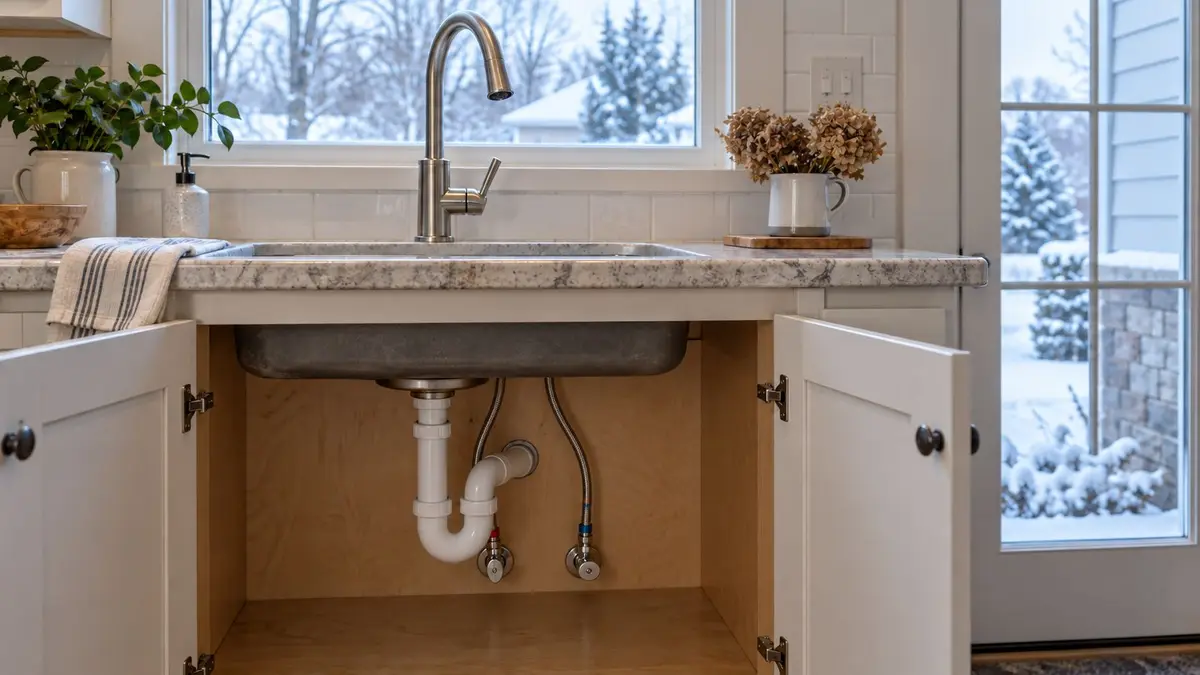
Ask whether the faucet worked immediately before the cold spell and whether anyone recently turned a local shutoff under the sink. An accessible shutoff that is closed explains no flow without ice; do not force a stuck valve. Check whether the aerator at the spout is visibly plugged, but avoid disassembling a fixture that may be frozen or leaking. If several fixtures have lost flow, widen the concern to a shared branch, meter, well system, or main and call the appropriate utility or licensed plumber.
| Observation | Likely search area | What to do |
|---|---|---|
| One faucet, cold side only | Cold branch or faucet side | Check accessible branch and stop valve |
| One faucet, hot side only | Hot branch or faucet side | Check accessible branch; call plumber if hidden |
| Several fixtures dry | Shared branch or supply | Call plumber or water utility |
| Flow returns with wet wall or cabinet | Damaged pipe | Shut off water and call plumber |
For a weaker stream rather than no flow, use the one-faucet pressure guide to check other causes. A dry faucet by itself cannot prove a pipe is frozen. The weather, exact fixtures affected, and where the pipe runs make the case.
Why can a frozen pipe burst away from the ice?
Ice blocks flow, while unfrozen water trapped behind the plug can build pressure. The rupture can occur in a liquid-filled section rather than at the visible ice. A 1996 University of Illinois study explains this trapped-column mechanism. This is why finding a thawed section is not the end of the job: you must check for water escaping as pressure and flow return.
Pipe material changes how it behaves, but it does not make a hidden branch immune. The Plastics Pipe Institute’s TR-52 says PEX flexibility usually limits breakage, but PEX does not prevent freezing. Its report does not address fittings; constrained pipe in slabs or compacted soil may split, and an oxygen-barrier coating can crack or separate. PEX thawed incorrectly should be replaced as soon as possible even if damage is invisible; have a licensed plumber assess it. Copper and CPVC also need post-thaw inspection. Plastic pipe alone never proves the branch is sound.
A consumer guide hosted by Paola, Kansas uses roughly 20°F as a warning example for uninsulated attic pipes in southern or rare-freeze regions. Moving cold air can freeze exposed lines above that outdoor reading; a sheltered pipe may stay warmer, and water can briefly remain liquid below its freezing point (supercooling). There is no universal temperature threshold. Cold exposure matters more than a single outdoor number. A branch behind a cabinet, in an exterior wall, or above an unheated space may receive less room heat than the nearby bathroom line. A short cold snap in a normally mild region can expose such a branch. The house’s air leaks and insulation determine what that pipe experienced; an outdoor forecast cannot measure it.
What should you do in the first fifteen minutes?
- Stop using the affected fixture and look for water around its cabinet, the wall, ceiling below, and nearby accessible pipe. If water is spreading, close the main shutoff if safe and call a plumber.
- Identify which side of the faucet is dry. Check nearby fixtures and then other faucets, hot and cold separately. Leave the affected faucet open a little for pressure relief. Avoid forcing a frozen or seized valve.
- Locate the accessible run feeding that side. If opening a cabinet, first move cleaners out of children’s reach. Stay out of attics, crawl spaces, wall cavities, and areas near gas or wiring.
- Find the main shutoff before applying heat. If it is seized or unsafe to reach, call a licensed plumber. Decide whether the supply stays on while you monitor an exposed, intact pipe, or goes off because an unseen split could flood the house.
The American Red Cross advises keeping the faucet open while warming a frozen pipe and applying gentle heat to the accessible section. If you cannot find the frozen area, cannot reach it, or cannot thaw it, its guidance says to call a licensed plumber. The Paola-hosted guide recommends calling a plumber immediately; the Red Cross allows a bounded exposed-pipe thaw, and Utah State Extension recommends contacting a plumber before its main-off approach. A hidden line is not an invitation to heat the wall cavity.
How can you warm an accessible frozen pipe safely?
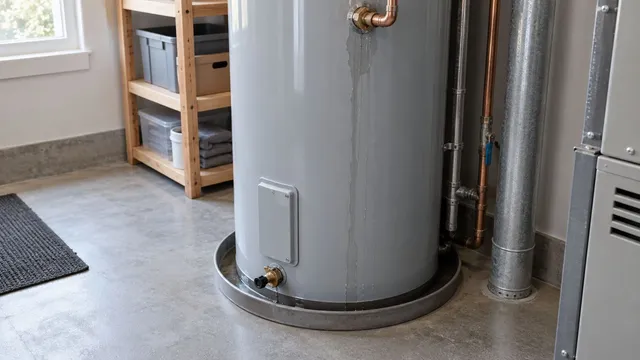
Before heating, make the water decision: the open affected faucet relieves the trapped column. With supply on, stay present and keep an operable safe shutoff within reach; flow returning gives feedback but an unseen split can discharge. Utah State Extension recommends main water off first and opening other taps to drain; that limits escaped water but removes the flow signal. Reopen the main only as a monitored leak check, ideally with the plumber present. If a hot or main line is frozen or the supply is shut off, have a qualified professional shut down the water heater’s energy source. A labeled electric breaker may be switched only from a dry, intact, safely accessible panel; do not approach wet electrical equipment or work on gas controls.
Heat the room and open cabinet doors so warm air can reach exposed supply lines. For an accessible pipe away from standing water, the Red Cross lists an electric heating pad wrapped around the pipe, a hair dryer, or towels soaked in hot water. Keep electricity away from water and follow the device’s instructions. Utah State Extension says to warm gradually from the faucet end toward the frozen section, reducing the risk of boiling trapped water or damaging faucet parts. Stay with the pipe and watch for dripping.
Do not use a blowtorch, open flame, charcoal heater, boiling water, or electric resistance thawing on plastic pipe. Do not use an electrical tool while standing in water. New York City DEP warns that steam pressure can rupture a blocked pipe. The Red Cross explicitly warns against open-flame thawing. Do not leave a portable heater unattended in a cabinet or place it against combustibles. Heat tape is not a quick improvisation. CPSC guidance links damaged or misapplied products with fires. A qualified installer should select a listed product rated for the pipe, use a GFCI-protected outlet, place it directly on the pipe rather than over insulation, avoid overlap unless the maker permits it, avoid excessive insulation, and inspect it for damage each year. A qualified electrician handles the electrical inspection.
If any leak is visible, close the main if safe, keep the affected faucet open, and call a plumber. If the frozen area is inaccessible, shut the main if safe and call a plumber. A visible intact section can be warmed only while you remain present and can stop the supply promptly.
When do you stop and call a plumber?
Stop if the pipe is split or bulged, if water emerges from a wall or ceiling, or if the problem is in an inaccessible cavity. A plumber has the tools to locate and repair the branch without asking you to cut into a wall or apply heat blindly. If a main, meter, or utility service line may be frozen, contact the utility first about its side of the system; ownership boundaries vary. For a well home, the well equipment and lines create a separate diagnostic path.
Tell the plumber which faucet sides are dry, which neighboring fixtures work, when flow stopped, where the branch runs, and whether you saw any dampness. Note whether the house recently lost heat. Those observations are more useful than guessing which fitting froze.
What should you inspect when the water comes back?
Do not walk away at the first trickle. Watch the exposed pipe, shutoffs, supply connectors, wall surface, floor, and ceiling below while the line warms. A pipe may leak only once full pressure returns. If water appears, close the main shutoff if safe and call a licensed plumber. Keep wet electrical outlets and devices untouched; an electrician handles electrical damage.
Once flow is stable and no leak is visible, continue checking the area for several days. Listen for running water when every fixture is off and check the water meter for movement; if it moves unexpectedly, use the hidden-leak guide and call a plumber. Dampness under a sink or staining below it is a reason for a plumber to inspect a hidden section. A hidden leak can damage finishes even when the faucet looks normal. The unexpected water-bill guide gives another way to narrow a hidden plumbing leak. Do not assume a thawed line is sound because the water pressure seems normal.
Why did that branch freeze, and how do you prevent it?
Trace the specific pipe path. Is it in an exterior wall, attic, crawl space, garage, or cabinet cut off from room air? DOE’s exterior-wall guidance explains why plumbing in outside walls needs careful protection. Put insulation between the pipe and outdoors while leaving room heat able to reach the pipe. Repair air leaks as part of that work. If the same branch freezes repeatedly, ask a plumber whether rerouting it into conditioned space is more durable than adding insulation alone. A qualified plumber or insulation contractor can assess the concealed route.
During future cold spells, maintain heat, open cabinet doors where pipes are on outside walls, and follow local utility advice for vulnerable lines. The Red Cross prevention guidance covers those steps. A controlled drip may help in some exposed situations, but it does not correct an unprotected branch and can waste water. Fix the specific exposure after the immediate event.
What does repair cost, and what about insurance?
No reliable national price dataset was found for this exact situation. A visible connector repair, a concealed branch in finished wall, a frozen service line, and water-damage restoration have very different scopes. Ask for a quote that separates diagnosis, opening and repairing the pipe, drying, insulation or air-sealing, and finish restoration. Permit requirements depend on the jurisdiction.
DC’s insurance department advises checking policy terms for frozen-pipe losses and the duty to maintain heat or shut off and drain water when away. Coverage depends on your policy, facts, and insurer. For claim documentation, see the water-leak insurance guide. Photograph damage and keep repair records. If the branch is sound after thawing, use the event to identify why that particular run froze before the next cold spell.
Frequently asked questions
Can only one faucet freeze while the rest work?
Yes. One branch can run through a colder wall or cabinet while neighboring pipes remain warm. Check hot and cold separately to narrow the affected side.
The overnight drip stopped—should I close the tap?
No. Leave it open; ice may have blocked the line, and the trapped water still needs pressure relief. Follow the accessible-pipe or plumber path above.
Does hot water only going dry mean the heater failed?
No. A frozen local hot branch or fixture can stop one faucet while the heater is sound. A licensed plumber must assess a hidden hot branch; have the heater energy shut down professionally if its supply is interrupted.
If water comes back, is the pipe intact?
Flow alone cannot settle that. A split can reveal itself during thaw, so inspect the pipe and nearby surfaces for several days and shut off the water if leakage appears.
Sources
- American Red Cross — Preventing and Thawing Frozen Pipes
- University of Illinois — Freezing Pipe Research
- Plastics Pipe Institute — TR-52
- City of Paola — Preventing Frozen Pipes
- Utah State Extension — Advice to Prevent Frozen Pipes
- New York City DEP — Protect Your Pipes from Freezing
- CPSC — Heat Tape Guidelines
- DOE — Pipes in Exterior Walls
- DC Department of Insurance — Frozen Pipes and Coverage