Demolition is easier to schedule than daily life without a bathroom. The contractor may expect to finish the shower on Friday, yet you need a toilet tonight, a place to wash hands after using it, and a bathing option if the work slips.
The useful question is which function is unavailable, for whom, and until what condition is met. A single “bathroom downtime” number hides those differences. No verified standard duration covers every sole-bathroom remodel, so get a schedule tied to your room, materials, and local approvals.
How do you remodel your only bathroom with toilet and shower downtime?
List the facilities you actually have. An existing half bath could cover a toilet but not bathing. A utility sink might help with washing only if a plumber confirms it retains both clean running water and a usable drain during the work. Ask whether a proposed shutoff affects only the bathroom branch or the whole house.
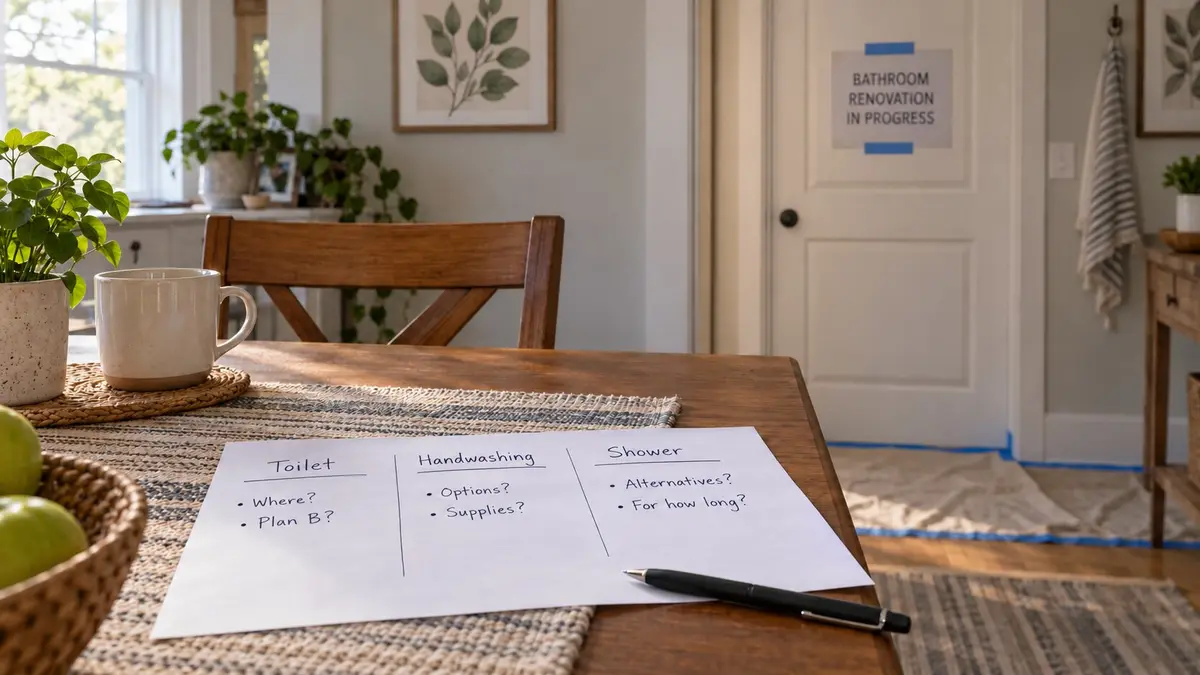
Use one record for each function, plus whole-house water. Fill it out with the remodeler before the working bathroom is dismantled:
| Function | Outage and release condition | Alternative, access hours and delayed backup |
|---|---|---|
| Toilet | Record outage; plumber or remodeler confirms safe connection and released route | Day-and-night toilet for everyone; name the extension plan |
| Handwashing | Record outage; confirm clean supply, drain and released route | Soap and clean running water after toilet use; name the extension plan |
| Bathing | Record outage; confirm testing, first-water-use conditions and released route | Hours, transport, privacy and access needs; name the extension plan |
| Whole-house water | Plumber identifies shutoffs and services that remain supplied | Drinking and hygiene access during shutoff; name the extension plan |
Add a name beside each restoration decision: plumber, remodeler, or inspector as applicable. Record what access looks like during work hours, at night, on weekends, and if reopening moves. CDC recommends washing with soap and clean running water after using the toilet. Its hand-sanitizer guidance describes limits on dirty hands and certain contaminants. Sanitizer is a backup, not a complete long-term handwashing arrangement for a renovation.
A flushing toilet is not the same as an accessible bathroom
Imagine a hypothetical remodel where the toilet remains connected but the only route crosses an unreleased floor or a contained work area. The fixture works, yet nobody in the household can use it. EPA’s Renovate Right guide specifically tells occupants to plan alternate bathroom arrangements when renovation containment blocks access. Do not plan on workers opening a restricted zone for bathroom breaks.
Ask the remodeler to define “available” in the agreement: installed, functioning, reachable by a safe route, private enough for use, and released to occupants. The same rule applies after the crew leaves for the day. If no practical toilet and handwashing combination will be available when your household needs it, book another place to stay before that outage.
Choose a backup that works at night, during bad weather, and if the job runs late
A gym shower may solve bathing for someone with membership and transport. It does not supply a family toilet at 2 a.m. A nearby relative’s house may cover both, but only if the invitation, access hours, privacy, and travel work for everyone. Compare options by the functions they actually provide.
| Arrangement | Toilet, washing and bathing coverage | Feasibility checks |
|---|---|---|
| Stay with family or paid lodging | Often covers all three, day and night | Can every member use it, and can the stay extend? |
| Nearby household or community facility | Depends on permission, hours and available fixtures | Who can enter at night and on weekends; what is the delayed backup? |
| Gym or workplace | Bathing may be possible; hours limit toilet and washing | What covers overnight needs and a closure or delay? |
| Professionally serviced portable toilet | Toilet only unless washing is added; bathing needs another plan | Where will handwashing, bathing and servicing occur? |
| Restroom or shower trailer | Depends on the selected unit’s fixtures | Can the site, utilities, access and local rules support it, including an extension? |
For a portable unit, arrange a suitable handwashing place and a separate bathing plan. Leave setup, waste handling, and service to the provider. A trailer supplier describes equipment-specific water and power needs and separate servicing and winter arrangements. Ask the current provider about delivery route, space, accessible entry, water suitability, utilities, wastewater service, weather, and failure response for the actual unit. Ask the local authority about placement and approvals, and check any association rules. A provider’s delivery offer is not legal permission to place the unit.
Decide when a temporary stay is the more workable plan
Consider lodging when no dependable overnight toilet and washing arrangement exists, the substitute cannot meet a household member’s access needs, or restricted work areas cut off the occupied part of the home. That is a practical decision for this house, not a blanket rule that every bathroom remodel requires moving out. If someone relies on medical toileting equipment, coordinate their existing care plan with the relevant clinician or equipment provider.
Choose the fallback address, the trigger for going there, and the contact who will tell you if reopening slips. For paid accommodation, check extensions, cancellation, transport, caregiving, pets, cooking, and laundry before assuming one reservation solves every delay.
Finish the material, permit, and hazard checks before demolition
Have the remodeler confirm measurements, selected fixtures, necessary fittings, delivery, and visible product condition while the current bathroom still works. Identify which items are essential to restore toilet and washing access and which finish items can genuinely wait. The FTC recommends putting scope, materials, estimated dates, and verbal promises in writing. A written list cannot prevent surprises, but it shows what was assumed when the access date was set.
Ask who coordinates plumbing, electrical, ventilation, flooring, waterproofing, and inspections. Portland’s bathroom inspection guide shows how exposed-work inspections and correction visits can interrupt a sequence. Portland also exempts some minor toilet removal and reinstallation for flooring; that local example says nothing about your project’s other plumbing changes. Get your own building department’s requirements, including any shared-building or water-shutoff arrangements. If older paint will be opened, plan that work before scraping or sanding.
For covered lead disturbance in a pre-1978 home, hire a renovation firm with EPA lead-safe certification. If material suspected of containing asbestos will be disturbed, EPA recommends trained, accredited asbestos professionals; requirements can differ by property and jurisdiction. General dust control is not a substitute for either specialized process. Have the remodeler explain the work boundary, debris route, product ventilation instructions, cleanup, and occupant release. EPA remodeling guidance distinguishes source control and product precautions; a “low-VOC” label or fading odor does not establish that the room is ready to enter.
Mark the conditions that pause the plan
Newly exposed wet or decayed material, suspect asbestos, an electrical hazard, sewage, unstable flooring, or a failed test changes the agreed plan. Stay out of the affected area and have the responsible remodeler, electrician, plumber, restoration professional, or environmental specialist assess it. Revisit lodging when the work boundary expands; a hotel checkout time is no reason to cover an unresolved condition.
Ask what can stay in service—and what would make that impossible
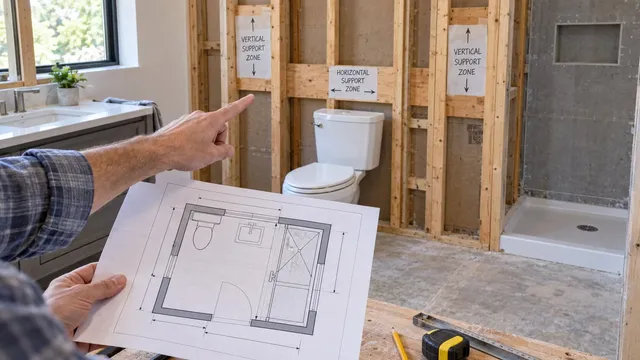
A limited tub or shower replacement may leave the toilet, sink, and their route outside the work area. A full floor replacement, toilet move, drain change, or broad wall opening can remove that possibility. Ask the project lead and plumber whether any fixture can stay in service during a particular stage, then ask what physical condition, connection, inspection, or access rule could change that answer.
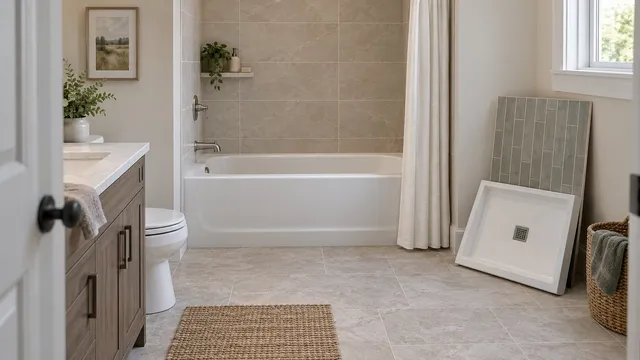
A proposal to remove and reconnect the toilet more than once needs a plumber’s scope, any local approvals, leak checks, and a clear price. It might preserve some nights, but it adds visits and can interrupt the work sequence. Neither a same-location toilet nor a prefab shower guarantees daily access. If a toilet move is part of the plan, read what complicates moving its drain. For a busy household choosing a wet-area system, prefab versus custom tile describes the separate product decision.
Test any “one-day” or “toilet stays working” promise against the written scope
Ask what the claim includes: demolition, repairs discovered after opening, inspections, product waiting conditions, fixture reconnection, cleaning, and release to occupants. A crew’s installation time is not the same as the first permitted shower. Limited work may indeed disrupt less than a full-room rebuild, but only the actual scope and access plan can establish that for your home.
Write the proposed access period, what must remain functional, what could block it, and who decides the fixture is ready. Do not rely on an oral promise that a toilet can always be reset each evening.
Build the schedule around the checks that release each fixture for use
Ask the remodeler for milestones: preparation and work-area separation; demolition and condition assessment; trade repairs; applicable inspections; wet-area work and testing; finishes; fixture commissioning; cleanup; occupant release. The actual order can overlap or change. An inspection appointment is not an approval, and a correction may require another visit.
Product clocks are separate. Schluter recommends waiting at least 24 hours after setting KERDI before water testing under normal curing conditions, longer when conditions are colder; the test itself is another step. CUSTOM’s March 11, 2024 Fusion Pro grout sheet gives 24 hours to light traffic and seven days before intermittent water exposure at 70°F and 50% relative humidity, with cold or humidity changing curing. These are examples for named systems, not an additive schedule or instructions for yours. Ask for the actual products’ current sheets and the installer’s first-use conditions.
Also separate floor traffic from full fixture loading, shower water exposure, and occupant reentry. A waterproofing test does not release a room after hazardous-material work. A fast-setting product does not erase hidden repair or inspection needs. Have the responsible contractor identify the hold point for each use instead of accelerating cure with an improvised fan or heater.
Confirm toilet access and shower access separately at handover
Ask the plumber or project lead to confirm that the toilet and sink are installed for use, connections have been checked, and the route is released. From an area already released to you, report any visible leak or instability; leave repair to the plumber. Ask separately for the shower’s test and inspection status, selected product’s first-water-use instructions, and enclosure conditions. A shower curtain is not an automatic substitute while glass is pending.
Confirm the household can wash hands and move through the space under the applicable cleanup and reentry plan. Record outstanding cosmetic work, but let the responsible professional and building authority decide whether it affects use. Planning access for aging in place may also change what an acceptable temporary route looks like for your household.
Agree on the delay plan and the access update before work starts
Set a time for the remodeler to update you before leaving, especially before a weekend. A useful short message is: What is usable now? What is prohibited? What must happen next? When is the next update? What backup is needed tonight? Name the person who can revise access status and whom to call after hours if a fixture becomes unavailable.
Budget separately for lodging or family travel, facility fees, rental delivery and pickup, servicing, utilities where applicable, extensions, and extra trade visits for temporary fixture work. There is no reliable national allowance for these costs. Ask what the contract includes and how a changed scope or date is recorded before optional extra work proceeds, while allowing immediate protective action when needed. Keep the fallback booking extendable if possible.
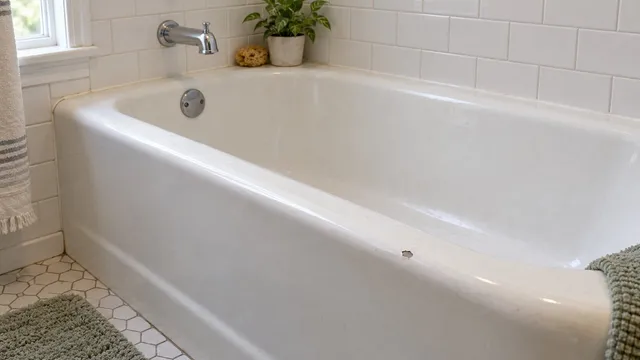
Before demolition, complete the worksheet together: each function’s expected outage; its confirmed day, night, and delayed backup; the person who releases it; inspection and product hold points; the next update time; and the action if newly opened conditions change the plan. A change in bathtub scope can alter access too, so settle the refinish-or-replace decision before assuming a finish job will leave the bathroom usable.
Frequently asked questions
Will homeowners insurance pay for a hotel while I remodel my only bathroom?
Usually not for a planned upgrade alone. California’s insurance guide ties additional living expenses to damage from an insured peril. Coverage depends on your policy and the cause of the work, so ask your insurer about the specific claim before counting on lodging reimbursement.
Who arranges toilet facilities for the remodeling crew when our bathroom is unavailable?
Agree on that responsibility with the contractor before work starts. OSHA’s construction sanitation standard applies to covered employers and employees and has a mobile-crew exception; the crew’s sanitation rules do not determine when your household can use the room. The contractor should explain its worker-facility plan and how it stays separate from the household’s confirmed access.
How can I confirm that a temporary hotel room has the accessible bathroom features I need?
Ask the property to describe the actual room’s bathing type, transfer space, route, and equipment you need, and have it confirm the reservation details. DOJ’s Title III guidance addresses accessible-room information and reservations at covered places of lodging. It does not guarantee that every private rental or advertised “accessible” room meets your particular needs.
Is cold running water adequate for handwashing if hot water is temporarily unavailable?
Yes, for handwashing with soap and clean running water. CDC says warm and cold water remove the same number of germs. Confirm that the sink has a usable supply and drain; this does not authorize a temporary plumbing arrangement or override a local requirement.
Sources
- U.S. EPA — The Lead-Safe Certified Guide to Renovate Right
- CDC — About Handwashing
- CDC — Hand Sanitizer Facts
- United Site Services — Restroom and Shower Trailer Requirements
- United Site Services — Customer Support
- FTC — How To Avoid a Home Improvement Scam
- City of Portland — Residential Bathrooms: Get an Inspection
- City of Portland — Do You Need a Permit for Your Home Project?
- U.S. EPA — Best Practices for Indoor Air Quality when Remodeling Your Home
- U.S. EPA — Protect Your Family from Exposures to Asbestos
- Schluter — What Is a Water Test?
- CUSTOM Building Products — Fusion Pro TDS-242
- California Department of Insurance — Residential Insurance: Homeowners and Renters
- OSHA — 1926.51 Sanitation
- U.S. Department of Justice — ADA Title III Regulations
- CDC — Hand Hygiene Frequently Asked Questions