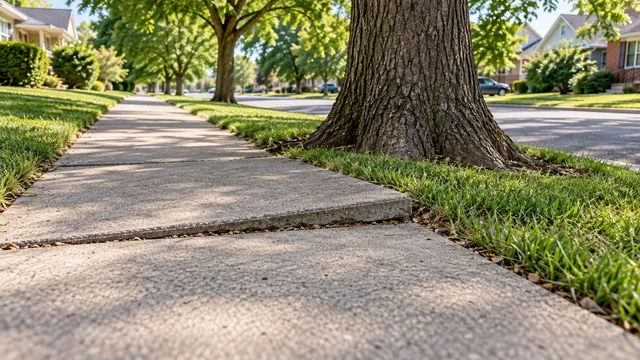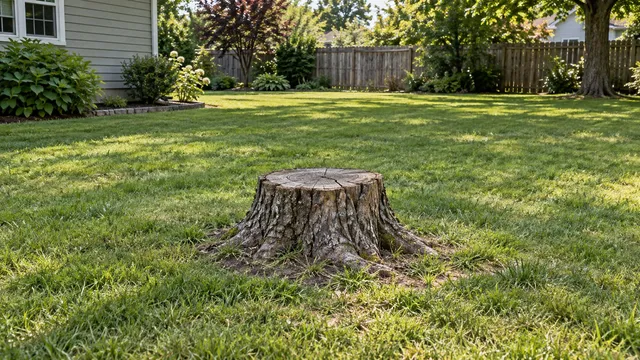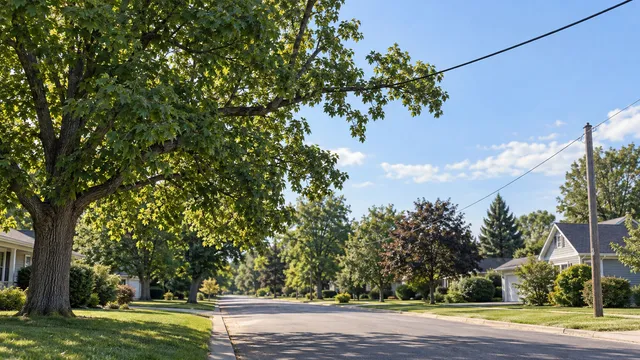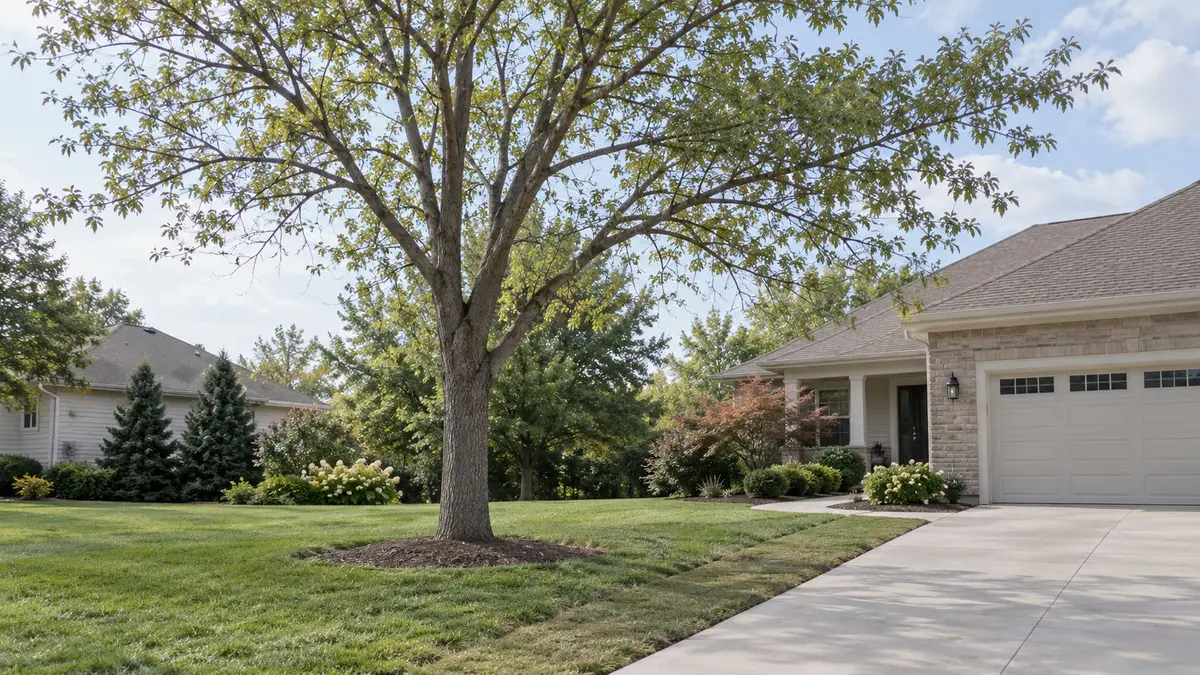
The driveway is finished, but the tree beside it looks thinner than it did before the work. Smaller leaves and dead twig tips can develop when injured roots cannot supply enough water. The same appearance can also come from drought, wet soil, insects or disease, so the order of events matters.
There is no verified national price for diagnosing and treating construction-damaged trees. A visual assessment, written report, soil work and repeated visits are different scopes; request local estimates that separate them.
Do the thinning leaves come with a stability warning?
Health and anchorage need separate checks. A sparse canopy does not mean a tree is about to fall, while a full canopy does not establish sound anchoring roots. The USDA Forest Service’s 1996 hazardous-defects guide warns that trees with root problems may fall without warning, even in summer.
| What is already visible | Next action |
|---|---|
| New lean, heaving soil or torn roots close to the trunk | Keep clear; urgent arborist risk assessment |
| Large dead limbs above people or property | Restrict access; prompt arborist assessment |
| Thin, small or scorched leaves without those warning signs | Book arborist diagnosis and stability check |
| Tree in or near electric lines | Serving utility before approaching or tree work |
ISA identifies cracked or heaving soil as a warning, especially with lean. The USDA guide also flags extensive cutting or crushing of roots under the crown, including more than half. That is a professional finding, not a percentage to estimate by digging. Cuts very close to the trunk or on several sides deserve particular attention in the history you give the arborist.
Report a new lean without approaching the base or moving possessions beneath it. Large dead branches over the house require their own pruning-or-removal decision. Where lines are involved, use the utility-first response.
What might construction have done to the roots?
ISA’s construction-damage guidance covers more than trenching. Heavy equipment compresses soil, restricting oxygen and water movement. Added fill, removed soil and redirected drainage can change the conditions roots depend on without leaving a visible cut.
| Work near the tree | Possible injury | Useful visible record |
|---|---|---|
| Utility trench or footing | Severed roots | Plans and excavation photos |
| Equipment parking or storage | Compacted soil | Ruts and former storage area |
| Added soil or lowered grade | Buried or stripped roots | Old and new ground levels |
| Paving or changed runoff | Altered air and water supply | Paved area and wet patches |
| Work against the trunk | Bark or root-collar wounds | Existing photos of damage |
The root collar is the area where the trunk meets the roots. Soil or debris piled there can add harm. Fuel spills, concrete-washout runoff and heat from machinery also belong in the history. Removing neighboring trees changes wind and sun exposure; ISA describes possible sunscald or structural failure in the remaining trees.
Fill type matters. Iowa State Extension warns that as little as two inches of clay fill will cause irreparable damage. Its more tolerant example—six inches or less of good topsoil probably not harming fill-tolerant species—is not permission to add soil around this tree. An arborist must consider the species and site. Finishing work such as irrigation, lighting, planting and new planting soil counts too.
Does work outside the branches still reach tree roots?
Yes. The dripline, the outline beneath the outer branches, is not the end of the root system. The Morton Arboretum describes roots in the upper soil spreading at least as far as the branches and often farther. A trench beyond the canopy can still cross roots.
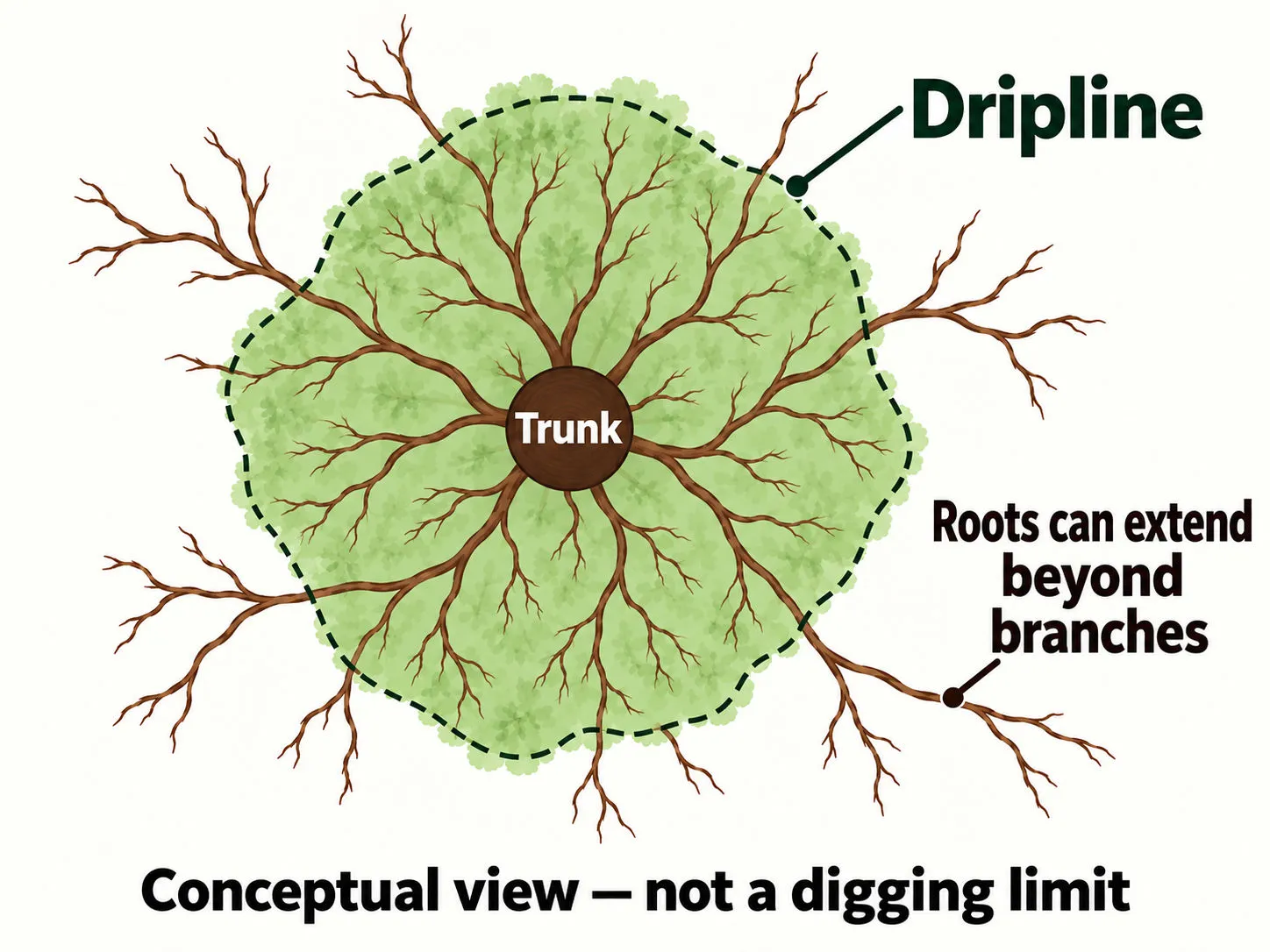
Ask the arborist to record the excavation’s distance in relation to trunk diameter, rather than only “a few feet away.” Trunk diameter at breast height is often abbreviated DBH. Where a prior survey gives circumference, dividing it by 3.14 gives diameter; the arborist can then express the excavation distance in trunk diameters. Use existing plans and measurements first. Do not approach a suspect tree or enter a work area to obtain a number.
Two studies explain why closeness matters without establishing safe boundaries. Smiley’s 2008 research on young willow oaks found reduced resistance to pulling when linear root cuts were inside three trunk diameters. The author cautioned against applying the result to large urban trees. A 2025 study of mature live oaks at one Florida site reports earlier work in which trees trenched at three diameters remained water-stressed a year later, while groups at six and twelve recovered.
Those distances describe particular experiments, not where your contractor may safely dig. Colorado State’s protection-zone formula is a planning convention too. Have the arborist define the actual protected area; leave buried roots and backfill undisturbed.
Which canopy symptoms fit root injury, and when do they appear?
Wilting, scorched edges and drooping branches can appear early, followed by premature color and leaf drop. Later symptoms include smaller or fewer leaves, yellowing, dead tips and dieback near the top. Sprouts on the trunk or major limbs can accompany stress. Excess loss of inner needles in conifers also belongs in the report, without diagnosing its cause from that feature alone.
The timing varies between sources:
| When thinning appears | What the timing contributes |
|---|---|
| Same growing season | Close trenching and dry weather can fit acute water stress |
| Next season or two to three years later | Morton describes these delayed windows |
| Months to many years later | Iowa State describes this range after grade changes |
| Often three to seven years later | Minnesota’s stormwater manual warns of this construction lag |
ISA says decline can take years to become easily visible. Minnesota’s guidance is the source of the three-to-seven-year range; it is not a deadline for either recovery or decline. One good summer after the excavator leaves does not clear the tree.
Compare dated photos from before the work. If the crown was already sparse, the assessment must consider an earlier problem and whether construction added stress. Record which parts changed, but do not assume thinning on the side nearest the work proves roots were cut on that side.
What else could make the canopy thin?
Iowa State’s “Causes of Branch Dieback on Trees” identifies water shortage from either dry soil or lost roots. It also lists wet soils, planting problems, disease, insects and chemical injury. More than one cause can operate at once.
| Possible cause | Clue worth reporting | What needs sorting out |
|---|---|---|
| Drought or root loss | Scorch and short growth | Weather history versus work history |
| Poor drainage | Persistent wet ground | Existing condition or redirected runoff |
| Herbicide injury | Cupped, twisted leaves or distorted growth | Nearby treatment dates and products |
| Salt or winter desiccation | One-sided injury | Salt source or windward exposure |
| Disease or insects | Cankers, boring signs or progressive dieback | Arborist or plant diagnostic lab identification |
| Deep planting or girdling roots | Long-standing decline | Older planting history and root conditions |
Finding borers or a disease does not rule out construction stress. Iowa State notes that environmental stress is often the primary problem even when pests are present. Fungi at the base and trunk cracks or wounds should be reported as separate observations. Avoid choosing a treatment from a leaf photograph alone.
What should you record before the arborist visits?
Gather the work dates, project type, who performed it and whether another phase remains. From normal accessible ground outside any suspect tree’s affected area, use existing photos or a simple sketch to identify trenches, paving, equipment routes and storage areas. Include known soil-level or drainage changes and approximate distances from plans.
Then add the tree’s timeline: when leaf changes began, where they appear, visible dead branches, sprouts and any changed lean. Take repeat photos from the same safe viewpoint. Old listing or family photos can supply the comparison you did not think to take before construction.
For a neighbor’s, utility’s or city’s project, preserve notices, messages and available permits. Ask for an arborist’s written findings separating observations from conclusions about cause. Responsibility and coverage vary by jurisdiction, contract and policy; take those questions to an attorney or insurer. The city’s forestry office or project-owning utility may control work on a street tree, so contact it before commissioning treatment.
What should an arborist’s assessment answer?
Use an ISA Certified Arborist for diagnosis and care. For stability concerns, seek an arborist with tree-risk experience and the ISA Tree Risk Assessment Qualification. TRAQ is a qualification, distinct from arborist certification and local licensing.
Request two findings: what likely explains the thinning, and whether the tree’s structure and anchorage create a risk that needs action now. The arborist may examine the crown, trunk, root flare, grade changes and site, and use instruments when decay needs investigation. Ask what remains uncertain and whether a plant diagnostic lab is needed.
The report should tell you what to do this season, what to avoid, the next assessment date and what changes mean calling sooner. A fertilizer prescription or removal price without those findings leaves the main questions unanswered.
Which care helps, and which “rescue” steps add stress?
After the arborist has resolved access and stability concerns, follow a site-specific care plan. ISA recommends slow, deep watering across the root zone as needed, especially in dry summer weather. Avoid frequent shallow watering or excess water; poorly drained soil needs less irrigation or drainage correction. There is no single weekly amount for every region and soil.
ISA recommends two to four inches of organic mulch across as much rooting area as practical. Have the arborist define its placement around the existing root collar. Keep equipment, storage, tilling and additional fill out of the protected soil. Do not create another injury while trying to repair the landscape.
Pruning guidance differs. ISA generally advises against reducing the canopy to compensate for lost roots, allows exceptions and finds no conclusive support for routine thinning to reduce water stress. Morton recommends crown pruning to compensate for stress. Have the arborist prescribe the objective for this tree; professional removal of dead, split, torn or diseased branches is separate from routine heavy thinning.
Fertilizer is not a rescue treatment. ISA says to limit it immediately after damage and base nitrogen on soil or leaf analysis. Morton says fertilizer is usually unnecessary for mature trees when growth is adequate and no nutrient deficiency is evident. Skip wound dressings: ISA says they do not reduce decay or speed closure and rarely prevent pests.
Professional air-excavation aeration may improve root conditions. Iowa State cautions that aeration systems under fill are not always successful. Neither is a promise to replace severed roots. Have an arborist explain the expected benefit before paying for treatment.
What if construction is still under way?
Bring the arborist and project manager together before the next excavation or finishing phase. ISA recommends an arborist-defined protection zone, fencing and project requirements that apply throughout the job. Keep grading, parking, stockpiles, dumping and concrete washout outside it.
The design may be changed: reroute a utility, tunnel beneath roots or bridge a footing or paving over them. If root cuts are unavoidable, an arborist should plan clean cuts before excavation rather than let machinery tear roots. These are coordinated professional choices, not homeowner trenching instructions. Sidewalk options around living roots explain why changing the hardscape can be preferable to cutting.
Can the tree recover, or will it need removal?
Recovery may occur, but species, age, prior condition, soil and the injury all matter. Colorado State notes that no comprehensive species-tolerance list exists and little can be done to correct injury afterward. An improving canopy supports continued care; it does not replace the stability finding.
ISA says the tree should be removed when its structural integrity is in doubt and the risk cannot be mitigated. Minnesota recommends inspection every year or two because decline may emerge years later; the arborist should set your tree’s actual schedule and earlier-call triggers. Progressing dieback over occupied areas needs renewed assessment rather than waiting for that date.
Request separate prices for assessment and report, any root-zone treatment, irrigation, pruning and follow-up visits. If removal is recommended, specify access, equipment, permits where required, debris and stump work. A second arborist’s opinion can help when the explanation is unclear, once immediate hazards have been addressed. Leave the visit with the care instructions and next review date in writing.
Frequently asked questions
How long after construction can root damage show?
It can show in the same season or years later. Morton describes the next season or two to three years later; Minnesota reports effects often appearing after three to seven years. Use the project and photo timeline rather than treating either range as a test.
Can a tree recover after a trench cuts roots?
Yes, recovery is possible, but cannot be promised. The live-oak research found regrowth of most cut roots within five years at its study site; that does not predict your tree’s outcome or prove anchorage. An arborist must assess injury, condition and follow-up needs.
Should I fertilize or cut the tree back?
Do not start either as a routine rescue. Have the arborist resolve the pruning disagreement for this tree and use soil or leaf tests to decide whether nutrients are needed. Removing hazardous dead or broken branches is a separate professional task.
Are construction-damaged trees more likely to fall in a storm?
Damaged anchoring roots can compromise stability, but canopy thinning alone cannot establish the risk. Failure is possible outside storms too. New lean or ground movement warrants prompt arborist assessment, not a wait for the next forecast.
How can I tell root damage from drought?
The leaf symptoms can overlap. Give the arborist rainfall, watering and construction dates plus earlier photos; soil and root findings may be needed to separate them. Both causes can affect the same tree.
Who is responsible for another contractor’s damage?
That depends on local law, agreements and the facts. Preserve records and seek written arborist findings; ask an attorney about responsibility and the insurer about policy terms. A symptom photo alone does not establish liability.
Sources
- USDA Forest Service — How to Recognize Hazardous Defects in Trees, 1996
- ISA — Recognizing Tree Risk
- ISA — Avoiding Tree Damage During Construction
- Iowa State — Preventing Grade Change Damage to Trees
- Morton Arboretum — Preventing Construction Damage to Trees and Shrubs
- Smiley — Root Pruning and Stability of Young Willow Oak, 2008
- Koeser and colleagues — Live Oak Root Regrowth Following Linear Trenching, 2025
- Colorado State — Tree Preservation During Construction
- ISA — Treatment of Trees Damaged by Construction
- Minnesota Pollution Control Agency — Protection of Existing Trees on Construction Sites
- Iowa State — Causes of Branch Dieback on Trees
- ISA — Tree Risk Assessment Qualification