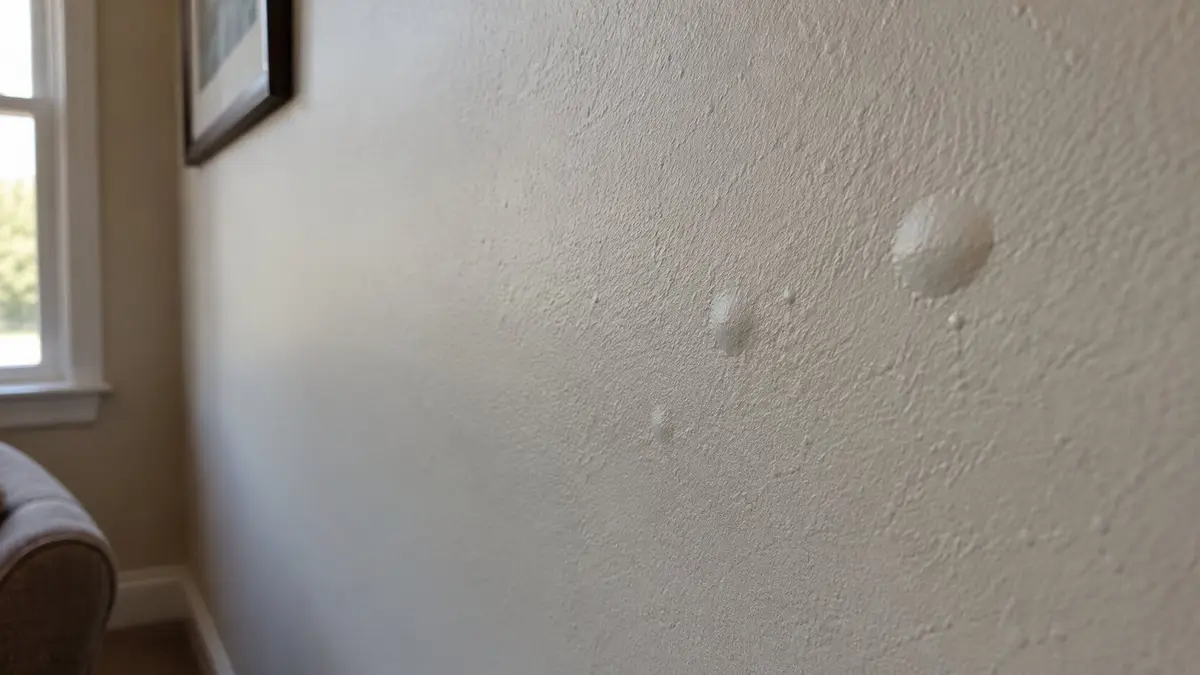
That patch looked fixed when the roller left. Now the same raised spots are back. Before picking another primer, find out whether the coating lifted, air was trapped in wet paint, or the material beneath it failed. Those are different repair jobs.
A rain pattern or shower-time recurrence puts water on the inspection list. Bubbles appearing during rolling put application on it. Neither clue settles the case by itself, and both conditions can affect one wall.
Before touching a bubble, check for water damage
A visibly sagging wet ceiling is not a paint problem to examine from below. Keep people clear and have a qualified water-damage or building professional assess it. If water is reaching a light, outlet, appliance, or other electrical equipment, stay out of that area and have a qualified electrician address the hazard. CDC warns against contact with wet electrical equipment; Texas AgriLife Extension warns that wet ceiling material can fall. Active collapse, fire, or shock danger calls for emergency services.
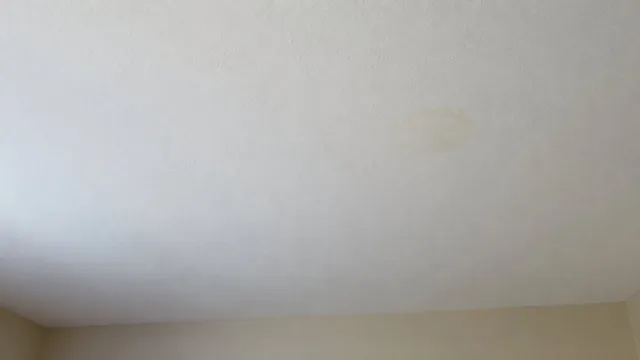
A spreading stain, persistent dampness, or musty odor without those immediate hazards still moves the job from decorating to moisture investigation. It does not diagnose mold. EPA’s moisture guidance says to correct water problems and not paint moldy surfaces. A stable, isolated finish defect can be recorded for a scheduled assessment; there is no universal safe waiting period for an unknown water source.
Before anyone cuts or removes a blister, check the building’s age and material history. EPA says pre-1978 paint may contain lead, and recommends a certified lead inspector or risk assessor to establish what is present. It recommends lead-safe certified contractors for renovation work in those homes. Owner-occupied DIY and covered contractor work have different rules. Planning paint work in a pre-1978 home explains that boundary further. No homeowner test here requires opening a bubble. The same caution applies to suspected asbestos-containing texture or other older materials: leave them undisturbed for professional assessment rather than treating the blister as a convenient sample.
What is bubbling, and when did it appear?
A blister is coating that separates and rises above the surface beneath. Sherwin-Williams’ blistering guide describes heat, moisture, and contamination as possibilities. Small air bubbles introduced while paint is wet can instead leave tiny craters, according to its separate foaming and cratering guide. A damaged drywall paper layer may also lift during a later repair. Zinsser’s GARDZ technical sheet addresses that specific substrate problem.
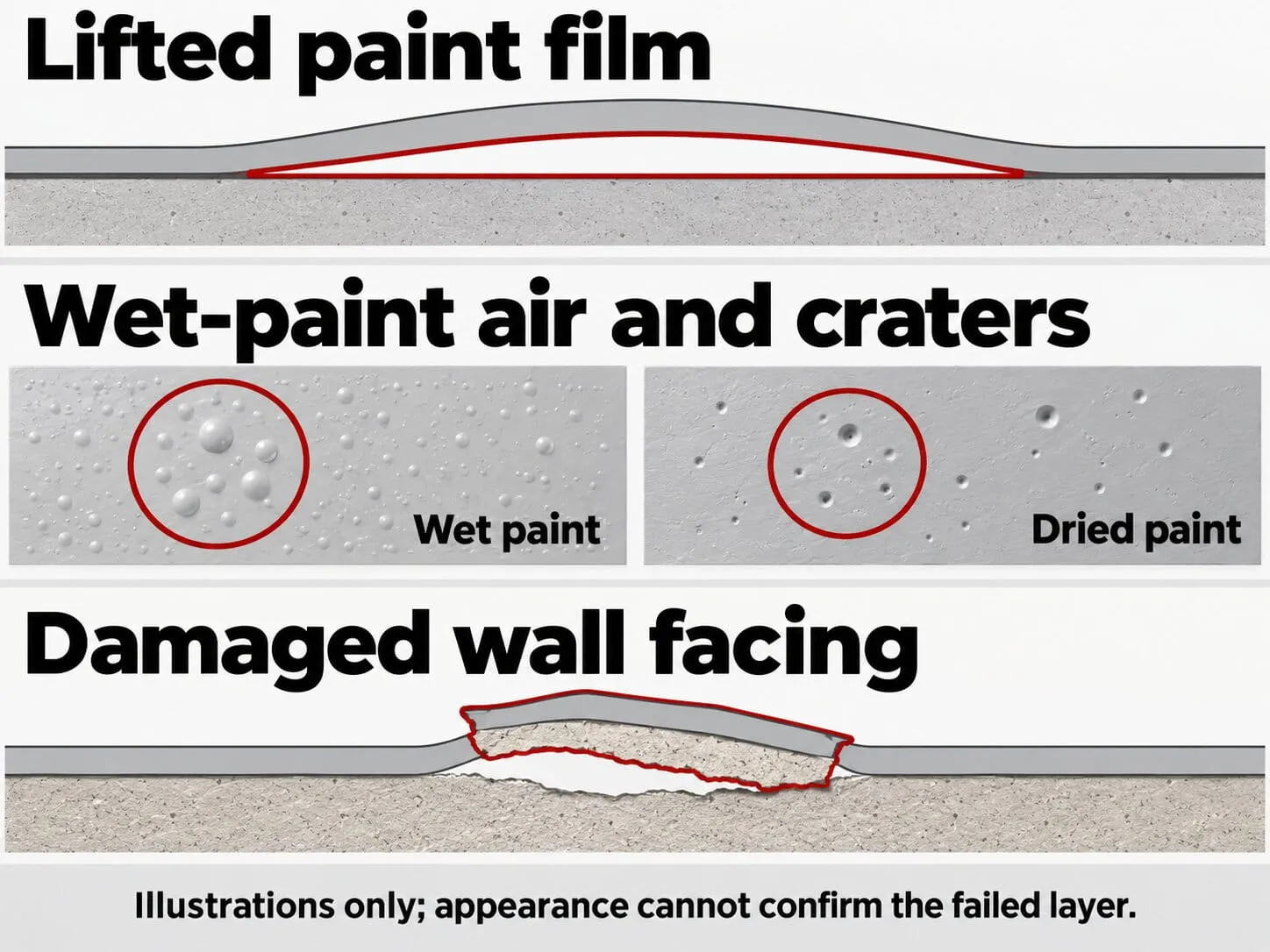
Ask what you actually saw: tiny defects during rolling, raised intact film after drying, or material lifting beneath a repaired area. Did the old coating move when new paint went on? Did a previously patched section change first? These questions sort which layer a painter must assess. A photograph of a bump cannot identify the layer underneath.
Early appearance does not prove an applicator error; late appearance does not prove a leak. A fresh coat can encounter moisture during application or later use. Benjamin Moore’s blistering guidance includes multiple causes and warns that an uncorrected cause can bring defects back. Keep timing as context, not a verdict.
Do the moisture clues match the painting history?
Record the pattern under ordinary use and weather. Do not run a shower, hose a wall, or expose fresh paint to reproduce a bubble. The table lists the next question, not a diagnosis.
| Pattern you already observed | Investigate | What it cannot establish |
|---|---|---|
| Recurrence after rain or a known leak | Water path, affected materials, earlier repair | Entry point or hidden damage extent |
| Recurrence after showers or visible condensation | Moisture exposure, ventilation, coating timing | Humidity as the only cause |
| Fresh exterior work blistered on a sun-exposed surface | Surface heat and product application limits | Absence of later moisture |
| Tiny bubbles during rolling or recurrence over patches | Application method, porous material, old layers | Defective paint brand or a dry wall cavity |
These possibilities may overlap. Moisture can weaken a surface that was also poorly prepared. On an already exposed edge, photograph the visible layers without enlarging it. Sherwin-Williams calls blistering down to the substrate likely moisture related; that is a direction for investigation, not proof of a particular leak. A separation between coatings prompts a look at preparation and compatibility, without excluding water.
If the primary symptom is paint already detached in sheets, which layer failed under new peeling paint is the more useful starting point.
What can you record without opening the wall?
Take dated room-view and close-up photos from a normal, accessible position. Mark the location on a simple room sketch or photo, and note whether the same spots returned or the area expanded. List repaint and primer dates, product labels, prior wallpaper removal or drywall patching, and ordinary events that preceded change: rain, shower use, condensation, cleaning, or heat. Record what is unknown. If another room or exterior elevation was painted at the same time, note whether it changed too. Keep those observations separate from the assumption that the rooms share a substrate or a water path. This is a diagnosis record, not a way to assign blame from one photo.
A room humidity gauge describes the air. It does not measure moisture within wall material. EPA’s investigation guidance treats moisture instruments as tools used with inspection, not stand-alone leak locators. The Tramex MEX5 guide distinguishes comparative scales from moisture-content measurements and air relative humidity. If you already have a noninvasive meter, record its model, mode, material setting, location, and readings for a professional to interpret. A single number is not a universal paintable percentage, mold test, or all-clear for a concealed cavity. Do not buy a meter or insert pins to follow this article.
Who should assess recurring paint bubbles?
With no moisture concern, send the record to the original painter or another experienced painting contractor. Ask which coating or substrate interface failed, what condition was found, and which product instructions apply. For a visible plumbing supply or drain concern, call a plumber. Rain-linked damage calls for an appropriate roofer or window/siding specialist; an uncertain concealed damp area needs a professional experienced in moisture investigation. Paint location alone cannot choose the water source.
Ask for answers before another coat:
- What supports moisture, application conditions, weak substrate, or a combination? What explanation remains possible?
- How was the affected material assessed, and what evidence sets the repair boundary beyond the visible blisters?
- Who corrects the water source, who documents drying, and who confirms the surface is sound enough for coating?
- Which exact preparation and coating instructions apply to this surface, and what happens if the same spots return?
A restoration professional may need to assess water-damaged material. EPA cautions that suspected hidden mold can be risky to disturb; do not cut a wall to check it. Before professional removal, ask how concealed services and old material hazards will be handled. A second assessment is reasonable after repeated failed repaints or when extensive removal is proposed without findings. Disagreement alone does not prove anyone acted dishonestly.
What comes before repainting?
Use an order, not a countdown. First identify and correct the cause. Then assess affected materials and their drying. Establish a sound paintable substrate, select the preparation and coating system for that substrate, and protect the new finish through the actual product’s drying and service requirements. A dry-to-touch paint film and a dry wall assembly are different findings.
A moisture problem needs correction before finish restoration; a stain blocker can hide discoloration but does not repair a leak. A weak facing-paper layer may need a substrate-specific repair system, as the GARDZ sheet illustrates. Neither product is a prescription for every wall. The painter must use current instructions for the selected materials and conditions. No fixed number of days or generic primer promises an end to recurring bubbles.
New photos after normal use and weather can show whether a previously affected area changed. A good-looking finish on completion day is not proof the cause was resolved. For a remaining water mark after a corrected leak, why water stains bleed through fresh paint addresses the separate stain-blocking question.
What should the estimate say?
Separate diagnosis, water-source work, drying or monitoring, material repair, surface preparation, primer and finish, and cleanup. Name who handles each. Ask what work is excluded and how concealed damage would change the scope. A spot repair and an entire wall or exterior elevation have different appearance and cost consequences; request the reason for the proposed boundary.
No dependable national price for recurring bubbles was established. Cost changes with access, affected area, failed layers, material damage, hazard controls, drying work, finish matching, and local labor. Read any workmanship or product warranty rather than assuming another coat is covered. Why painting quotes differ by prep and repair scope gives a fuller comparison. The next useful payment decision is whether the estimate identifies and assigns the cause, not how many coats it promises. Ask the bidder to distinguish finish work from investigation and drying so a low finish-only number is not compared with a broader repair as though they are the same job.
Frequently asked questions
If a bubble flattens when it dries, has the paint bonded again?
Not necessarily. A 1966 USDA Forest Products Laboratory note describes some heat-related blisters shrinking, but that historical house-paint behavior does not establish adhesion in a modern coating. Record whether it returns under normal conditions and have the failed layer assessed without puncturing it.
Why does my pinless meter spike in a corner?
Metal corner bead within the sensing field can elevate some readings, as Tramex explains for its ME5. That possibility does not prove the corner is dry. Give the model, mode, reading location, and other observations to the moisture professional for corroboration.
Do recurring bubbles mean I need mold testing?
No, the paint alone does not establish mold. EPA’s investigation guidance puts finding and correcting moisture first and says routine sampling is often unnecessary when visible mold is present. Suspected concealed or contaminated-water damage calls for qualified assessment, not homeowner opening or painting over it.
Would a lighter exterior color stop heat blisters?
Not as a reliable repair. The 1966 USDA note discusses greater heat absorption by darker house paints in its historical context. Modern product limits, substrate, preparation, and moisture still need assessment; color choice alone cannot repair an already failing coating system.
Sources
- CDC — What to Do to Protect Yourself From Electrical Hazards
- Texas AgriLife Extension — After a Disaster
- EPA — A Brief Guide to Mold, Moisture and Your Home
- EPA — Lead-Safe Renovations for DIYers
- Sherwin-Williams — Blistering
- Sherwin-Williams — Bubbling (Foaming/Cratering)
- Rust-Oleum / Zinsser — GARDZ Problem Surface Sealer
- Benjamin Moore — Paint Bubbling & Blistering
- EPA — Mold Course Chapter 3: Finding Mold and Moisture
- Tramex — Moisture Encounter MEX5 User Guide
- USDA Forest Products Laboratory — Temperature Blistering of House Paints
- Tramex — False Positive Moisture Readings on Drywall