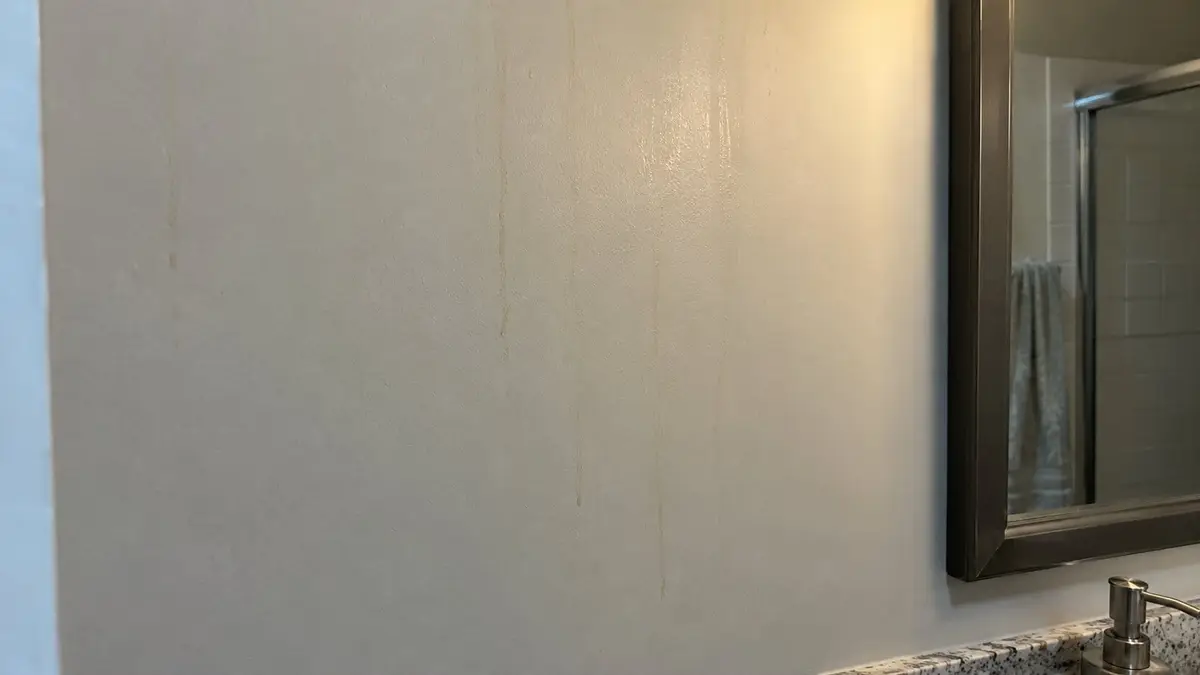
Brown trails running down a freshly painted bathroom wall look like a dirty surface, a failing paint job, and a water problem all at once. The useful question is whether the mark sits on intact paint or signals a change in the wall. Neither answer comes from color alone.
A limited, compatible care test may be enough for identified coating residue. A wet or damaged wall needs a different professional before another cleaning or paint attempt. Start by sorting those two paths.
Could sticky brown trails be surfactant leaching?
Yes, the pattern can fit. Sherwin-Williams’ surfactant guidance describes concentrated water-soluble paint ingredients appearing at the surface as tan, brown, or clear deposits. They may look glossy, soapy, oily, or sticky. Moisture contacting an immature coating and cool drying conditions are relevant. The paint is not literally melting, and shower water has not necessarily turned brown.
Benjamin Moore describes identified surfactant leaching as a cosmetic coating issue. That statement does not clear an unidentified mark, wet wallboard, failed paint, or suspected contamination. A mark that wipes off is a clue about its location, not a chemical identification test or proof that hidden material is dry.
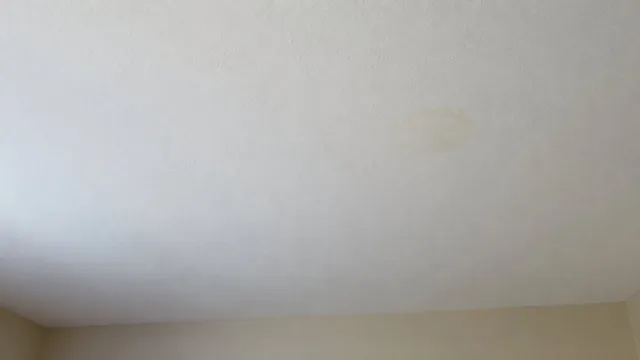
The same wall can hold an old stain and surface residue. If a yellow-brown ring shows through new paint, water-stain bleed-through is the better coating question. Automatically buying a stain blocker for sticky runs may address the wrong layer.
When should you stop treating it as washable paint?
Look from a safe dry position. Active dripping, enlarging discoloration, peeling or blistering, a distorted surface, or visibly wet building material means pause cosmetic treatment and arrange moisture assessment. Record whether it followed showers, rain, or another fixture’s ordinary use; do not steam the room deliberately to reproduce it. EPA advises finding and correcting water problems and cautions against disturbing suspected hidden growth. An odor or color does not identify mold or prove its absence.
A sagging wet ceiling means keep clear and arrange urgent building or restoration help; NOAA notes water-damaged ceilings can fail. If water reaches a light, fan, outlet, or other electrical fitting, stay away and have a qualified electrician address it. CDC warns against using wet electrical equipment. Do not inspect behind the fitting or open the wall. An intact, isolated surface mark without those signs can proceed to coating identification and cautious care, without calling it harmless.
| What you already see | What it cannot establish | Next question |
|---|---|---|
| Sticky trails after showers on intact finish | That leaching is confirmed or the wall is dry inside | What paint and return-to-service instructions apply? |
| Expanding wet-looking area or new damage | The leak location | Can a water-damage restoration professional assess the damage and need for a plumber? |
| Old ring visible through coating | That surface washing will remove it | Was the source corrected and material assessed? |
| Shiny patch after wiping | That residue remains | Did cleaning change the finish sheen? |
If the wall starts bubbling, recurring paint bubbles need a coating-and-moisture assessment rather than more washing.
What should you record about the paint and bathroom use?
Find the brand, exact product line, sheen, color or base, and painting date from the can, invoice, or painter. “Latex bathroom paint” is not enough to settle care or primer questions. Record any old stain, leak repair, wallpaper removal, smoke exposure, and cleaner already tried. Unknown history is worth marking unknown.
Note when the room returned to shower use and whether the exhaust operated during painting and afterward. Ask about cool or damp application conditions without assigning blame. BEHR PRO notes leaching may appear soon after painting or over time; an older wall is neither automatically excluded nor diagnosed by age. Photograph the same area in comparable light and note whether the mark changes with ordinary use.
Look up the actual U.S. product sheet and care instructions, or ask the painter or manufacturer if the coating is discontinued. Ask four separate questions: When was it dry to touch? When could it be recoated? When was full bathroom service expected? When can the finished wall be washed? The U.S. Aura Bath & Spa Matte 532 sheet distinguishes those milestones and says humidity and cool conditions affect them. Its numbers and heavy-leaching primer guidance belong to that product, not every bathroom wall. Do not confuse application-tool cleanup instructions with finished-wall care.
How can you clean without making another mark?
Only consider a cleaning test on an intact, accessible finish with no moisture or material stop signs. The installed coating’s own directions govern. Benjamin Moore’s leaching page describes a water rinse or damp wipe when leaching appears; Sherwin-Williams’ interior guidance describes soap, water, and rinsing. Benjamin Moore’s general fresh-paint care adds cure-related cleaning caution. Those are different contexts, not a universal mixture or washing date.
When the finish is recent, soft, unknown, or its leaching advice conflicts with care restrictions, ask the painter or product maker before washing a broad area. Waiting indefinitely is not a universal treatment either. Sherwin-Williams’ wall-care guidance supports trying an approved method on an inconspicuous spot, allowing it to dry, and judging the result before expanding. Handle the finish gently and avoid excessive wetting.
Stop if paint transfers, softens, lifts, or changes appearance. Photograph the test and seek product-specific advice. Do not escalate to abrasive pads, concentrated degreasers, solvents, or internet chemical mixtures. A remaining shiny patch may be burnishing—increased sheen from rubbing or scrubbing—rather than stain needing stronger cleaner, as Sherwin-Williams’ marring guidance explains. That is a possibility, not a diagnosis of this wall. Why wall touch-ups still show addresses appearance after the coating issue is resolved.
What if the streaks return after cleaning?
A return does not by itself establish defective paint or a new leak. Recheck the record: is there fresh surface residue on sound paint, continued dampness, or damage revealed by cleaning? Each changes the next call. Sherwin-Williams notes leaching may recur, so a fixed number of washes is not an evidence-based finish plan.
Operate the bathroom exhaust as intended, but an audible fan does not prove it removes moisture. The U.S. Department of Energy’s home-ventilation guide explains that moist air can condense on cooler surfaces and that bathroom exhaust should terminate outdoors. Persistent dampness calls for a qualified ventilation or building-performance assessment; do not open ducts, reach a roof outlet, or alter wiring yourself. Air moving around the room is not the same evidence as moisture leaving the building. See ventilation problems behind a bathroom that stays steamy for what an assessment should cover.
Repainting is conditional. First determine whether residue remains on an otherwise sound surface, moisture is unresolved, or wall material was damaged. The selected coating’s preparation instructions then govern cleaning, compatible primer if indicated, topcoat, and return to service. The Aura Bath & Spa sheet includes a primer provision for heavy existing leaching; it does not justify sealing every brown mark. Do not coat active dampness or suspected growth. If preparation would disturb pre-1978 or unknown-age paint, check the lead-safe boundary before scraping or sanding and consult an EPA lead-safe certified renovation firm before disturbing the coating.
Who should assess the wall, and what should the scope say?
For a recent intact coating and uncertain care instructions, start with the original painter or paint manufacturer’s technical support. For persistent condensation, use a qualified ventilation or building-performance professional; for suspected plumbing leakage, a plumber; for wet or damaged material, a restoration professional experienced in moisture assessment. These referrals follow the observed problem, not an assumed diagnosis.
Give them the paint label, date, shower-use and ventilation history, photos, earlier wall history, and any cleaning test result. Ask what evidence supports leaching, a substrate stain, moisture, or finish damage—and what remains uncertain. Request separate scope for assessment, water or ventilation correction, compatible cleaning, substrate repair if justified, primer/topcoat work if needed, and care instructions afterward.
There is no reliable national price for this narrow symptom. Cost depends on whether the job is product advice, cleaning, moisture work, substrate repair, or repainting, plus local labor. A proposal that identifies mold by color, promises one sealer for every brown streak, or calls for repeated repainting without investigating recurrence deserves clarification or a second opinion. Agree on what will be checked before authorizing a finish-only fix.
Frequently asked questions
Do I need satin or semigloss, or can bathroom-rated matte work?
A suitable matte can work when its exact product instructions allow bathroom service. The Aura Bath & Spa 532 sheet is one high-humidity matte example, not a comparative guarantee. Sheen alone does not identify or prevent this residue; match the coating system and conditions.
Can a darker wall make leaching more likely?
It can in a specific formulation: Benjamin Moore says deeper-colored paints tinted with universal colorants can be more prone to leaching because those colorants add surfactants. That is not a rule for every dark paint. Check the actual paint and tint system, along with application and moisture history, before attributing the streaks to color.
Is the shiny patch after cleaning burnishing?
It could be. Rubbing can raise sheen, and residue may also remain. Stop stronger cleaning, let the small tested area dry, compare it under normal light, and ask the product maker before further treatment.
What if similar streaks appear in a bedroom?
Leaching is possible outside a bathroom; the paint and moisture conditions still matter. The different room may point to another humidity source, old surface contamination, or a separate water problem. Record location and timing, then assess each wall rather than extending one visual diagnosis to the whole house.
Sources
- Sherwin-Williams — Surfactant Leaching
- Benjamin Moore — Surfactant Leaching
- EPA — A Brief Guide to Mold, Moisture and Your Home
- NOAA — After a Flood
- CDC — Returning Home After a Flood
- BEHR PRO — Common Residential Painting Problems
- Benjamin Moore — Aura Bath & Spa Matte 532 Technical Data Sheet
- Benjamin Moore — Cleaning Freshly Painted Walls & Cabinets
- Sherwin-Williams — How to Clean Painted Walls
- Sherwin-Williams — How to Fix Paint Marring
- U.S. Department of Energy — Guide to Home Ventilation
- EPA — Lead-Safe Renovations for DIYers