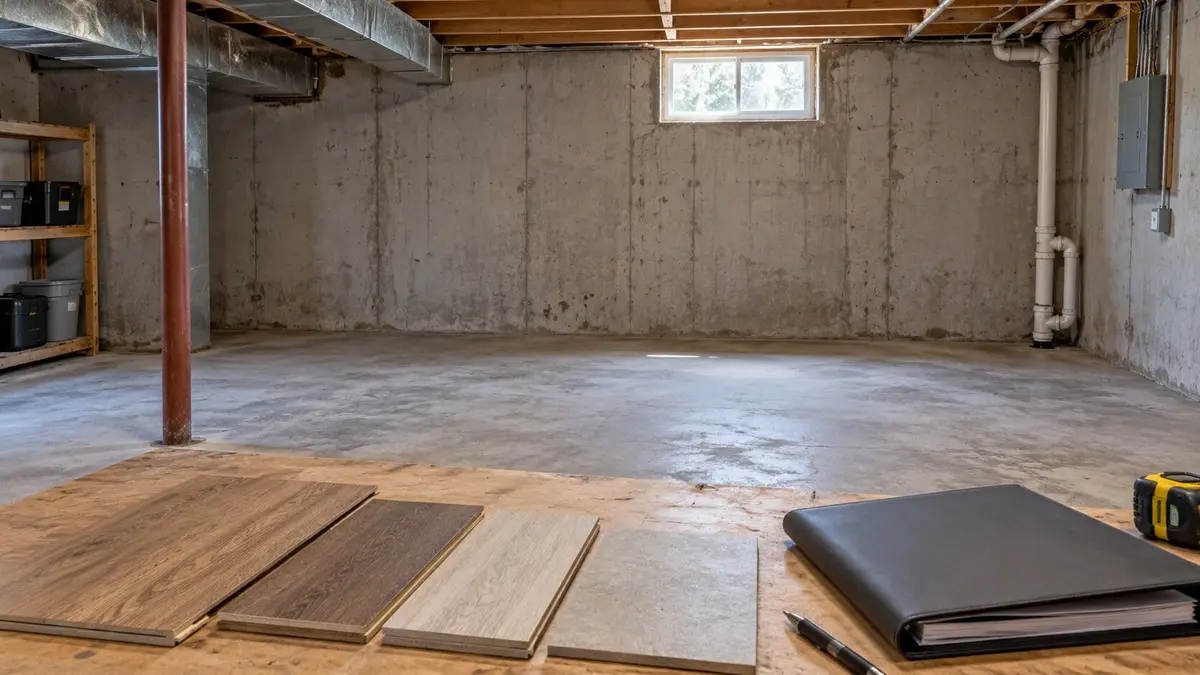
The flooring samples look ready. The concrete underneath may not be. A basement can look dry on the day you shop while water enters after storms, humid air condenses on a cool slab, or moisture moves through the concrete.
Those are different problems. They call for different evidence and may rule out different installation systems. The purchase decision rests on the actual slab, the basement’s history, and every layer specified beneath the visible floor.
Put the purchase on hold if the basement is still getting wet
Visible seepage, repeated wet flooring, a recurring musty odor, or a known flood deserves investigation before covering the slab. A stain is evidence to record, not proof of an active leak or its source. The University of Minnesota Extension explains several basement moisture paths, including groundwater entry and condensation. More than one can affect the same room.
Separate three questions: Is it safe to enter? What is making the space wet? Is the floor ready for a particular installation? Answering one does not answer the others. If water is near electrical equipment, do not enter it to reach a breaker, pump, or appliance; seek utility or emergency assistance. CDC floodwater guidance describes the electrical and contamination hazards.
Arrange a building-envelope or foundation drainage assessment for recurring rain-related entry, and a plumber for a suspected pipe or drain leak. Sewage damage needs an experienced cleanup professional. Extensive or potentially hidden mold calls for assessment by an experienced mold or water-damage professional, as the EPA’s mold guide explains. A new floor is not a remedy for any of these conditions.
Check what is safe to disturb before exposing the slab
Existing flooring can conceal the concrete the installer needs to assess. Old resilient tile, sheet flooring, backing, and adhesive may contain asbestos. Appearance or tile size cannot establish whether they do. EPA advises assessment by a trained, accredited asbestos professional before suspect material is disturbed. Do not lift a corner, scrape adhesive, drill, grind, or sweep suspect debris to prepare for a test. Put assessment and safe access in the project scope.
Record where and when moisture appears
Make a short record before a site visit: photos, location, date, recent rain or snowmelt, appliance use, prior repairs, and whether the room was conditioned. Note accessible exterior observations such as runoff direction, downspout discharge, or a visible window-well problem. Do not excavate, work on sump wiring, or force water into the building to reproduce a symptom.
| Observation | Possible lines of inquiry | Evidence to request next |
|---|---|---|
| Wetness near a wall-floor joint after rain | Drainage or water entry | Exterior and foundation assessment, repair history |
| Broad dampness on cool surfaces in humid weather | Condensation, possibly alongside another source | Room conditions and surface observations |
| Local patch near plumbing | A leak | Plumber’s inspection and repair record |
| White powdery deposit (efflorescence) or tide-line stain, with no current water | Past or current moisture; cause unknown | Dates, prior photos, and site assessment |
A room hygrometer measures air relative humidity. It does not measure moisture inside the slab or replace a flooring manufacturer’s test. EPA warns that concrete moisture and condensation on a cold slab can both affect carpet. Covering the slab also changes what can be seen or dried beneath the finish.
A dehumidifier can help manage humid room air; it cannot stop groundwater, a leaking pipe, or other water entry.
Include the season and the slab’s history
Tell the installer about past flooding, coatings or patches, construction age, available records of an underslab vapor retarder (a layer intended to slow water vapor below the concrete), and whether the basement will stay heated or cooled. If records are missing, mark construction details unknown. A dry week in September does not erase a wet spring. Opening windows in humid weather is not a universal drying tactic; warm air may condense on cool basement surfaces, as the Minnesota Extension guidance notes.
Which moisture test does a basement floor need before you buy flooring?
Select a provisional product first. Its current installation guide tells the tester which methods and limits apply. “The concrete passed” means little without the product, method, result, units, and locations. These measurements answer different questions:
| Observation or test | What it describes | What it cannot establish |
|---|---|---|
| Room hygrometer | Relative humidity in the room air | Moisture inside the concrete |
| In-slab RH probe test (ASTM F2170) | Relative humidity within a concrete slab, reported as percent RH | Future flood or leak behavior |
| Calcium chloride test (ASTM F1869) | Moisture-vapor emission from eligible bare concrete | In-slab RH; coated or patched areas |
| Concrete moisture meter (ASTM F2659-type) | Comparative screening across accessible areas | Quantitative acceptance for a moisture-sensitive finish |
| Plastic sheet test (ASTM D4263) | An indication of capillary moisture within its stated concrete-coating scope | Universal approval for flooring installation |
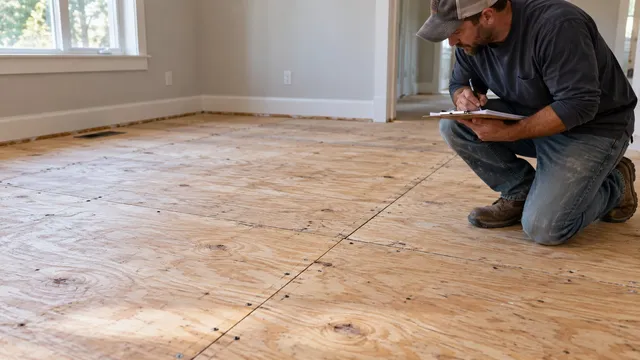
The taped-plastic check seen in online tips may show moisture reaching the surface, but ASTM D4263 is written for concrete coatings and cannot approve a flooring installation. An installer or qualified tester selects and performs the applicable procedure. F1869 does not simply go on top of paint, sealer, or leveling compound. Ask for a dated report with locations, units, method, substrate and surface treatments, room conditions, equipment, and a comparison to the exact product instructions. If access requires disturbing old layers, resolve that hazard first.
A favorable test does not cancel a leak history
A test describes the conditions and locations sampled. It cannot promise what groundwater, rain, a future pipe leak, or changed room operation will do. A manufacturer’s exclusion based on a history of high moisture is a separate issue from today’s number. For example, Shaw’s stone-plastic composite (SPC) guide allows covered products below grade (beneath ground level) but still requires moisture testing and says not to install over concrete with a history of high moisture or hydrostatic conditions (water pressure from outside the slab). That is an example for those products, not a rule for all vinyl.
If a test and the product’s history-based restriction point in different directions, request written technical clarification before ordering. Ask whether pH testing (a measure of surface acidity or alkalinity) is also specified for the chosen flooring, adhesive, or preparation system. It answers another question; there is no single pH or moisture limit that approves every basement floor.
Compare the complete flooring system, not just the surface material
“Waterproof” can describe the finish plank while the adhesive, underlayment, panel, or material beneath it still has limits. Compare candidates through their current documents rather than a ranking of “best basement floors.”
| Candidate | Documents and conditions to check | Question after a future leak |
|---|---|---|
| SPC or other vinyl | Exact SKU, below-grade approval, slab tests, preparation, attached pad, installation method | Which layers require inspection or removal? |
| Engineered wood (a hardwood face bonded to a layered core) | Exact product, environmental and moisture limits, allowed below-grade method | Can hidden layers be accessed and dried? |
| Carpet | Carpet, backing, cushion, concrete interface, unresolved chronic dampness | What happens to pad and backing? |
| Tile | Tile, mortar, substrate and any membrane as a documented assembly | How will trapped moisture or source entry be addressed? |
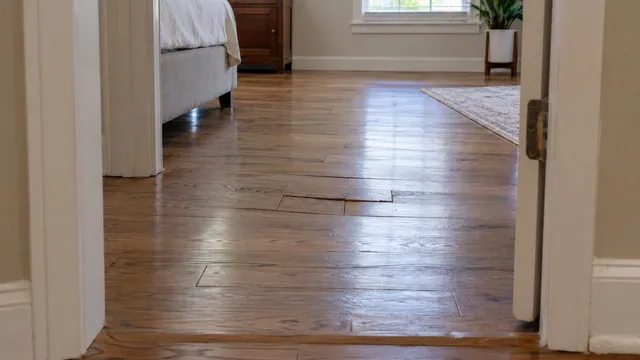
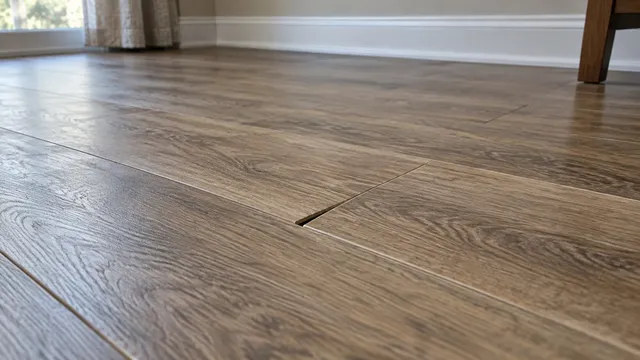
NWFA distinguishes engineered wood’s dimensional stability from solid wood’s usual on- or above-grade use. Stability is not waterproofness. A particular engineered product may allow below-grade use only by a specified method. WEST | WOOD’s installation guide is one example: it directs a floating method below grade. Get written confirmation that the exact installation method is approved before buying. If an existing wood floor has changed shape, the hardwood-cupping guide explains why its moisture source matters first.
Tile does not waive substrate review. Check that the chosen mortar, membrane if any, and substrate together permit the site’s moisture conditions. Bostik’s Ditra-Set sheet puts one hydrostatic-pressure restriction in a specific assembly subsection; do not assume that adding a membrane permits hydrostatic pressure. For laminate, rubber, coatings, or another material, apply the same exact-document check rather than borrowing limits from this table.
Ask what can be inspected, dried, or replaced after a future leak
Have the installer describe access to every hidden layer and whether replacement materials can be retained. A floating floor is not guaranteed to come apart intact. DRICORE says a water source must be addressed and panels may need removal after significant flooding. Product survival, drying beneath it, and contaminated-water cleanup are distinct questions. No comfort or moisture-management feature guarantees flood recovery.
Do you need a vapor barrier under basement flooring?
“Vapor barrier” is a common name for a layer intended to limit vapor movement, but its material and location depend on the flooring system. Ask the installer to draw and name the actual sequence: slab; specified preparation or moisture-control system; approved underlayment or subfloor; finish floor. Each product has a job. A cushioning layer does not correct a leak or provide structural support. A raised panel changes height and access. A coating specified for vapor control cannot be assumed to stop groundwater entry.
Get written compatibility for the adhesive, patch or leveling material, attached pad, extra underlayment, and raised panel, if used. More layers are not automatically safer. DRICORE says its subfloor panel goes directly over concrete without a separate barrier beneath it. That is a product-specific direction, not a rule about plastic beneath every basement floor. Keep floor drains, cleanouts, and other service access in the drawing.
If a topical moisture-mitigation product is proposed, request its technical data, substrate limits, compatible finish system, and the name of the installer responsible for it. For an existing raised floor that feels unsound, ask a qualified flooring or building professional to assess the moving layer before adding a finish. A proposed vinyl overlay over tile also needs separate flatness and height review.
Make the quote show what must happen before installation starts
Ask bidders to separate investigation and testing, water-source repair, safe removal, slab or panel repair, preparation, moisture-control layers, finish installation, transitions, access work, and disposal. Put unknown conditions and responsibility for failed tests in writing. A finish-floor price alone omits the part that determines whether it can be installed.
Have the installer identify the finished height at doors, stairs, appliances, drains, and service points. Local building requirements may matter; ask the local building department about this project’s changes rather than relying on a national clearance rule. Schedule installation after the conditions and product requirements are verified, not merely after a promised drying date.
No reliable national price covers the many possible moisture diagnoses and assemblies here. Compare local, itemized quotes for the same documented scope. If an expensive drainage recommendation does not explain the source, or a seller dismisses a conflicting test, seek an independent moisture or flooring assessment.
Keep a small handover file
Save the product SKU and installation guide, test reports, site repair records, approved layer drawing, care instructions, warranty exclusions, and each trade’s responsibilities. Those records make a future leak or warranty question easier to investigate. Proceed only when the water condition and complete assembly are documented as compatible; otherwise revise the system or postpone installation.
Frequently asked questions
Can radiant heating change which basement flooring products I can use?
Yes. Ask for the exact product’s approval and installation limits for the heating system and complete assembly. Do not infer approval from a broad “basement suitable” label.
What if no one knows whether an older slab has a vapor retarder underneath?
Record it as unknown rather than assuming the slab has one. Request the tests required by the proposed flooring and compare both results and the basement’s water history with its instructions. Any proposed mitigation layer needs its own technical data and documented compatibility with the complete floor.
Should I test for radon before finishing the basement?
Yes. EPA advises testing for radon before a basement remodel, because fixing a problem is usually easier and less expensive before the room is finished. A flooring moisture test cannot answer this separate indoor-air question. Ask your local health department or a qualified radon professional about testing and follow-up.
Sources
- University of Minnesota Extension — Moisture in basements: causes and solutions
- U.S. Environmental Protection Agency — Remodeling Your Home and Indoor Air Quality
- ASTM International — F2170-19a
- ASTM International — F1869-23
- ASTM International — F2659-23
- ASTM International — D4263-24
- Shaw Floors — Resilient Installation Guidelines for SPC Products
- DRICORE — Subfloor FAQ
- National Wood Flooring Association — Types of Wood Floors
- WEST | WOOD — Installing Engineered Hardwood Floors
- Bostik — Ditra-Set Technical Data Sheet
- U.S. Environmental Protection Agency — Protect Your Family from Exposures to Asbestos
- U.S. Environmental Protection Agency — A Brief Guide to Mold, Moisture and Your Home
- Centers for Disease Control and Prevention — Safety Guidelines: Floodwater