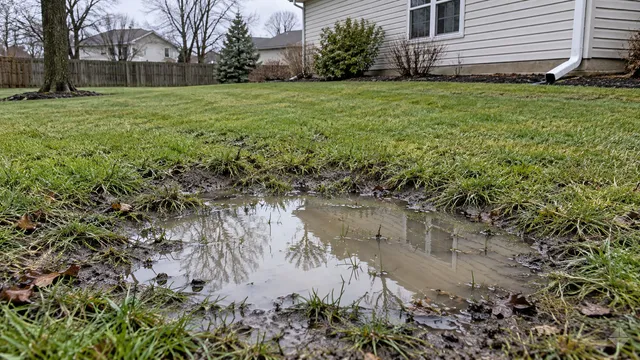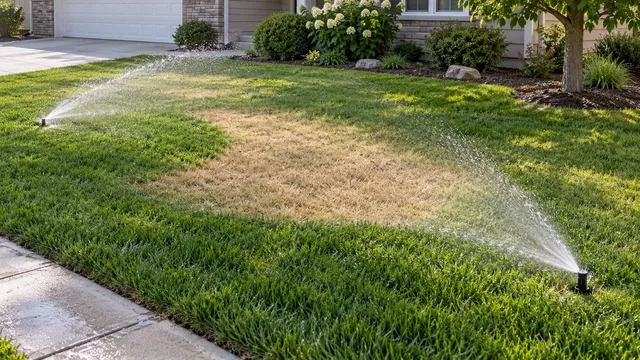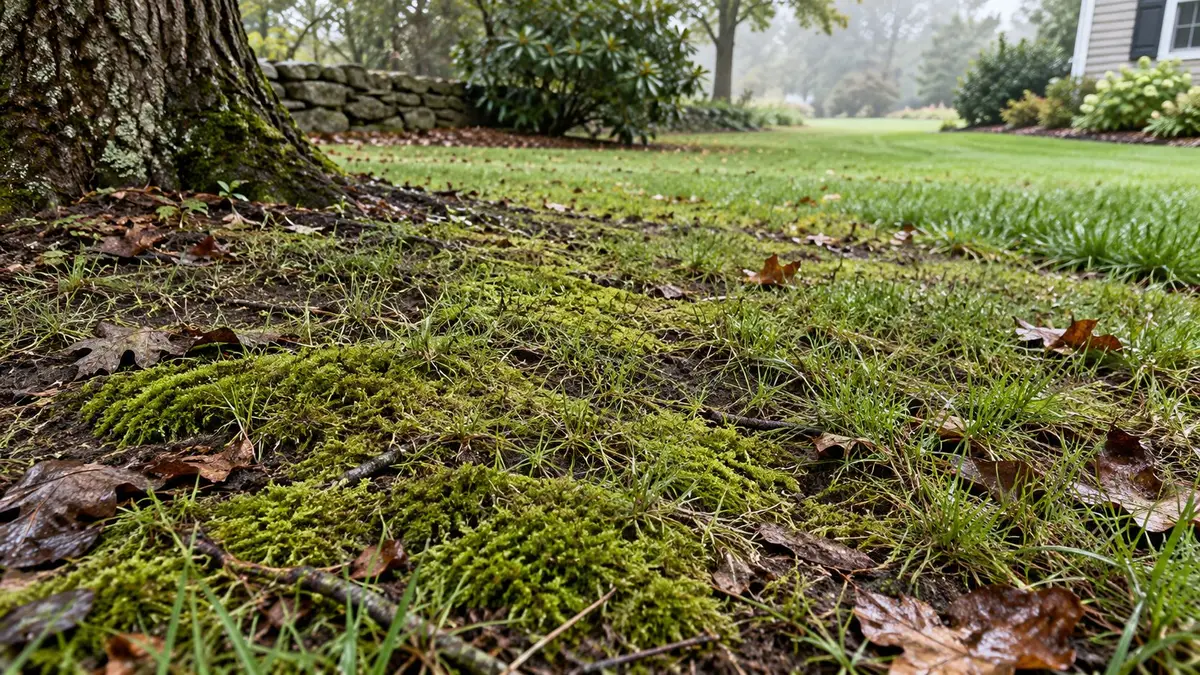
The moss is back where you raked it out last spring. That spot may sit under a tree, beside a downspout or along a compacted footpath. Each setting can leave grass thin, creating room for moss again.
Before buying lime, locate the patch and check the conditions around it. Oregon State University Extension says lime can improve acidic soil for turf but has no direct effect on existing moss. That distinction can save another round of a treatment that never addressed why grass disappeared.
There is no dependable national price for a moss program or lawn renovation. Test fees, lawn size, seed type, aeration, drainage and tree work vary locally. Start with a soil-test quote and a site diagnosis before comparing treatment estimates.
Does lime kill moss or stop it from returning?
No. Lime raises soil pH when acidity is the problem. It does not kill or directly suppress existing moss. Moss can be more prevalent in moderately to strongly acidic soil, Penn State Extension notes, but that association is not a soil test. Wisconsin Horticulture advises against assuming every mossy lawn is acidic.
If a lab recommends lime for your grass, it can help the grass compete as pH changes. The change is slow: a 2026 University of Connecticut Extension article says full effect may take six months to a year or longer. Seeing moss next month, or even next spring, does not alone tell you whether the lab’s recommendation worked. Recheck by the lab’s schedule, not by the amount of green moss visible.
Over-liming can push pH high enough to limit iron, manganese and zinc availability, according to UConn. Ohio State’s lawn lime guidance also warns of nutrient problems and summer patch risk in Kentucky bluegrass. More lime is not insurance against moss.
Why does moss keep coming back after raking or spraying?
Moss settles where the desirable grass is already weak. Wisconsin says it does not invade vigorous turf; it develops as turf thins. Clemson Extension says mechanical or chemical removal is temporary unless the underlying conditions change. Raking a patch without improving light, drainage or turf density leaves the same opening for recolonization.
Usually more than one factor is involved. Shade and dense tree roots can limit grass, while compaction slows infiltration. Too much irrigation keeps a north-facing strip wet. Low fertility, unsuitable grass, short mowing and poor airflow can contribute too. In western Oregon, cool wet winters favor moss while lawn growth slows, Oregon State notes; the seasonal advantage differs elsewhere.
What should you check in a recurring moss patch?
Walk the lawn after rain and again after a normal irrigation cycle. Mark the moss on a photo and compare it with tree shade, building shade, outlets, low spots and traffic. Note direct sun during the grass-growing season. Oregon State uses about four hours as a rough minimum for grass; it is a guide, not a promise for every species.
| Moss location | Condition it may suggest | First check |
|---|---|---|
| Beneath a tree or north side of house | Too little light for existing grass | Count direct growing-season sun hours. |
| Below a downspout or in a depression | Repeated wetting or slow drainage | Watch where rainwater goes and how long soil stays wet. |
| Footpath or play area | Compacted soil and worn turf | Compare a probe in slightly moist path and nearby soil. |
| Sprinkler-side patch | Overwatering or uneven coverage | Compare water caught in that zone. |
| Broad thin lawn | Mowing, fertility, pH or wrong species | Check mowing height and obtain a lab soil test. |
Do not use a dry-ground screwdriver result to declare compaction; dry soil is hard even when the structure is fine. If the patch tracks a sprinkler zone, compare coverage rather than increasing watering. A muddy-yard assessment is the better next step for soil that stays soggy after rain. Under trees, the reseed-or-redesign decision addresses both shade and root competition.
How do you test soil before adding lime?
A home kit can hint at pH, but it cannot give a meaningful lime requirement. Two soils with the same pH can need different amounts because texture and organic matter affect buffering. Ask your state land-grant extension office or a soil lab for a lawn test with a lime recommendation for your grass species.
Clemson’s soil-sampling guide recommends taking eight to ten or more small cores, roughly two to four inches deep for lawns, and mixing them into one composite sample. Use clean tools so fertilizer or pesticide residue does not distort the result. Sample the mossy area separately from healthy turf if they have different treatment histories or conditions; areas limed or fertilized differently also need separate samples. Order the test ahead of the local lawn-care season so there is time to act.
Read the report for pH, nutrients and the actual lime recommendation, often expressed per 1,000 square feet. If it says no lime, do not add it because moss is present. If it recommends lime, follow the lab’s grass-specific amount, product type and timing, then the product label. Calcitic versus dolomitic lime depends partly on magnesium results; Penn State advises against hydrated or burned lime on established turf.
What if the test recommends lime, says pH is fine, or shows alkaline soil?
| Lab result | Next step | Avoid |
|---|---|---|
| Lime recommended for this grass | Apply the lab’s type and amount, possibly in stages as directed. | A flat rate copied from another lawn. |
| pH in the target range | Work on light, water, compaction and turf density. | “Maintenance lime” just because moss returned. |
| Alkaline soil | Ask the lab about suitable grass and other constraints. | Adding more lime. |
Even extension sources differ on how much to apply in one treatment: Ohio State lists roughly 10–50 pounds per 1,000 square feet, depending on product, while Penn State allows up to 100 pounds per 1,000 square feet in its general turf guidance. Those are source-specific upper limits, not rates to choose. Targets differ too: Oregon State discusses roughly pH 6.0–6.5 for western Oregon turf, while Ohio State gives pH 6.0–7.0; NC State notes centipedegrass prefers around pH 5.5. The lab’s recommendation for your grass and soil is safer than one national rate or target.
Many western soils are naturally alkaline. Utah State University Extension reports Utah soils averaging near pH 8 with free lime in many places. That is a regional example, not a claim about every western yard. If moss grows there, look hard at shade, water and turf weakness rather than assuming more lime will help.
How do you fix shade, wet soil and compaction so grass can return?
Match the fix to the observed condition. For moderate shade in a cool-season lawn, Wisconsin recommends fine fescues, taller mowing around three inches and less nitrogen than sunny turf. In the Southeast, NC State includes St. Augustinegrass among more shade-tolerant warm-season options, though it still needs light. Have an ISA Certified Arborist evaluate any pruning beyond small ground-level branches; the electric utility handles branches near lines. Pruning cannot turn deep shade into a sunny lawn.
For wet patches, adjust irrigation to weather and soil rather than a fixed schedule. A drainage or grading contractor should examine persistent low spots, especially near foundations or buried lines. In compacted but suitable turf, core aeration can help; the aeration-versus-dethatching check prevents an unnecessary machine pass. Treat fertility from the soil report and mow at a height suited to the grass. Do not pour on nitrogen to force a shaded patch to thicken.
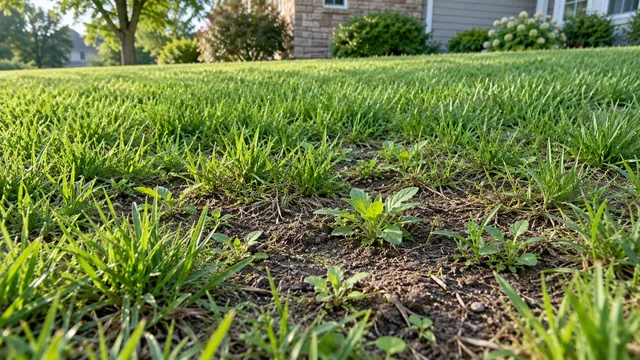
Where light and drainage can support grass, rake out moss and prepare bare soil for seed during the local grass-growing window. Oregon State advises mid-March through April dethatching in western Oregon, when moss growth slows, and spring reseeding there. Your state’s grass and climate set its timing. The overseed-or-start-over guide helps choose how much turf to repair. Bare soil left empty after raking is an invitation to moss and weeds again; use suitable seed and establishment watering. Returning weeds after treatment follow the same open-space pattern.
Should you use a lawn moss killer?
It can remove existing moss, but it cannot correct shade, wetness or weak turf. Iron-based and fatty-acid products appear in extension guidance, but choose only a product labeled for lawn use. Oregon State’s moss-control page warns that iron products stain concrete and that treatments can irritate eyes, skin and lungs; wear the label’s protection and avoid runoff into waterways. Check its rain restrictions too. Roof or walkway moss products containing copper or zinc can injure or kill lawn grass, Oregon State warns, so do not substitute them on turf.
Do not build a recurring service plan solely around killing moss. A lawn-care quote should identify the soil test, removal method, grass species, seed preparation, irrigation or compaction change, and separate drainage or tree work. Get another opinion when a contractor prescribes lime without a test or proposes major tree or drainage work without explaining how it changes the site.
When should you keep moss instead of grass?
If a spot receives well under roughly four hours of direct growing-season sun and tree-safe pruning will not change that, a mulched bed or locally suitable shade groundcover can be more durable. Clemson and NC State also describe accepting moss in a low-traffic area as an option. Wet moss on steps or a walking path deserves a different surface and attention to slip risk; it need not be removed from every shaded corner. Choose the groundcover and maintenance that fit that exact place.
Frequently asked questions
My pH is fine. Why is moss still growing?
Moss also favors thin turf, shade, wet or compacted soil and low airflow. Map the patch against sun, water and traffic, then correct the condition that prevents grass from filling in. More lime cannot fix a pH that is already suitable.
Should I kill moss first or apply lime first?
They address different things. Lime is for a lab-confirmed soil need; moss removal clears a patch for turf repair. Fix the site’s light, moisture or compaction before expecting either step to last.
How long after liming should the lawn change?
UConn says the full pH effect may take six months to a year or longer. Grass density will also depend on season, species and the other growing conditions. Retest on the soil lab’s schedule rather than adding more lime because moss remains.
Can I use the same moss killer on my roof and lawn?
Only if that product label explicitly allows lawn use. Oregon State warns copper- or zinc-containing roof and walkway moss products can injure or kill turf. Use a lawn-labeled product as directed.
Is it bad to leave moss in a lawn?
It can be a reasonable low-maintenance cover where turf will not grow, according to Clemson and NC State. Consider whether people walk there; wet moss on steps or paths can be slippery.
Should mossy areas be tested separately?
Yes when the mossy patch has different soil, treatments or conditions from healthy lawn. Use a separate composite sample and label its location. That helps you see whether acidity is actually different there.
Sources
- Oregon State University Extension — Managing Moss in Lawns in Western Oregon
- Oregon State University — Moss in Lawns
- University of Wisconsin–Madison Extension — Managing Moss Problems in Lawns
- University of Connecticut Extension — Should You Lime This Fall?
- The Ohio State University CFAES — Lime and the Home Lawn
- Penn State Extension — Liming Turfgrass Areas
- Utah State University Extension — Solutions to Soil Problems II: High pH
- Clemson Cooperative Extension — Moss and Algae Control in Lawns
- Clemson Cooperative Extension — Soil Testing
- N.C. Cooperative Extension — Solving Moss Problems in the Lawn